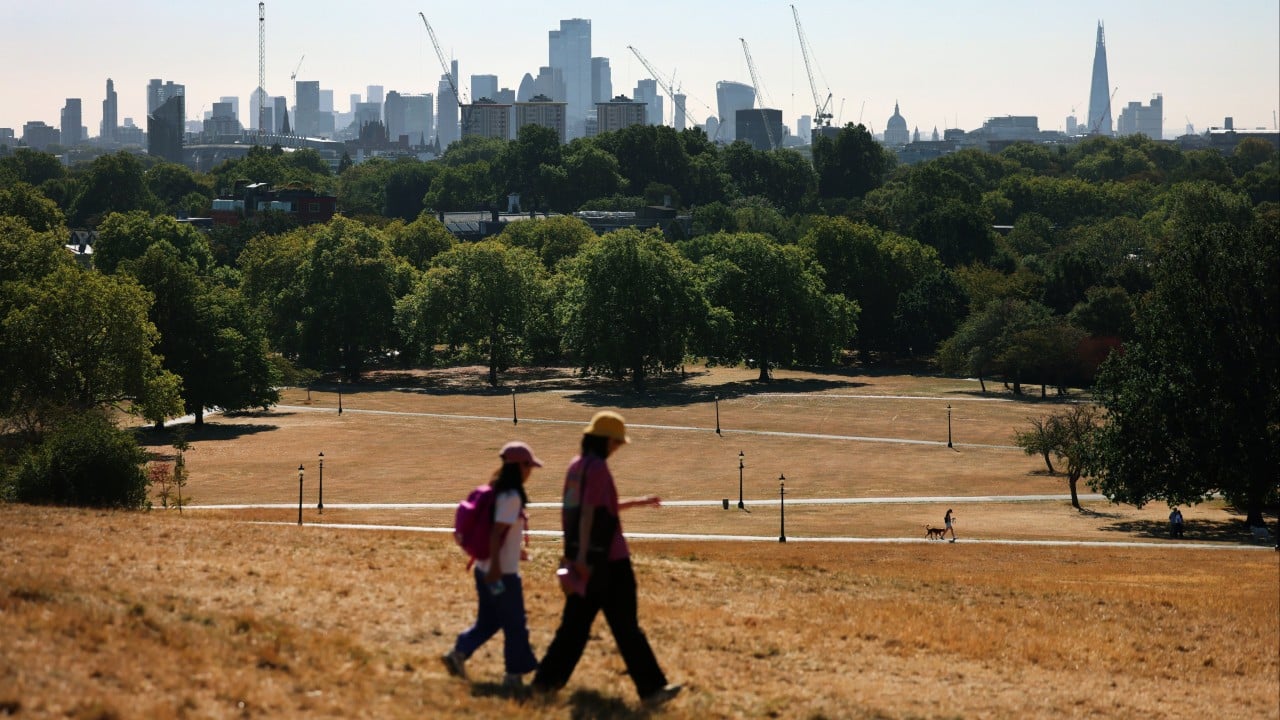
Every time the thermometer ticks past thirty degrees in southern England, the property pages fill with panic. The narrative writes itself. Heatwaves bake the clay beneath our feet, the ground shrinks, London houses crack down their stucco fronts, and homeowners reach for insurance brokers while cursing global heating. Insurance payouts hit record highs, surveyors nod gravely, and the media runs stock footage of parched lawns next to fractured Victorian bay windows.
It is a comforting script because it treats structural failure as an act of God. It places the blame squarely on the skies.
That narrative is entirely wrong.
I have spent twenty years watching developers, local councils, and heritage purists repeat the same structural malpractice, then hide behind the weather when the bill comes due. London ground does not move because the summer was warm. London ground moves because we built a city on shrink-swell London Clay, planted thirsty exotic trees on postage-stamp plots, and spent a century ignoring basic soil mechanics. Weather is just the trigger. Poor construction and municipal neglect are the bullet.
The Myth of the Unstoppable Clay
Let us start with the soil. London Clay is famous among geologists for one primary property: it hates consistency. It is a highly plastic, over-consolidated Eocenic deposit that expands when wet and shrinks when dry. When summer arrives and evapotranspiration outstrips rainfall, the moisture leaves the upper layers of the soil profile, and the clay contracts.
Insurance companies love this explanation because it sounds like a force majeure event. But shrink-swell behavior is not a surprise discovery made last Tuesday. Engineers have mapped London Clay since the nineteenth century. We knew it was there when the Victorians laid down miles of terraced housing. We knew how it behaved when post-war planners dropped commercial blocks across zone one and zone two.
Yet, year after year, property owners act surprised when a dry July leaves a hairline fracture above a lintel. The lazy consensus says that extreme weather caused the movement. The reality is that the foundation depth was inadequate for the soil type from day one, or subsequent alterations ruined the sub-surface moisture equilibrium.
When a foundation sits at a standard shallow depth of one meter in shrink-swell clay, you are inviting seasonal movement. It is not climate change destroying your Edwardian semi; it is the fact that shallow footings on high-plasticity clay in a drying climate are an engineering anachronism. Blaming the heatwave is a cheap excuse for refusing to modernize foundation engineering standards across the capital.
The Green Enemy in Your Backyard
If weather is only half the story, what drives the rest of the destruction? Look no further than the obsession with urban forestry.
For the past three decades, local authorities and well-meaning environmental groups have pushed hard to urbanize our streets with trees. Every borough wants a greener canopy. Planners mandate mature planting schemes around new builds. Homeowners plant fast-growing oaks, poplars, and limes inches from property boundaries to block out the neighbors.
Trees are biological pumps. A mature broadleaf tree can draw hundreds of gallons of water out of the soil every single day during peak growing season. When you plant thirsty trees into shrink-swell clay right next to shallow foundations, you create localized drought zones underground long before the weather forecaster mentions a heatwave.
Insurance loss adjusters know this, yet they keep writing policies that treat tree roots as an unpreventable hazard rather than a design variable. I have seen million-pound developments where landscape architects planted high-water-demand species within three meters of clay-embedded strip footings. Five years later, the corner of the building drops four centimeters. The owners blame August. I blame the landscape architect who skipped basic hydrology class.
If you want to stop subsidence claims in London, you have to stop planting water-guzzling trees next to structural masonry, or you have to underpin foundations to depths where seasonal moisture fluctuations cease to matter. You cannot have both a thirsty forest and a shallow foundation on London Clay. Physics refuses to compromise.
Why Underpinning Is a Band-Aid Market
When a property cracks, the standard playbook kicks in. An engineer comes out, installs crack monitors, takes a few soil samples, and declares that underpinning is required. Concrete is poured deep into the earth. The homeowner pays fifty grand, crosses their fingers, and hopes the movement stops.
Often, it does not. Or worse, it creates a new problem elsewhere on the structure.
Underpinning is treated as the gold standard of subsidence repair. In reality, it is often an admission of defeat that fails to address the root cause of ground movement. If you underpin a building without addressing the moisture dynamics around it—such as leaky drains washing away fines, or aggressive tree roots desiccating the clay on one side—you are just anchoring one corner while the rest of the structure adjusts to the differential stiffness.
We have built an entire remediation industry around treating symptoms while ignoring systemic design flaws. Subsidence claims are profitable. They keep loss adjusters, geotechnical contractors, and specialist lawyers busy. There is very little commercial incentive for the insurance sector to fund preventative retrofits when they can just hike premiums across the board every time a dry summer hits the headlines.
What Real Property Resilience Looks Like
If we want to break the cycle of record insurance payouts every time the temperature climbs, we have to change how we build, buy, and insure property in the UK.
Stop accepting shallow foundations on reactive soils as standard practice. If you are building or extending on London Clay, screw piles or deep bored piles should be the baseline requirement, not a luxury upgrade for commercial high-rises.
Manage your sub-surface moisture. If you own a Victorian or Edwardian property, inspect your drainage runs annually. A leaking earthenware pipe doesn't just waste water; it washes away the fine particles of the clay sub-grade, causing localized collapse that mimics drought-induced shrinkage.
Audit your vegetation. If you have large trees within influencing distance of your foundations, do not wait for a crack to appear. Install root barriers or manage the canopy through structured pollarding. It sounds brutal to tree traditionalists, but a pruned tree drinks less water, and a managed tree protects your equity.
The next time a headline screams about London homes cracking under the pressure of a record heatwave, remember what is actually happening beneath the pavement. The weather isn't breaking our houses. Our refusal to engineer for the soil we live on is.
Stop blaming the sun. Fix your footings.