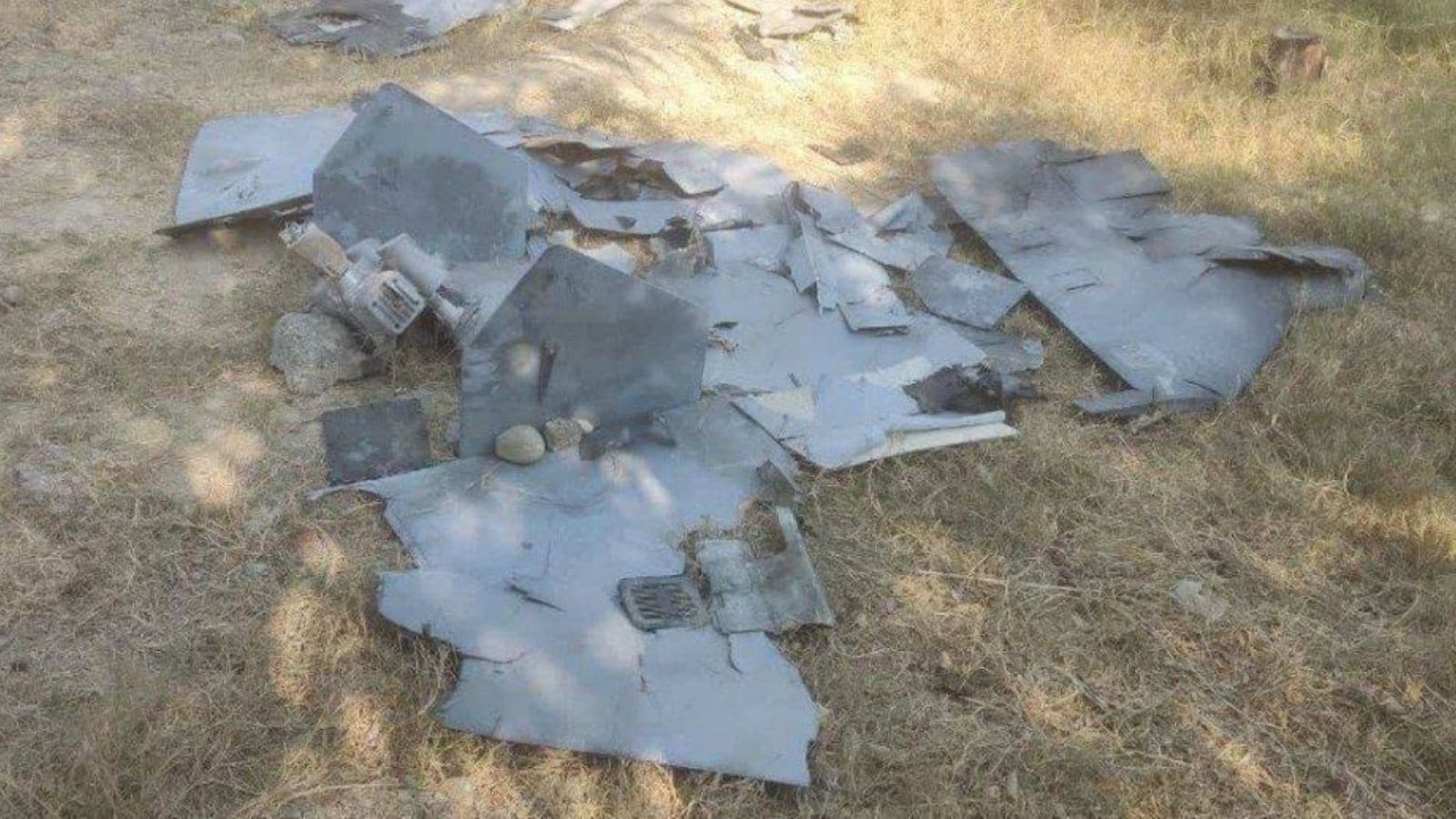
Military operations on Qeshm Island carry a weight far disproportionate to the physical damage of a localized kinetic strike. When reports emerge of limited United States military action against targets on Iran's largest island in the Strait of Hormuz, the immediate tactical objective is rarely the destruction of concrete or hardware alone. Instead, such strikes represent a calculated, high-stakes message delivered directly to the geographic throat of global energy transit.
The premise of a "limited" strike in the Persian Gulf has always been an exercise in strategic brinkmanship. Situated just off the southern coast of mainland Iran, Qeshm Island stretches roughly 135 kilometers along the northern edge of the Strait of Hormuz. At its narrowest point, the shipping lane separating Qeshm and neighboring Hengam Island from Oman's Musandam Peninsula shrinks to a mere 21 nautical miles. Any military friction here instantly threatens the passage of roughly one-fifth of the world's petroleum liquids consumption. For a deeper dive into this area, we recommend: this related article.
To understand why Qeshm Island sits at the center of military planning, one must look past the surface-level headlines of tit-for-tat escalation and examine the island's physical and operational architecture.
The Geography of Chokepoint Leverage
Qeshm is not a barren rock outcropping. It is a sprawling, rugged landmass home to over 150,000 residents, a designated free trade zone, critical desalination infrastructure, and a dense network of Islamic Revolutionary Guard Corps (IRGC) naval facilities. Over the past two decades, Tehran has systematically transformed the island into an unsinkable aircraft carrier and a subterranean fortress designed to enforce anti-access and area denial (A2/AD) strategies. For broader context on this issue, detailed reporting is available at NPR.
The terrain itself favors the defender. Limestones, salt domes, and coastal ridges provide natural overhead cover for mobile missile batteries and hardened command bunkers. Unlike fixed surface airbases on the mainland, which can be mapped by commercial satellites years in advance, mobile coastal defense cruise missile (CDCM) launchers on Qeshm can emerge from concealed tunnels, fire within minutes, and relocate before counter-battery sensors lock onto their launch signatures.
When Washington authorizes limited strikes on such an environment, target selection becomes an agonizing exercise in calibration. Hit too lightly, and the strike fails to degrade actual launch capacity, handing Tehran a propaganda victory. Hit too broadly, and collateral damage to civilian desalination plants or commercial port facilities risks unifying domestic Iranian sentiment while triggering an immediate, uncontrolled closure of the maritime corridor.
The Architecture of Asymmetric Sea Denial
For decades, naval analysts have tracked how Iran compensates for its lack of a modern blue-water surface fleet. Rather than contesting the United States Navy in open-ocean engagements, the IRGC Navy built a doctrine tailored specifically to the shallow, congested waters around Qeshm.
- Fast Attack Craft and Swarm Tactics: Small, heavily armed speedboats dispersed among Qeshm's mangrove forests and rocky coves are designed to overwhelm the defensive radars of larger warships through sheer numerical saturation.
- Coastal Defense Cruise Missiles: Systems such as the Noor, Qader, and Abu Mahdi variants give shore-based units the reach to strike vessels anywhere in the Gulf of Oman and the northern Arabian Sea.
- Naval Mines and Unmanned Systems: Subsurface mines, unmanned explosive surface vessels, and long-range reconnaissance drones operate seamlessly from the island's southern shoreline, creating a multi-layered sensor and strike web.
A limited strike targets the connective tissue of this network. Radar installations, drone assembly warehouses, hardened munitions depots, and satellite communication nodes represent the eyes and ears of the coastal defense grid. Blinding those sensors degrades the IRGC's ability to coordinate complex attacks without necessarily requiring a massive amphibious or sustained bombing campaign.
Decoding the Anatomy of a Limited Strike
The phrase "limited strike" often obscures more than it reveals. In modern military doctrine, a limited operation is defined not just by the tonnage of ordnance dropped, but by strict political boundaries placed on target sets, weapon delivery platforms, and operational duration.
In the context of Qeshm Island, executing a bounded operation requires overcoming some of the densest air defenses in the Middle East. Tehran has layered its southern coastline with indigenous surface-to-air missile systems—including the Bavar-373, Khordad-15, and Sevom Khordad—integrated with Russian-supplied Tor-M1 short-range point defense units. These batteries are specifically positioned to protect high-value assets along the Strait of Hormuz.
Penetrating that envelope without risking downed aircrew dictates the choice of weapons. Standoff munitions, such as Tomahawk land-attack cruise missiles launched from surface combatants or submarines, or Joint Air-to-Surface Standoff Missiles (JASSM) released well outside Iranian radar horizons, allow planners to strike fixed coordinates with high precision. Stealth platforms offer another avenue, capable of slipping past early warning radars to deliver bunker-busting penetrators against subterranean storage facilities.
Yet precision weaponry cannot solve a fundamental strategic dilemma. Deterrence relies on convincing an adversary that the cost of continued aggression exceeds any potential gain. When strikes are explicitly telegraphed or visibly restrained to avoid wider war, they can inadvertently signal risk aversion.
Consider a hypothetical scenario to illustrate this escalation trap. Suppose a regional proxy launches a coordinated drone barrage against commercial shipping, prompting Washington to respond by destroying three unoccupied radar stations and a logistics warehouse on Qeshm at 3:00 AM to minimize casualties. From the Pentagon's perspective, the strike demonstrates reach, precision, and restraint. From Tehran's perspective, the preservation of its core missile brigades and leadership infrastructure proves that the adversary is unwilling to absorb the economic shock of a full-scale conflict. Consequently, the underlying behavior rarely stops; it merely shifts to a different theater or a lower intensity.
The Energy Market Blind Spot
Financial markets frequently misprice the initial hours of military friction in the Persian Gulf. Algorithmic trading desks tend to react instantaneously to keywords involving Qeshm Island or the Strait of Hormuz, driving sudden spikes in Brent crude futures and war-risk maritime insurance premiums. Once reports clarify that the strikes were "limited" and oil tankers continue transiting the channel, prices often retreat just as quickly.
That complacency ignores how modern maritime disruption actually functions. Tehran does not need to physically sink a supertanker to halt global energy flows.
Modern global shipping runs on actuarial math, not naval heroics. Lloyds of London and major maritime insurers dictate whether a vessel enters a conflict zone. If limited strikes on Qeshm trigger even minor retaliatory harassment—such as the seizure of a single merchant vessel, limpet mine damage to a hull, or GPS spoofing that forces tankers toward Iranian territorial waters—insurance premiums spike to prohibitive levels. Shipowners simply drop anchor outside the Gulf of Oman and wait.
Secondary Economic Shockwaves
Beyond crude oil, the Strait of Hormuz is the primary export artery for liquefied natural gas (LNG) from Qatar, which accounts for roughly 20 percent of global LNG trade. Unlike crude oil, which has limited alternative pipeline routes bypassing the strait via Saudi Arabia and the United Arab Emirates, Qatari LNG has no overland escape valve. Every single cargo must pass within sight of Qeshm Island.
A sustained military exchange around the island introduces immediate supply chain paralysis across European and Asian industrial sectors. Furthermore, Qeshm's proximity to major regional transshipment hubs like Dubai's Jebel Ali port means that heightened military alert statuses disrupt container shipping, aviation corridors, and regional desalination security. Gulf Arab states rely heavily on coastal desalination plants for potable water; kinetic conflict in the narrow waters between Qeshm and the Arabian Peninsula places critical civilian survival infrastructure directly in the crossfire.
The Intelligence and Attribution Fog
Whenever reports surface regarding limited strikes on sensitive Iranian territory, a predictable information war immediately follows. Understanding what actually happened on the ground requires filtering out three distinct layers of distortion.
First is operational secrecy from Washington. Defense officials routinely withhold battle damage assessments (BDA) for days or weeks to protect intelligence collection methods and preserve diplomatic off-ramps. By refusing to confirm or detail specific targets, planners give Tehran the political space to downplay the incident domestically, reducing the pressure on Iranian leaders to launch a face-saving retaliation.
Second is Tehran's historical pattern of narrative management. Iranian state media almost invariably frames external strikes either as minor incidents repelled by domestic air defenses or as unattributed industrial accidents. Acknowledging that foreign munitions penetrated the air defenses of Qeshm Island undermines the central pillar of the Islamic Republic's deterrent posture: the image of an impenetrable southern bastion.
Third is the proliferation of unverified open-source intelligence. Social media platforms routinely flood with recycled footage from past exercises, unrelated fires at mainland refineries, or misidentified satellite anomalies within minutes of breaking news. Separating genuine kinetic impacts from background noise requires waiting for high-resolution commercial synthetic aperture radar (SAR) imagery capable of seeing through cloud cover and smoke to verify structural collapse.
Historical Precedents and the Limits of Calibration
History offers sobering lessons about the illusion of controlled escalation in the Persian Gulf. During the Tanker War of the 1980s, culminating in Operation Praying Mantis in April 1988, the United States executed tightly scoped retaliatory strikes against Iranian oil platforms and naval vessels after a US warship struck an Iranian mine.
While Praying Mantis succeeded in crippling a substantial portion of Iran's conventional navy within a single day, the strategic environment of 1988 bears little resemblance to the reality of the mid-2020s. Back then, Iran was exhausted by an eight-year ground war with Iraq, lacked long-range precision ballistic missiles, possessed no drone swarms, and had no regional network of heavily armed partner militias capable of striking targets from the Red Sea to the Levant.
Today, any kinetic action on Qeshm Island occurs inside an interconnected regional ecosystem. Tehran's doctrine of "forward defense" explicitly links the security of its domestic coastline to external pressure points. Strikes on Qeshm do not necessarily provoke an immediate counter-strike from Qeshm itself; they just as easily manifest days later as heightened maritime interdictions in the Bab el-Mandeb Strait, rocket fire against bases in Iraq and Syria, or cyber operations targeting critical infrastructure thousands of miles away.
The Strategic Paradox Moving Forward
The reliance on limited strikes reflects a deeper structural impasse in Washington's approach to Gulf security. Full-scale military confrontation carries unacceptable human, economic, and geopolitical costs, particularly when global supply chains remain fragile and strategic attention is divided across multiple global theaters. Yet complete inaction invites relentless boundary-pushing that erodes regional alliances and threatens freedom of navigation.
Limited strikes on Qeshm Island occupy the narrow, treacherous middle ground between those two extremes. They function as a violent form of diplomatic signaling—a way to impose tangible costs on military infrastructure while attempting to keep the conflict below the threshold of total war.
The danger lies in mistaking a tactical pause for a strategic resolution. Concrete bunkers can be repoured, radar arrays can be replaced from underground reserves, and mobile launchers can be dispersed deeper into the jagged terrain of southern Iran. Every limited strike tests the exact threshold where calibrated deterrence collapses into miscalculation, leaving the world's most vital energy chokepoint balanced on a razor's edge.