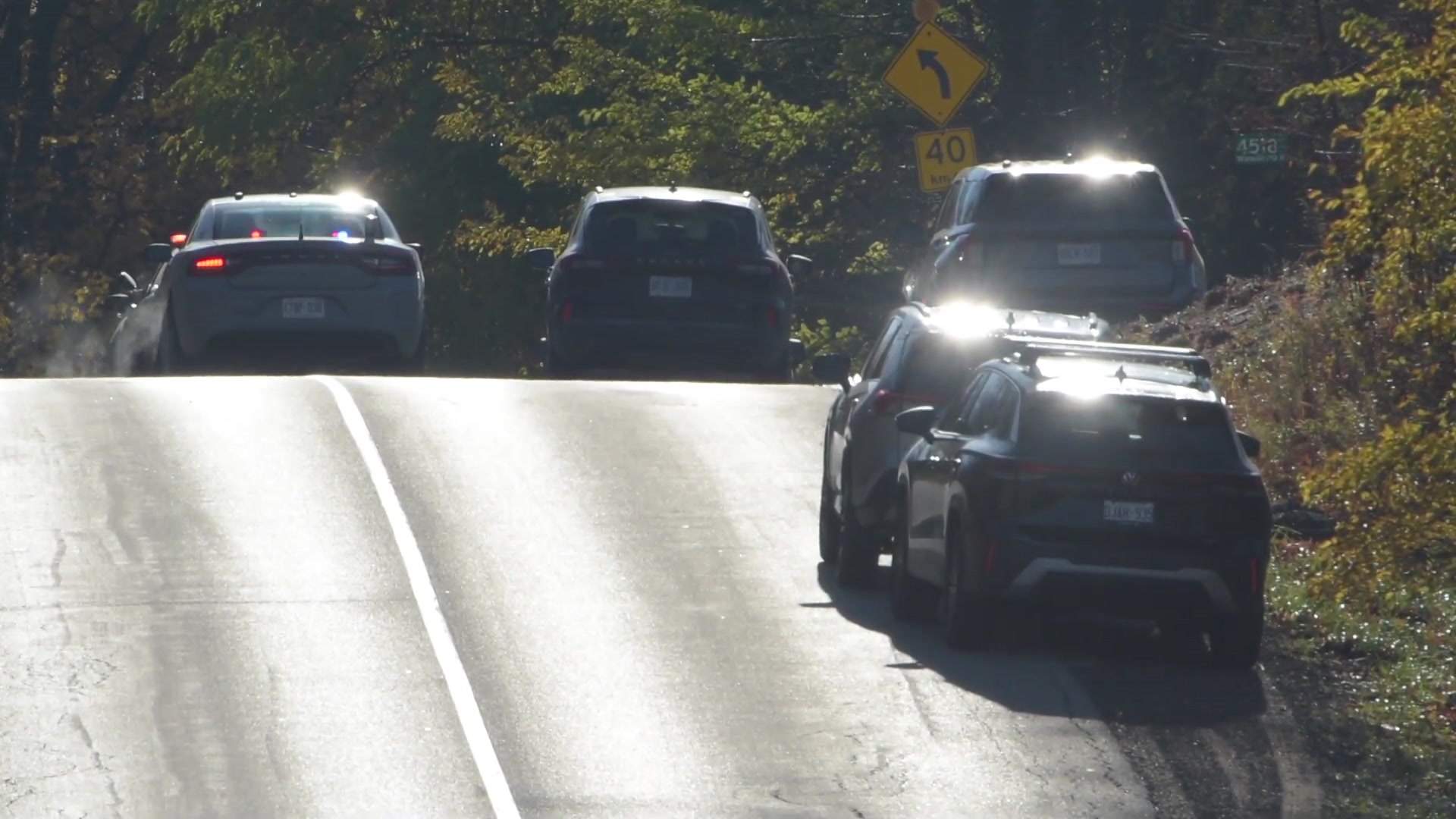
A catastrophic multi-vehicle collision just outside Guelph, Ontario, claimed four lives and left two others fighting for theirs, exposing a persistent and deadly vulnerability along Wellington County’s rural commuter corridors. While initial police reports focus on immediate crash reconstruction and road closures, the deeper story lies in the lethal intersection of high-speed rural highways, heavy commercial freight, and a regional infrastructure struggling to absorb explosive population growth across the Greater Golden Horseshoe.
Breaking news coverage of fatal crashes almost always follows a predictable, sanitized script. A stretch of asphalt is taped off. Emergency crews spend hours extracting victims from twisted metal. Investigators release a brief statement confirming the death toll before moving on to the next incident. That cycle obscures the systemic failures turning ordinary Tuesday commutes into mass-casualty events. Also making headlines in related news: Why Gaza Was Never Really on the Ballot in Israel's Election.
Anatomy of a Rural Corridor Crisis
The stretch of highway surrounding Guelph sits at a geographical choke point. It serves as a primary artery connecting the agricultural heartland of Southwestern Ontario with the dense urban sprawl of the Greater Toronto Area. Every morning and evening, thousands of passenger vehicles share undivided, two-lane provincial and county roads with massive transport trucks hauling goods between Highway 401 and northern industrial hubs.
Physics does not negotiate on these roads. When a 40,000-kilogram tractor-trailer meets a 1,500-kilogram passenger sedan at a combined closing speed exceeding 180 kilometers per hour, the outcome is mathematically predetermined. Modern crumple zones and side-curtain airbags are engineered to protect occupants in standardized crash tests, typically conducted at moderate speeds against deformable barriers. They are functionally useless against the sheer kinetic energy of a high-speed, head-on, or T-bone impact on a rural highway. Further information on this are explored by The Guardian.
Investigators looking at collisions in the Guelph area consistently examine three primary triggers. Distraction remains the silent killer, often manifesting as a two-second glance at a smartphone that translates into 50 meters of blind travel. Speed variance comes second, occurring when impatient commuters attempt risky passing maneuvers around slower farm equipment or fully loaded freight haulers. Finally, environmental factors—ranging from sudden lake-effect snow squalls to dense morning fog rolling off the Speed and Eramosa rivers—can erase visibility in seconds.
The Infrastructure Deficit in Wellington County
To understand why these crashes keep happening near Guelph, you have to look at urban planning decisions made twenty years ago. Guelph and the surrounding townships of Puslinch, Guelph/Eramosa, and Centre Wellington have experienced relentless residential expansion. Thousands of workers priced out of Toronto and Mississauga have migrated west, transforming quiet farming communities into bedroom suburbs.
The roads did not grow with the population. Many of the arterial routes feeding into and around Guelph—such as Highway 6, Highway 7, and Wellington Road 124—retain the basic geometric footprint of mid-20th-century rural highways. They feature narrow shoulders, deep drainage ditches, and minimal physical separation between opposing lanes of traffic.
Adding center-line rumble strips and lowering speed limits by 10 kilometers per hour are the standard bureaucratic responses to a spike in fatalities. Those measures are cheap. They look good in a municipal press release. Yet, traffic safety engineers know that paint and grooved asphalt cannot stop a drifting vehicle once a driver loses consciousness, hits black ice, or suffers a tire blowout.
The Missing Median Barrier
In countries with aggressive road safety mandates, such as Sweden’s Vision Zero program, high-speed undivided highways are systematically retrofitted with high-tension cable barriers or concrete medians. These physical dividers make head-on collisions virtually impossible. In Ontario, outside of the 400-series highways, physical median separation remains the exception rather than the rule.
Cost is the perennial excuse. Widening a rural highway to accommodate a central barrier requires purchasing adjacent farmland, relocating utilities, and rebuilding bridges. Provincial budgets inevitably prioritize high-visibility transit projects in downtown Toronto over the unglamorous work of widening two-lane highways in Wellington County. As a result, drivers are left relying entirely on the thin yellow line of paint separating them from oncoming traffic.
The Commercial Trucking Pressure Cooker
Any honest analysis of highway fatalities around Guelph must confront the realities of the modern supply chain. The region is a logistical hub, surrounded by distribution centers, manufacturing plants, and aggregate quarries. Gravel trucks and long-haul transports are a constant presence on local roads.
The trucking industry is operating under immense financial strain. Thin profit margins, driver shortages, and strict just-in-time delivery schedules create an environment where fatigue and corner-cutting become chronic hazards. While electronic logging devices have curbed the worst abuses of hours-of-service regulations, they cannot measure the quality of a driver's sleep or eliminate the pressure to push through deteriorating weather conditions to make a delivery window.
Furthermore, driver training standards have come under intense scrutiny across Ontario. Following high-profile tragedies, investigations have repeatedly uncovered gaps in how commercial licenses are issued and monitored. Putting an inexperienced operator behind the wheel of a multi-axle rig on an icy, undivided county road is a gamble with public safety. Even when the commercial driver is entirely blameless—which is frequently the case when a passenger car crosses the center line—the sheer mass of the truck magnifies the severity of the collision.
What Happens During a Major Collision Investigation
When four people die in a single crash near Guelph, the Ontario Provincial Police (OPP) deploy their Technical Collision Investigation (TCI) unit. This is not a quick process, which is why major highways often remain closed for eight to twelve hours following a fatal wreck, triggering widespread frustration among stranded commuters.
The forensic work required is exhaustive. Investigators treat the asphalt like a homicide scene because criminal charges, such as dangerous driving causing death or impaired operation, often hinge on millimeter-level measurements.
- Photogrammetry and Laser Scanning
Modern crash reconstructionists use terrestrial laser scanners to create a three-dimensional point cloud of the entire scene. This captures the exact resting positions of the vehicles, gouge marks in the pavement, and debris fields before a single tow truck is allowed near the wreckage. - Event Data Recorder Extraction
Nearly every modern passenger vehicle and commercial truck contains an Event Data Recorder, commonly known as a black box. Investigators extract this data to determine vehicle speed, throttle position, brake application, and steering input in the five seconds leading up to impact. - Mechanical Inspections
Heavy trucks and passenger cars are impounded and stripped down to check for catastrophic mechanical failures, such as severed brake lines, bald tires, or faulty steering linkages, which might shift liability from the driver to a maintenance facility. - Toxicology and Digital Forensics
Coroners conduct mandatory toxicology screenings to rule out alcohol, cannabis, or prescription drug impairment. Simultaneously, investigators routinely obtain warrants to examine the cellular phone records of surviving and deceased drivers to establish whether a screen was active at the moment of impact.
The Human Toll Beyond the Headlines
The statistics released at the end of the year by provincial police reduce human beings to sterile data points. Four dead. Two injured. A percentage increase over the previous year. Those numbers fail to capture the permanent devastation radiating outward from a single afternoon crash.
In a mid-sized community like Guelph, a quadruple fatality does not stay anonymous for long. First responders—many of them local firefighters and paramedics—often discover they know the victims, or share mutual connections through local schools, sports leagues, and workplaces. The psychological trauma inflicted on emergency personnel cutting four deceased individuals out of crushed vehicles lingers for years, fueling high rates of post-traumatic stress injury across municipal services.
For the two survivors pulled from the wreckage, survival is rarely a clean victory. High-speed trauma typically involves severe orthopedic fractures, traumatic brain injuries, and internal organ damage. Recovery stretches across years of surgeries, grueling physical rehabilitation, and permanent disability, all while grieving the loss of family members or friends who were sitting inches away when the impact occurred.
Why Public Outrage Evaporates
Every fatal crash in Wellington County sparks a brief flare-up of anger on local social media forums. Residents demand immediate action. They call for lower speed limits, increased police patrols, and highway widening. Within seventy-two hours, the news cycle moves on, the detour signs come down, and traffic returns to its usual aggressive pace.
This collective amnesia is the biggest obstacle to meaningful road safety reform. Commuters routinely complain about police speed traps, viewing traffic enforcement as a municipal cash grab rather than a life-saving intervention. Yet, the same drivers demand accountability whenever a reckless motorist wipes out an entire family on a country road.
Automated speed enforcement and red-light cameras offer a proven, data-backed method for modifying driver behavior without requiring a massive expansion of police manpower. However, political pushback frequently restricts these cameras to school zones, leaving high-speed rural corridors largely unmonitored outside of sporadic OPP blitzes.
The Counter-Argument on Infrastructure Spending
Defenders of the current transportation budget point out that Ontario maintains tens of thousands of kilometers of highway, and the cost of twinning every high-volume rural road would run into the tens of billions of dollars. They argue that engineering cannot fix human stupidity. If a driver chooses to pass on a blind hill, drive while impaired, or stare at a text message at 100 kilometers per hour, no amount of asphalt widening will save them.
There is truth in that assessment. Personal responsibility remains the foundational element of road safety. However, a mature transportation system does not rely on the perfection of its users. People make mistakes. They misjudge distances, get distracted by crying children in the backseat, or suffer sudden medical emergencies behind the wheel.
The core philosophy of modern highway engineering is forgiveness. A forgiving road ensures that a momentary lapse in judgment results in a damaged guardrail and a bruised ego, rather than four body bags on the side of the highway. Until provincial and municipal leaders commit the capital required to build forgiving infrastructure around rapidly growing hubs like Guelph, the sirens will keep wailing.