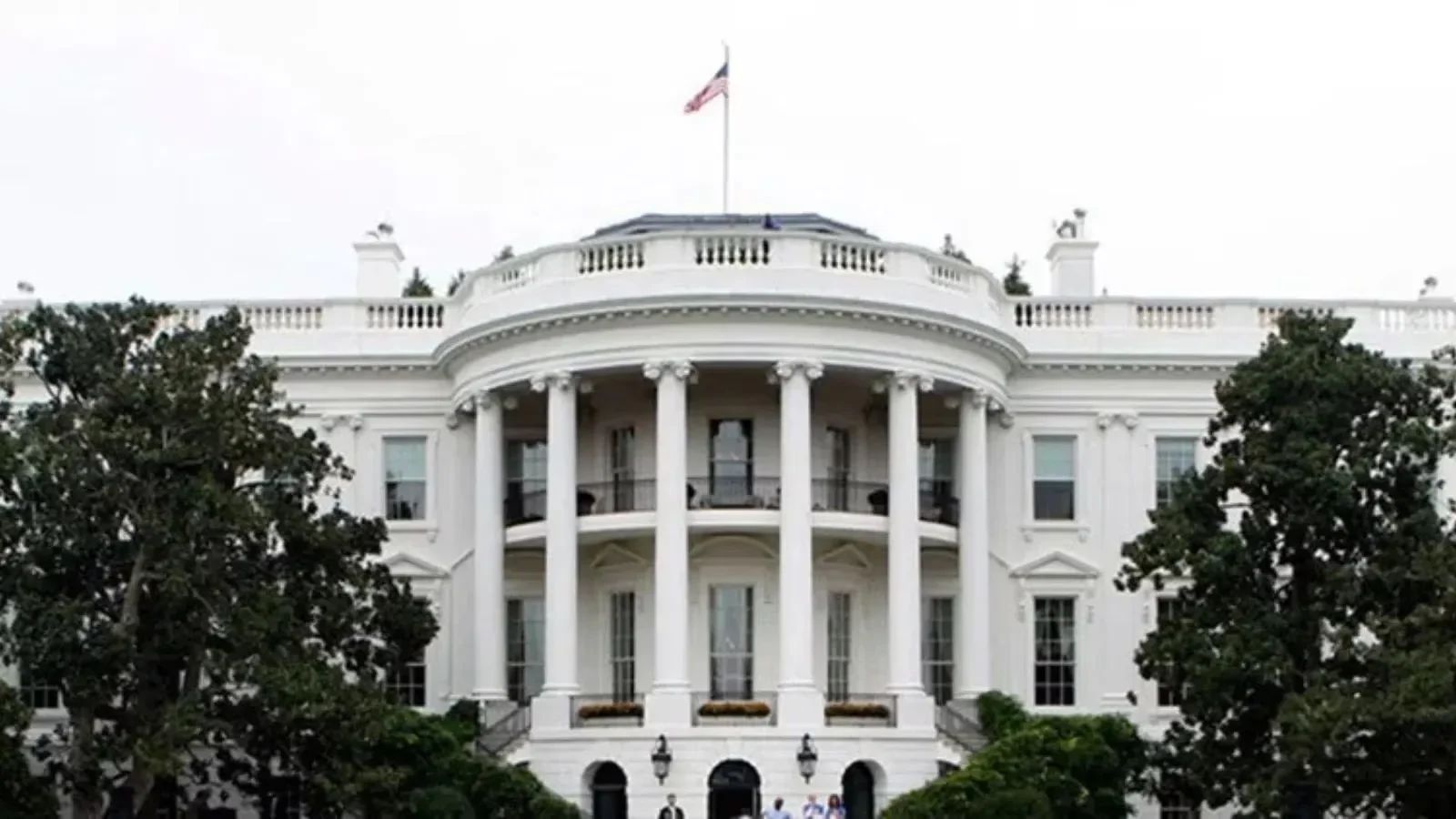
A shift in House control from unified party alignment to opposition majority converts the presidency from a legislative engine into a defensive administrative apparatus. When a Democratic majority captures the House of Representatives midway through a Trump presidential term—whether referencing the historical precedent of the 2018 midterm cycle or the structural mechanics of the 2026 midterm transition—the immediate operational reality is the termination of unilateral domestic lawmaking and the activation of constitutional oversight mechanisms. Standard political commentary frames this shift as a vague period of "gridlock" or "harder days." That framing obscures the precise institutional levers that change hands. Governing under divided control operates through three distinct structural bottlenecks: statutory origination, fiscal appropriation, and oversight subpoena power.
The Architecture of Legislative Asymmetry
In the United States bicameral system, passing primary legislation requires concurrent majorities in the House of Representatives, the Senate, and presidential signature—or a two-thirds supermajority in both chambers to override a veto. When the opposition party secures a simple majority in the House, the legislative production function drops to near zero for partisan priorities.
The House Speaker controls the floor calendar, committee assignments, and the Rules Committee. Unlike the Senate, where individual members wield substantial procedural delay tactics through the filibuster, the House operates as a strict majoritarian institution. An opposition Speaker exercises an absolute gatekeeping veto over what reaches the floor.
- Statutory Termination: Any administration priority requiring new statutory authority—such as sweeping tax code revisions, entitlement restructuring, or statutory immigration overhauls—becomes mathematically non-viable unless it attracts significant bipartisan consensus.
- The Discharge Petition Threshold: Bypassing leadership requires 218 signatures on a discharge petition. In polarized environments, defections from the majority caucus on core ideological bills rarely exceed single digits, rendering the discharge mechanism largely theoretical for administration priorities.
- Messaging Legislation Asymmetry: While the opposition House cannot enact its own partisan agenda over a Senate blockade or a presidential veto, it controls the national policy framing by passing messaging bills that force Senate incumbents and the White House into defensive veto postures.
This dynamic alters the executive branch's strategic calculus. Without a compliant lower chamber to ratify policy shifts into permanent law, the White House must pivot entirely toward executive orders, regulatory rule-making under the Administrative Procedure Act, and unilateral foreign policy authorities.
The Fiscal Chokepoint and Appropriations Leverage
Article I, Section 7 of the Constitution mandates that all bills for raising revenue originate in the House of Representatives. By custom and institutional precedent, general appropriations bills follow the same origination path. Control of the House Appropriations Committee gives the opposition majority direct leverage over the operational funding of executive branch agencies.
Standard reporting treats government funding battles as theatrical brinkmanship. Operationally, they represent a zero-sum negotiation over administrative capacity. An opposition House utilizes three specific fiscal mechanisms to constrain executive execution:
- Appropriations Riders: The House can attach policy riders to must-pass spending bills that explicitly prohibit the expenditure of federal funds to enforce specific executive orders or regulatory initiatives. Even if the Senate strips these riders during conference negotiations, their inclusion forces the administration to expend political capital and concede priorities elsewhere to secure clean funding.
- Agency-Specific Disaggregation: Rather than passing omnibus spending packages that bundle popular defense spending with contested domestic cuts, an opposition House can pass disaggregated appropriations bills that starve specific regulatory or enforcement divisions while funding core constituent programs.
- Debt Ceiling and Continuing Resolutions: When statutory debt limits or fiscal year deadlines expire, the administration faces an asymmetric risk profile. Because a sovereign default or prolonged federal shutdown inflicts immediate macroeconomic damage, the sitting president absorbs disproportionate blame from financial markets and voters, granting the House majority structural leverage to extract policy concessions in exchange for baseline fiscal continuity.
The limitation of this strategy lies in mutual assured destruction. If the opposition House overplays its fiscal hand and triggers a prolonged shutdown perceived by the electorate as partisan obstruction, public pressure shifts rapidly toward the chamber demanding riders rather than the executive demanding clean funding.
Oversight Subpoena Power and Administrative Friction
The most immediate operational shock to an administration following a House flip is the transfer of committee chairmanships. Under House rules, standing committees—most notably Oversight and Accountability, Judiciary, Ways and Means, and Intelligence—possess broad authority to investigate executive branch operations, compel document production, and issue subpoenas for witness testimony.
During unified government, committee chairs act as institutional shields, declining to investigate executive missteps and focusing oversight on external targets. Under divided control, those same committees convert into continuous investigative engines.
This creates a severe resource-allocation penalty inside the executive branch. Senior cabinet officials, agency general counsels, and White House legal teams must divert substantial bandwidth from policy implementation to document review, privilege assertions, and hearing preparation.
The friction manifests across three operational tiers:
- Information Asymmetry Reduction: Through compulsory process, committees gain access to internal agency communications, deliberative memos, and financial records previously shielded from public scrutiny. Even when the White House invokes executive privilege, the resulting judicial battles tie up Department of Justice resources for months or years.
- The Perjury and Contempt Trap: Compelling mid-level bureaucrats and political appointees to testify under oath creates acute legal exposure. Discrepancies between public statements and internal records become immediate catalysts for criminal referrals or contempt of Congress citations.
- Rule-Making Delay: Publicized oversight hearings expose procedural flaws in proposed federal regulations, providing outside interest groups with the evidentiary record needed to challenge administration rules in federal court under the arbitrary-and-capricious standard.
The Executive Pivot: Unilateralism and Judicial Reliance
Faced with a hostile House, a second-half presidency historically retreats to two domains where the House holds minimal direct authority: the regulatory state and the federal judiciary.
First, the administration accelerates rule-making through existing statutory delegations. Agencies reinterpret broad terms within legacy statutes—such as the Clean Air Act, the Immigration and Nationality Act, or the Defense Production Act—to achieve policy outcomes without new congressional authorization. However, this approach suffers from low durability. Rules promulgated via executive action lack statutory permanence; a subsequent administration can rescind them through the same administrative process, and federal courts increasingly scrutinize aggressive statutory interpretations following the curtailment of judicial deference doctrines.
Second, the White House doubles down on Senate-only powers, primarily judicial and executive confirmations. Because the House plays zero constitutional role in the advice-and-consent process under Article II, Section 2, a president who retains a friendly Senate majority can continue reshaping the federal appellate and district courts uninterrupted. This creates a structural divergence: while the legislative branch locks into stalemate, the judicial branch continues to shift ideologically, locking in long-term legal frameworks that constrain future Democratic administrations.
Strategic Constraints on the Opposition Majority
A House majority does not grant omnipotence. An opposition caucus operating against a sitting president and a potentially divided or hostile Senate faces rigid structural boundaries that limit its offensive reach.
- The Veto Override Barrier: Without a two-thirds supermajority in both chambers—a threshold virtually unattainable in modern polarized politics—the House cannot force legislation into law over presidential objection. Every bill passed by the House is an opening bid in a negotiation, not a final enactment.
- Caucus Cohesion Costs: Narrow House majorities amplify the bargaining power of ideological factions within the winning party. Leadership must constantly manage internal dissent between swing-district moderates, who risk electoral defeat if perceived as overly partisan, and safe-seat progressives, who demand aggressive confrontation and impeachment inquiries.
- Overreach Blowback: Historically, opposition majorities that prioritize punitive investigations over tangible economic messaging suffer diminishing returns with independent voters. When oversight appears purely retributive rather than corrective, it consolidates the president's base and fractures the opposition's swing-district coalition ahead of the subsequent presidential cycle.
Operational Execution Under Divided Government
To navigate the remaining two years of a presidential term under an opposition House, executive strategists must abandon legislative ambition and execute a strict defensive-unilateral posture. The administration must front-load all remaining regulatory rules before the Congressional Review Act lookback window closes, isolate judicial confirmations from legislative horse-trading, and consolidate legal defense operations inside the White House Counsel's office to centralize responses to committee subpoenas. Simultaneously, the opposition House must avoid fracturing its narrow majority on symbolic floor votes that fail in the Senate, concentrating its finite institutional capital on targeted appropriations riders and high-salience oversight that directly impacts swing-district economic concerns.


