Morning on the water smells of salt, rusted iron, and wet timber.
For a hundred years, before the concrete bridges arrived to stitch the fragmented islands of Hong Kong together with modern efficiency, there was only the muscle. There was only the human grip, tightened around a greasy steel cable suspended above the tidal currents of Tai O.
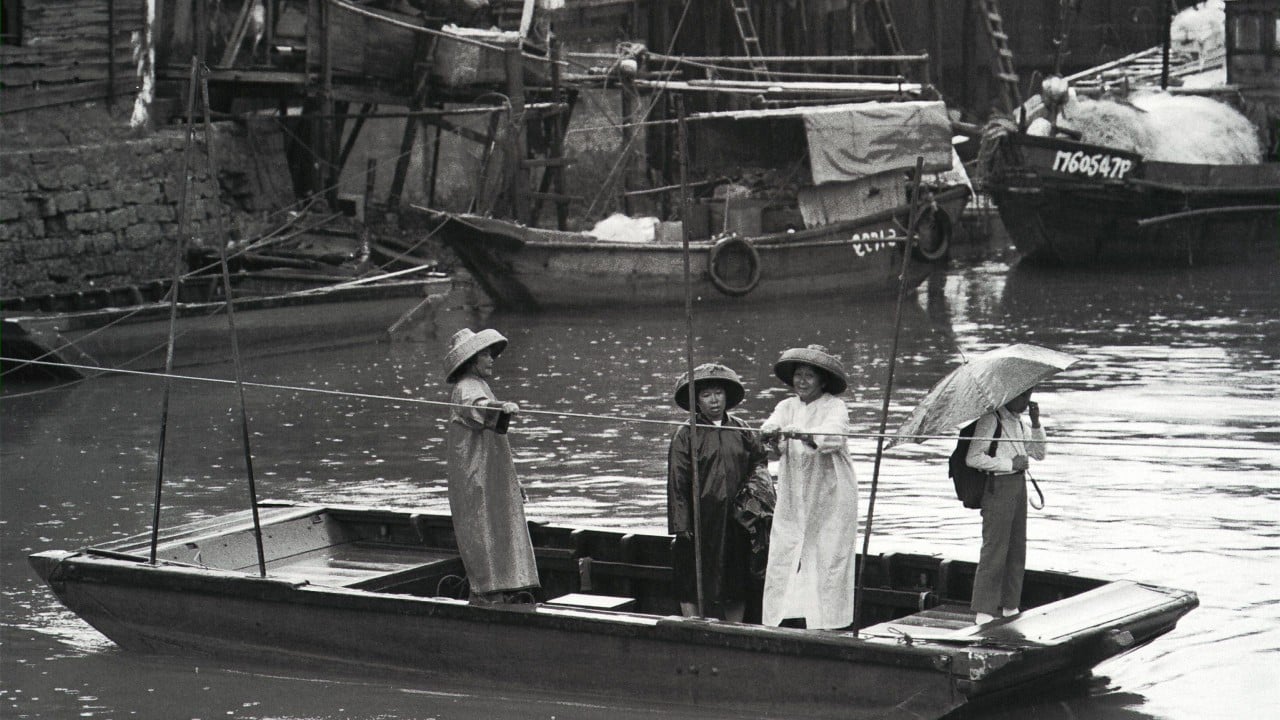
Picture an old man standing on a weathered wooden platform. His palms are thick with calluses, hardened into leather by decades of friction. He leans forward, his boots braced against the deck of an open ferryboat, and pulls. Hand over hand. Inch by inch. The cable groans overhead, shivering as the weight of the boat and its passengers pulls against the saltwater abyss.
This was not a machine. This was a handshake across the water.
Tai O, nestled on the western coast of Lantau Island, earned the title of the Venice of Hong Kong. Stilt houses constructed from weathered timber lean over the tidal flats, their pilings submerged in the rhythm of the South China Sea. For generations, the inhabitants of this remote fishing village lived suspended between land and water. They navigated their lives by the ebb and flow of the tide, relying on a simple, ingenious mechanical marvel to cross the narrow waterway that bisected their community: a hand-operated rope-drawn ferry.
Consider the physics of it. No roaring diesel engines. No electric hum. Just pure kinetic effort transferred from human sinew to a galvanized steel cable stretched taut from bank to bank. Passengers stepped onto the flat-bottomed wooden vessel, holding their market baskets, bicycles, and umbrellas. They paid a few coins—fractions of a dollar—to the ferryman. And then came the unique, rhythmic metallic music of the crossing: the sharp clack-clack-screech of iron wheels gripping the overhead line, the deep vibration of the rope singing in the sea breeze, and the gentle splash of wood parting water.
It was slow. It was inefficient. It required physical labor under the blazing sub-tropical sun and through the biting chill of winter gales.
And it was essential.
For a century, this rope-ferry bridged more than just a physical gap between the two halves of Tai O. It bridged generations. Children rode it on their way to school, clutching the straps of their heavy backpacks while watching jellyfish pulse beneath the green surface. Fishermen hauled their catch across it before dawn. Elders used it to visit neighbors without having to embark on a lengthy, circuitous detour around the mudflats.
Tradition, however, is a fragile thing when confronted with the unyielding march of infrastructure.
By the late twentieth and early twenty-first centuries, the pressures of modern connectivity began to hem in the quiet corners of Hong Kong. Concrete footbridges were proposed, debated, and eventually built. The rationale was logical, clinical, and difficult to argue against on paper: safety, speed, accessibility for the elderly and disabled, and the relentless demand for twenty-four-hour convenience. A bridge does not sleep. A bridge does not require a human being to tear their shoulders apart pulling a boat across a swollen tide.
Yet efficiency often comes at the silent expense of soul.
When the final bell rang and the last rope-ferry service was officially retired into the archives of the South China Morning Post, something irreplaceable vanished from the stilt-house alleys of Tai O. The residents did not just lose a mode of transportation. They lost a daily ritual of human connection. On the rope-ferry, strangers stood shoulder to shoulder. You had to acknowledge the person next to you. You shared the physical space, the strain of the crossing, the smell of the sea spray. On a concrete bridge, you walk past strangers with your eyes fixed on a glowing smartphone screen, isolated inside your own digital bubble.
Today, tourists still flock to Tai O. They come to see the historic stilt houses, to taste the local salt-fish, and to ride the modern motorboats that whisk them out into the bay to spot pink dolphins. They seek a glimpse of old Hong Kong, preserved like a specimen in amber.
But if you stand by the riverbank long enough, past the souvenir stalls and the chatter of tour groups, you can almost hear it. The sharp metallic screech of the cable. The rhythmic splash of the wooden hull. The heavy breathing of a ferryman who spent his life pulling his neighbors across the water, one hand over the other, keeping a community tethered to its own history.
The rope is gone. The cable has rusted away. But the water still remembers the weight of a human hand.