Two receipts sit on the laminate kitchen counter of a townhome in Ashburn, Virginia.
One is from a neighborhood grocery store, printed on thermal paper that already feels slick between the thumb and forefinger. The total at the bottom has climbed thirty-eight dollars higher than the same cart of rice, lentils, cooking oil, and school snacks cost two years ago. Next to it lies a second piece of paper—a thick, cream-colored envelope bearing the return address of a regional hospital in Maryland, containing a deployment physical notice for a twenty-two-year-old Army specialist who grew up riding his bicycle down the Washington and Old Dominion Trail. Meanwhile, you can find similar events here: What Most Pundits Get Wrong About Trump and the 2026 Midterms Blue Tsunami.
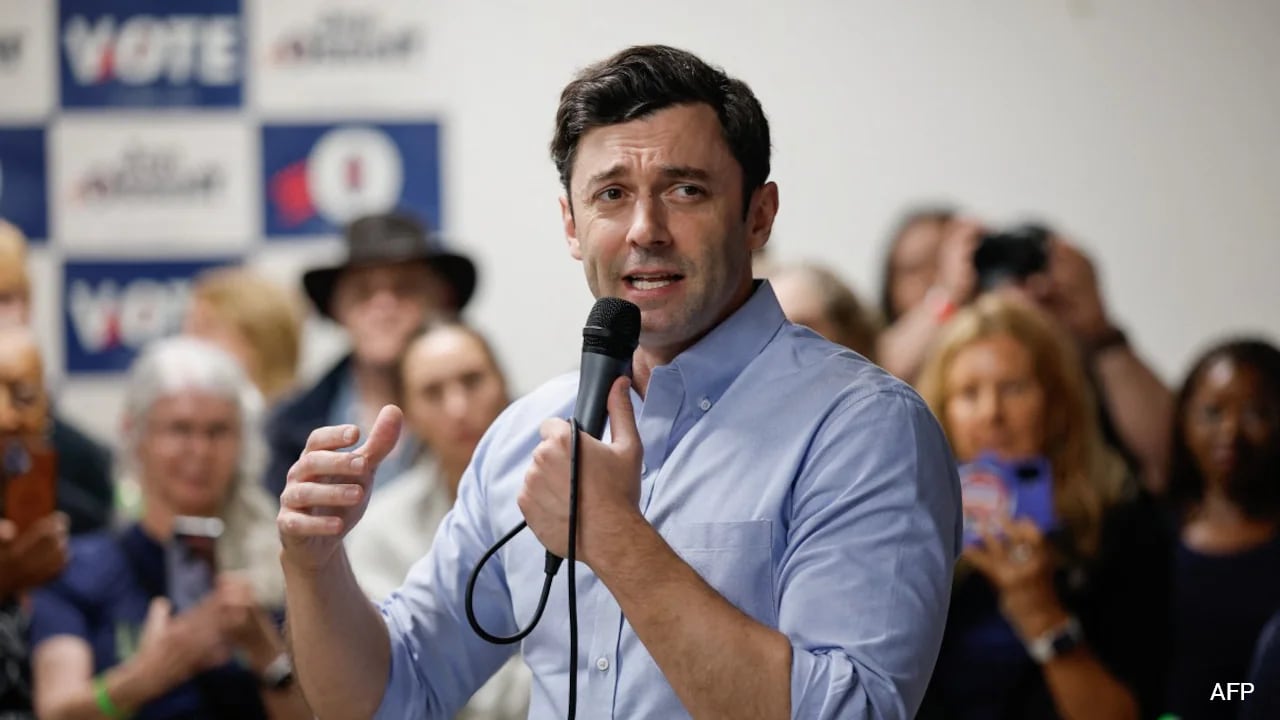
For the sake of understanding what actually happened in Northern Virginia this November, call the woman standing over those two slips of paper Maya. Maya is a composite, a hypothetical resident built from the real demographic realities of Virginia’s 10th Congressional District, where software engineers, federal contractors, small-business owners, and immigrant families live side by side along the Dulles Technology Corridor. Yet the numbers on her counter are anything but imaginary. They represent the twin anxieties that defined the 2026 midterm elections and propelled Congressman Suhas Subramanyam—a former White House technology policy advisor under Barack Obama, the first Indian American elected to the Virginia General Assembly, and now a victorious incumbent securing his seat in the U.S. House of Representatives—into the center of Washington’s sharpest policy fight.
When standard political coverage summarizes a post-election interview with a winning lawmaker, it usually reduces human survival to bullet points. A headline declares that Suhas Subramanyam wants to end the war with Iran and lower tariffs after his midterm victory. Readers nod, skim two paragraphs of Capitol Hill jargon, and click away. To see the full picture, check out the detailed report by The New York Times.
That clinical framing misses the entire point.
Foreign policy and trade schedules are not abstract chess games played on glossy mahogany tables in Foggy Bottom. They are invisible taxes levied directly against living rooms from Loudoun County to Manassas. When Subramanyam stepped before microphones following his reelection triumph and named ending the conflict with Iran and rolling back sweeping tariffs as his immediate legislative priorities, he was not reciting a focus-grouped talking point. He was answering a quiet revolt brewing inside suburban households across America.
The Ghost in the Grocery Aisle
To understand why tariffs became the unexpected flashpoint of the 2026 midterms, you have to follow a container ship across the Pacific and watch how an import duty mutates by the time it reaches a suburban checkout scanner.
Think of a tariff not as a shield, as politicians fond of tough rhetoric like to describe it, but as a tollbooth built directly across your own driveway. The government announces that the neighbor across the street must pay a twenty-five or sixty percent fee to deliver lumber, steel, electronics, or textiles to your front door. Naturally, the neighbor does not absorb that loss out of civic charity. He adds the toll to the invoice. By the time the raw materials become an air conditioning compressor, a child’s winter coat, or the packaging around imported spices, the American family pays the bill at the register.
I remember watching this exact mechanism play out inside a family-run wholesale distribution warehouse just off Route 28 in Chantilly during the height of recent trade escalations. The air inside smelled of cardboard dust, diesel exhaust from idling box trucks, and burnt coffee from a breakroom pot that never quite emptied. The owner—a man who had spent twenty-five years building margins thin enough to shave with—spread out three years of customs invoices across a metal desk. Every time a new round of across-the-board tariffs went into effect, his landed costs jumped within weeks. He had two choices: lay off three warehouse workers who had been with him since their twenties, or raise prices on the regional restaurants and independent grocers he supplied. He raised prices. Those restaurants raised menu prices. The families eating there cut back on tips and skipped Friday night takeout.
Economists at institutions like the Peterson Institute for International Economics and the Tax Foundation have quantified this cascade with sobering precision, estimating that broad-based tariff regimes cost the average American household thousands of dollars annually in lost purchasing power while functioning as a regressive tax that hits middle- and working-class earners hardest.
In Virginia’s 10th District—a region home to one of the largest South Asian American populations on the East Coast alongside tens of thousands of small tech firms, logistics operators, and retail entrepreneurs—trade policy is never theoretical. Small business owners rely on global supply chains for everything from semiconductor components to specialty food imports. When Subramanyam campaigned across Loudoun, Prince William, and Fauquier counties, he heard the same refrain from hardware store owners in Leesburg and restaurant operators in Herndon: unpredictable, punitive tariffs were strangling margins faster than inflation ever did.
Lowering tariffs, in Subramanyam’s post-election framework, is not an ideological surrender to foreign competitors. It is emergency triage for household budgets. Targeted trade enforcement aimed at genuine intellectual property theft or state-subsidized dumping has its place, he has argued, but blanket tariffs act like a sledgehammer swung inside a china shop—shattering domestic small businesses and punishing consumers who had nothing to do with trade disputes in the first place.
The Drums No One Voted For
If tariffs quietly drain a family’s bank account, war threatens to empty its chairs at the dinner table.
Northern Virginia carries a unique, heavy relationship with American military intervention. Drive ten minutes in almost any direction from Dulles International Airport and you pass unmarked office buildings housing defense analysts, veterans transitioning into civilian life, and active-duty families stationed across the National Capital Region. People here know what happens when Washington drifts into open-ended conflict in the Middle East. They remember the years after 2001, when "limited strikes" and "containment missions" stretched across two decades, costing trillions of dollars and thousands of lives while leaving the region more fractured than before.
As hostilities with Iran escalated through 2025 and 2026—marked by retaliatory strikes, maritime chokepoints in the Strait of Hormuz, surging global oil prices, and the deployment of tens of thousands of U.S. service members—a familiar dread crept back into suburban life.
Fear.
It shows up in the sudden spike at the gas pump along Route 50, where premium fuel jumps sixty cents a gallon overnight because tankers are rerouting around the Persian Gulf. It shows up in the quiet conversations between parents watching evening news broadcasts, wondering whether a regional conflagration will pull American ground troops into another generation-defining quagmire.
When Subramanyam spoke candidly after his midterm win about the urgent need to end the war with Iran, he tapped into a deep bipartisan exhaustion that Beltway hawks consistently underestimate. Voters did not go to the polls in November 2026 asking for another Middle Eastern war. They went asking for stability, affordable housing, accessible healthcare, and an economy that rewards hard work.
Under the U.S. Constitution, Article I vests the power to declare war exclusively in Congress—a safeguard the Founders designed specifically to prevent executive branches from dragging the nation into prolonged conflict without the consent of the governed. Yet for decades, lawmakers of both parties have ceded that authority, allowing military engagements to expand through outdated authorizations and incremental escalations. Subramanyam’s insistence on ending the Iran conflict places congressional oversight back at the center of foreign policy: demanding diplomatic off-ramps, de-escalation frameworks, and a strict refusal to let American blood and treasure vanish into an unwinnable regional spiral.
Why the 10th District Matters Beyond Virginia
To understand why Suhas Subramanyam’s voice carries particular weight in this moment, you have to look at the political geography he represents.
Virginia’s 10th District is a bellwether of modern American suburbia. For decades, it leaned reliably conservative, anchored by rural counties and defense-oriented suburbs. Over the past fifteen years, explosive growth in technology, healthcare, and diverse immigrant communities transformed it into a competitive battleground where elections are won not by partisan bomb-throwers, but by pragmatic problem-solvers who can hold together coalitions of moderate independents, progressive young voters, and business-minded suburbanites.
Subramanyam’s own biography mirrors that evolution. Born to Indian immigrant physicians, he worked as an EMT and volunteer firefighter before entering law and public policy. During his tenure in the Obama White House, he focused on cybersecurity, tech modernization, and strengthening small businesses. Later, in the Virginia House of Delegates and State Senate, he built a reputation for crossing party lines on consumer protection, lowering prescription drug and toll costs, and expanding broadband access—passing dozens of bills even in divided legislatures.
When he first won the congressional seat in 2024 to succeed retiring Representative Jennifer Wexton, skeptics wondered whether a newcomer could hold a sprawling district stretching from the affluent suburbs of Fairfax and Loudoun out toward the Blue Ridge foothills of Rappahannock County. His decisive victory in the 2026 midterms answered that question—and handed him a clear mandate.
Voters in swing suburbs are notoriously unsentimental. They do not care which cable news network wins a shouting match. They care whether their grocery bill stops climbing, whether their small business can survive the next quarter, and whether their children will be sent to fight a war nobody can explain.
The False Choice We Keep Being Sold
One of the oldest tricks in politics is convincing ordinary people that they must choose between national strength and economic sanity—that if you oppose reckless tariffs, you are soft on foreign competitors, and if you oppose war with Iran, you are weak on national security.
Consider what happens when we strip away that false binary.
A nation burning hundreds of billions of dollars on military escalation in the Persian Gulf while simultaneously choking its own consumers and manufacturers with retaliatory trade wars is not projecting strength. It is weakening itself from the inside out. True national security begins at home: resilient supply chains built through smart alliances rather than unilateral trade penalties, energy independence accelerated by clean technology and domestic innovation, and diplomatic leadership capable of containing adversaries without sacrificing American lives.
Look at how intertwined Subramanyam’s two priorities actually are. War in the Middle East drives up global energy and shipping costs. Tariffs drive up the cost of raw materials, food, and manufactured goods. Together, they form a vise squeezing the American middle class from both ends—raising the cost of living while forcing the federal government to borrow more money at higher interest rates to fund military operations.
Breaking that vise requires moral clarity in a city addicted to short-term posturing. On Capitol Hill, calling for de-escalation during an active conflict invites predictable attacks from hawkish pundits. Calling for tariff reductions invites predictable attacks from protectionist factions. Yet Subramanyam’s willingness to state both goals plainly immediately after securing reelection signals a calculation grounded in political reality: the fever is breaking, and voters are demanding adults in the room.
What Happens Next on Capitol Hill
A post-election promise, of course, is only as strong as the legislative grind that follows it.
Inside the 120th Congress, turning those priorities into tangible relief will require relentless coalition-building. On trade, lawmakers pushing to curb unilateral tariff hikes must reassert congressional authority over trade policy—requiring legislative approval for broad import duties, expanding exclusion processes for small businesses, and negotiating targeted agreements with democratic allies in Europe and the Indo-Pacific so American companies are not left isolated.
On Iran, ending hostilities demands sustained diplomatic pressure alongside strict War Powers oversight—blocking unauthorized escalations, leveraging regional partners to restore maritime security in the Gulf, and redirecting billions in wartime supplemental spending back toward domestic priorities like healthcare affordability, infrastructure, and middle-class tax relief.
None of this will happen overnight. Washington moves slowly, weighed down by entrenched lobbyists, partisan gridlock, and institutional inertia. There are moments when even the most determined lawmakers wonder whether common sense can penetrate the noise of a twenty-four-hour outrage cycle.
Yet history shows that major shifts in American policy rarely begin inside committee hearing rooms. They begin at kitchen tables, when millions of ordinary families look at the receipts in front of them and decide they have paid enough.
Back in that Ashburn townhome, evening settles over the cul-de-sac. Maya folds the grocery receipt into her wallet and places the deployment notice gently beside the coffee maker for tomorrow morning. Outside, commuter traffic hums along the Dulles Toll Road, headlights streaking red and white through the November dark—thousands of working people heading home, waiting to see if the promises made in the glow of an election victory will finally reach the places where they actually live.