The rain in Manchester does not fall; it hangs. It is a damp, persistent mist that blurs the sharp edges of the red-brick mills and slick asphalt streets, a visual reminder of a city built on grit and industry. If you stand outside the Greater Manchester Combined Authority building on a Tuesday morning, you can watch the commuters streaming out of Piccadilly Station. They are clutching reusable coffee cups, collars turned up against the chill, eyes fixed on the pavement.
To them, politics is not a game played on green benches in London. It is a late bus. It is a damp apartment. It is the cost of a tram ticket eating into a weekly grocery budget.
For years, the British political story had only one setting: Westminster. A suffocatingly dense square mile where decisions were made by people who spoke in a specific cadence, went to the same universities, and viewed the rest of the country as a vast, quiet backdrop to their careers. But a shift has been quietly gathering force in the provinces. At the center of this shift stands a man who traded the warmth of Parliament for the rain of Manchester, betting his entire future that the longest way round would be the shortest way home.
Andy Burnham is often called the King in the North. It is a title bestowed with a mix of genuine affection and cynical irony. But labels obscure the flesh-and-blood reality of a career built on a profound gamble.
Think back to 2015. Burnham was a Westminster insider. He was a former Health Secretary, a polished frontbencher, a man who seemed destined to lead the Labour Party. Then came the crushing defeat of the leadership election, a loss that could have relegated him to the quiet oblivion of the backbenches. Instead of fading, he packed his bags. He left London. He ran for Mayor of Greater Manchester.
At the time, commentators viewed it as political exile. A soft landing for a beaten man. They were wrong.
To understand why a politician would leave the heart of national power, you have to understand the sheer exhaustion of the British electorate. People felt invisible. The system seemed designed to extract wealth from the regions and concentrate it in the capital. By stepping into the newly created role of metro mayor, Burnham was not retreating. He was occupying a new piece of high ground.
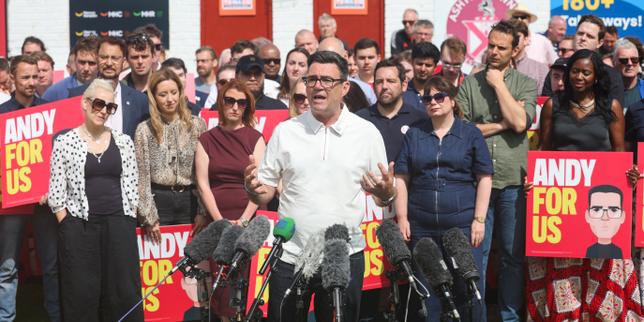
From this regional fortress, he built a different kind of identity. He shed the defensive, focus-grouped language of national politics. He wore a dark worker's jacket instead of a pristine tailored suit. He spoke with an urgency that resonated because it was attached to concrete things. When he stood on the steps of the mayoral office during the pandemic, openly defying the national government over financial support for low-wage workers, he ceased to be just a local administrator. He became a symbol of regional resistance.
That resistance paid off. A commanding electoral victory secured his third term as mayor, a win that was about more than just keeping a local job. It was a massive validation of a strategy.
But a victory in Manchester always carries an unuttered question that echoes all the way down the train line to London. Is this the end goal, or is it a launchpad?
The tension is palpable. The Labour Party has finally returned to national power, but the machinery of government remains deeply centralized. The prime minister's office holds the keys to the kingdom. For an ambitious politician, the pull of that center is like gravity. It is inescapable.
Consider the psychological toll of this waiting game. Burnham has built something real in the North. He integrated the bus network, created the Bee Network, and took control of local transport for the first time in decades. This matters to the person waiting in the cold at 6:00 AM on a Tuesday. It is a tangible change. Yet, within the British constitutional setup, a mayor cannot change national tax policy. A mayor cannot rewrite employment law or rebuild the National Health Service from scratch.
The true stakes are hidden behind the administrative jargon of devolution. The struggle is about who gets to decide the future of the British working class.
Critics argue that Burnham’s eyes have never truly left London. They whisper that his championing of regional grievances is a calculated performance, a way to maintain national relevance while his rivals exhaust themselves in the grueling meat-grinder of Parliament. They point to his frequent appearances on national television, his commentary on topics far beyond the borders of Greater Manchester, as evidence of a man who is merely renting his northern home.
But this view misses the deeper transformation. You cannot spend nearly a decade listening to the specific, localized pain of communities like Oldham, Rochdale, and Wigan without it altering your political DNA. The polished Westminster technician of 2010 has been replaced by someone far more unpredictable.
The path back to London is fraught with danger. The national Labour Party views popular regional figures with a degree of suspicion. A powerful mayor with an independent mandate is a threat to party discipline. If Burnham chooses to return to Parliament to make a play for the highest office, he will have to give up his regional throne. He will become just another member of Parliament, subject to the whips, forced to fit back into a box he spent years breaking out of.
It is a terrifying gamble. To leave a place where you are genuinely loved, where you have real executive power, to return to a court that may never fully trust you again.
On a late afternoon, as the sky over Manchester turns the color of a bruised plum, the streetlights flicker on, reflecting off the wet pavement. The city hums with the sound of home-bound traffic. Down in London, the politicians are arguing over points of order and media narratives. Up here, the buses are running on a network created in defiance of the old ways of doing things.
Andy Burnham stands between these two worlds. He is a man who discovered that true power is found not by looking up at the grand monuments of the capital, but by looking directly into the eyes of the people who have been left behind in the rain. Whether that discovery will lead him back to the ultimate prize remains an open question, but the country is finally watching the north to find out the answer.