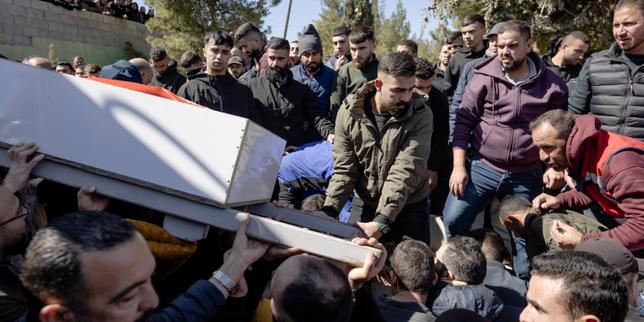
The recent escalation of Pakistani cross-border airstrikes into Afghanistan represents a fundamental shift from covert proxy management to overt kinetic intervention. This transition signals the failure of Pakistan’s long-standing "strategic depth" doctrine, replaced now by a desperate attempt to externalize internal security deficits. By targeting what it defines as Tehrik-i-Taliban Pakistan (TTP) strongholds in the Khost and Paktika provinces, Islamabad is attempting to solve a domestic insurgency through the violation of a neighbor’s sovereignty, a maneuver that structurally undermines the regional stability it claims to protect.
The Architecture of Contradiction
The current conflict is defined by the breakdown of the patron-client relationship between the Pakistani security establishment and the Afghan Taliban. For decades, Islamabad supported the Taliban movement under the assumption that a Taliban-led Kabul would provide a compliant western border and deny sanctuary to anti-Pakistan militants. This logic contained a fatal flaw: the ideological and organizational kinship between the Afghan Taliban and the TTP is stronger than any transactional debt owed to Pakistan.
We can analyze this failure through three structural pillars:
- The Sovereignty Paradox: The Afghan Taliban, having secured victory against a global superpower, cannot maintain internal legitimacy if they appear to be puppets of the Pakistani Inter-Services Intelligence (ISI). Their refusal to enforce the Durand Line—a border they view as a colonial relic—is a non-negotiable component of their nationalist identity.
- The Militant Symbiosis: The TTP and the Afghan Taliban share a common history, a shared deobandi ideology, and intermarried tribal structures. Expecting the Taliban to dismantle the TTP is equivalent to asking them to amputate a limb to satisfy a foreign power.
- The Security Dilemma: Pakistan’s kinetic response creates a feedback loop. Every airstrike intended to degrade TTP capacity instead fuels local recruitment and forces the Afghan Taliban to move from passive support to active defensive positioning.
The Mechanics of Kinetic Failure
Pakistan’s reliance on airstrikes as a primary counter-terrorism tool is technically efficient but strategically bankrupt. In the rugged terrain of eastern Afghanistan, the "kill-chain" is frequently corrupted by faulty human intelligence and the high mobility of insurgent groups.
The Erosion of Deterrence
The Pakistani military operates on a model of conventional deterrence that does not translate to asymmetric warfare. By striking Afghan soil, Islamabad aims to impose a cost on Kabul for its perceived inaction. However, the cost function for the Taliban is skewed. They possess no high-value infrastructure or conventional air force to lose in a retaliatory strike. Their assets are decentralized, ideological, and human. Consequently, Pakistan finds itself in a position where its most sophisticated tools—F-16s and JF-17s—are being used against mud-brick compounds, a massive expenditure of political and economic capital for negligible strategic gain.
The Intelligence Deficit
Successful counter-insurgency requires a granular understanding of the local human terrain. Since the withdrawal of NATO forces, the cross-border intelligence network has fragmented. Pakistan’s strikes often rely on signals intelligence (SIGINT) that can be easily spoofed or outdated imagery. When these strikes result in civilian casualties—as reported in the Tanda Darah and Laman areas—the immediate effect is the radicalization of the surrounding population, expanding the TTP’s "pool of the aggrieved" from which it draws its next generation of fighters.
Geopolitical Friction and the Durand Line
The Durand Line remains the central friction point in the bilateral relationship. Pakistan views the 2,640-kilometer boundary as an internationally recognized border; the Taliban, echoing every Afghan government since 1947, views it as a temporary line of control.
Pakistan’s recent fencing project, costing over $500 million, was intended to formalize the border and restrict movement. This physical barrier has failed to stop the TTP, which continues to exploit traditional smuggling routes and local sympathizers. The kinetic strikes are an admission that the fence is porous. By striking deep into Paktika and Khost, Pakistan is effectively declaring that the border no longer serves as a barrier for its security operations, thereby inviting the Afghan Taliban to similarly disregard it in their support for the TTP.
The Economic Constraint of the High-Intensity Conflict
Pakistan’s military maneuvers are occurring against the backdrop of a severe macroeconomic crisis. The cost of maintaining a heightened security posture on the western border, combined with the operational costs of frequent air sorties, places a significant burden on a shrinking federal budget.
- Fuel and Maintenance: Continuous combat air patrols and strike missions accelerate the maintenance cycles of aging airframes and consume expensive aviation fuel.
- Opportunity Cost: Resources diverted to the western border are resources not spent on stabilizing the internal security of Balochistan or the economic corridors linked to the China-Pakistan Economic Corridor (CPEC).
- Investment Risk: State-level kinetic exchanges with a neighbor signal instability to foreign investors, further depressing the Pakistani Rupee and increasing the risk premium on sovereign debt.
The Afghan Taliban, conversely, operates a low-cost, high-resilience economy. They do not require an air force or a massive standing army to project influence. This asymmetry ensures that in a prolonged war of attrition, Pakistan’s state-centric model will face bankruptcy long before the Taliban’s decentralized model collapses.
Identifying the TTP Tactical Evolution
The TTP has undergone a significant transformation since 2020. It has evolved from a fractured group of disparate factions into a unified, centralized insurgency modeled after the Afghan Taliban’s own organizational structure.
- Administrative Modernization: The TTP now operates "shadow provinces" (wilayats) within Pakistan, mimicking the Taliban’s previous governance model in Afghanistan.
- Advanced Weaponry: Reports indicate the TTP has gained access to night-vision equipment, thermal optics, and M4 carbines left behind after the U.S. withdrawal. This narrows the technological gap between the insurgent and the Pakistani soldier.
- Narrative Control: The TTP has moved away from global jihadist rhetoric, focusing instead on local grievances in the Khyber Pakhtunkhwa province, positioning itself as a "liberation" movement against an "oppressive" Pakistani state.
Pakistan’s airstrikes target the physical presence of the TTP but do nothing to address this ideological and organizational maturation. Without a political strategy to address the grievances in the tribal districts, the kinetic approach is merely "mowing the grass"—a temporary reduction in capacity followed by an inevitable regrowth.
The Strategic Play for Islamabad
The current trajectory leads to a permanent state of low-intensity border war, which Pakistan can ill afford. To break this cycle, the Pakistani state must shift from a military-first posture to a multifaceted containment strategy.
- Decoupling the Taliban and TTP: Rather than demanding the Taliban "eliminate" the TTP, Pakistan should negotiate for the relocation of TTP cadres away from the border regions. This offers the Taliban a way to "solve" the problem without violating their internal code of protecting guests.
- Leveraging Regional Stakes: Pakistan must involve China and Qatar in the mediation process. China, concerned about the East Turkestan Islamic Movement (ETIM), has a vested interest in a stable Afghanistan and can exert economic pressure on Kabul that Islamabad cannot.
- Internal Governance Reform: The merger of the Federally Administered Tribal Areas (FATA) into Khyber Pakhtunkhwa must be completed through actual service delivery, not just legislative fiat. The vacuum left by the state is the oxygen of the TTP.
- Border Management vs. Border Conflict: Transition from a policy of "kinetic strikes" to "intelligence-led targeted operations" within Pakistani territory. Strengthening the internal police and paramilitary forces to secure the hinterland is more effective than bombing foreign mountains.
Pakistan’s reliance on the hammer of its air force has turned every border dispute into a nail. Until Islamabad recognizes that the Afghan Taliban are no longer clients but a sovereign entity with their own domestic imperatives, these strikes will continue to yield diminishing returns, eventually resulting in a strategic isolation that leaves Pakistan’s western flank permanently exposed.