Tokyo is no longer waiting for permission to secure its own backyard. For decades, Japan hid behind a pacifist constitution and let Washington handle the heavy lifting of regional deterrence. That era is dead. Prime Minister Sanae Takaichi’s government has moved past ambiguous diplomacy, explicitly defining a potential conflict in the Taiwan Strait as a survival-threatening situation for Tokyo.
When Beijing looks across the water today, it doesn't just see Taipei anymore. It sees a deeply integrated network of Japanese radar installations, anti-ship missile batteries strung along the Nansei island chain, and tightening military logistics with regional partners. Japan's defense posture has shifted from passive self-defense to proactive regional denial. This calculated pivot is completely rewriting Beijing's operational timeline.
The Geography of Deterrence
You cannot understand Tokyo's new strategy without looking at a map. The Ryukyu Islands stretch like a natural barrier from southern Kyushu right down to Taiwan's doorstep. Islands like Yonaguni sit barely seventy miles from Taiwan.
Tokyo has spent the last few years quietly turning these remote outposts into heavily armed fortresses.
- Deploying electronic warfare units.
- Installing surface-to-ship missile batteries.
- Upgrading airstrips for rapid fighter deployment.
If Beijing attempts an amphibious assault or a naval blockade across the strait, these islands act as an unsinkable barrier. Japan’s Self-Defense Forces can monitor every movement, jam enemy communications, and threaten hostile fleets before they ever reach a beachhead. Geography used to favor a fast, overwhelming strike by the People's Liberation Army. Tokyo's island garrisons turn that narrow window into a bloody, protracted nightmare.
Beyond the Bilateral Safety Net
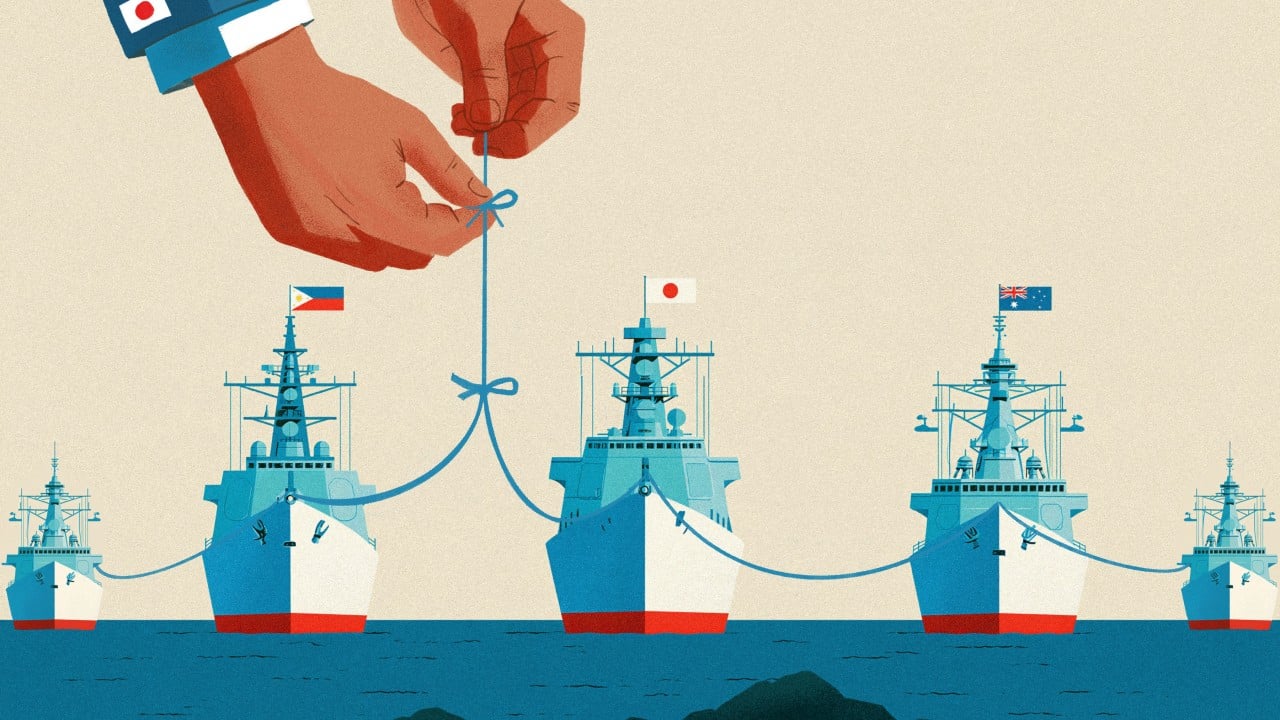
Washington remains Tokyo's primary treaty ally, but relying solely on a distant superpower is a gamble nobody in Asia wants to take anymore. Japan is diversifying its security portfolio through a web of minilateral agreements.
Take the Reciprocal Access Agreement signed with Manila. Japanese troops now train openly on Philippine soil, participating in massive exercises like Balikatan with advanced hardware. Tokyo is also exporting defense equipment, lifting decades-old self-imposed bans to arm partners who share a common threat perception.
This web of partnerships means Beijing can no longer isolate individual nations through economic coercion or targeted maritime harassment. If a crisis erupts near Taiwan, Japanese logistical hubs, shared early-warning radar data, and interoperable naval patrols with nations like Australia and the Philippines will form an overlapping zone of resistance.
Economic Pain and Political Resolve
Beijing expected economic punishment to break Tokyo's spine. Official Chinese data and diplomatic channels show a massive spike in public denunciations against Japan over Taiwan-related rhetoric. Trade restrictions and diplomatic freezes were meant to force Japanese leadership into quiet compliance.
It backfired completely.
Instead of backing down, Japanese leaders doubled down on strategic resilience. Supply chains are decoupling from over-reliance on Chinese markets, and the domestic public has rallied behind a stronger national defense posture. Voters understand that a neutralized Taiwan cuts off vital sea lanes carrying the bulk of Japan’s energy and food imports. Standing up to Beijing isn't just a foreign policy choice anymore; it is viewed in Tokyo as an existential necessity.
Complicating the Beijing Calculus
Military planners in Beijing run simulations constantly. Every war game used to assume a localized conflict where US intervention was slow and hesitant, and regional neighbors stayed out of the way.
Japan's systemic military upgrade throws those assumptions in the trash. With a doubling of defense spending, the acquisition of long-range counterstrike capabilities, and ironclad legal frameworks allowing collective self-defense, Tokyo has created immense uncertainty. Beijing must now calculate whether an operation against Taiwan will trigger a direct, high-tech intervention right on its maritime doorstep.
The goal of this entire defense widening isn't to start a war. It's to make the cost of launching one so astronomically high that the trigger is never pulled. Tokyo is forcing Beijing to do the math, and every new alliance makes the numbers look worse.