The teacups in Tehran do not rattle when the threats arrive from across the sea, but the air grows thin all the same.
Step into a narrow bazaar off the Grand Bazaar of Tehran at five in the evening. The autumn sun cuts through the dusty slats of the timber roof, casting long, bruised bars of orange light across pyramids of dried lime, saffron threads nestled in glass vials, and copper pots beaten by hands that learned the trade from fathers who learned it from grandfathers. An old merchant named Reza pours dark, bitter tea from a porcelain pot into a pear-shaped glass. He does not watch the state television overhead, though the screen flickers with the latest bulletin from Washington. He knows the script by heart. The cadence of fury is older than the transistors carrying it.
When Donald Trump speaks of pressure, of red lines, of the heavy hand of American might waiting just beyond the horizon, the sound reaches this market as a distant rumble of thunder over the Alborz mountains. It is a weather pattern. You do not negotiate with a storm; you batten down the hatches and wait for the squall to pass or break upon the stone.
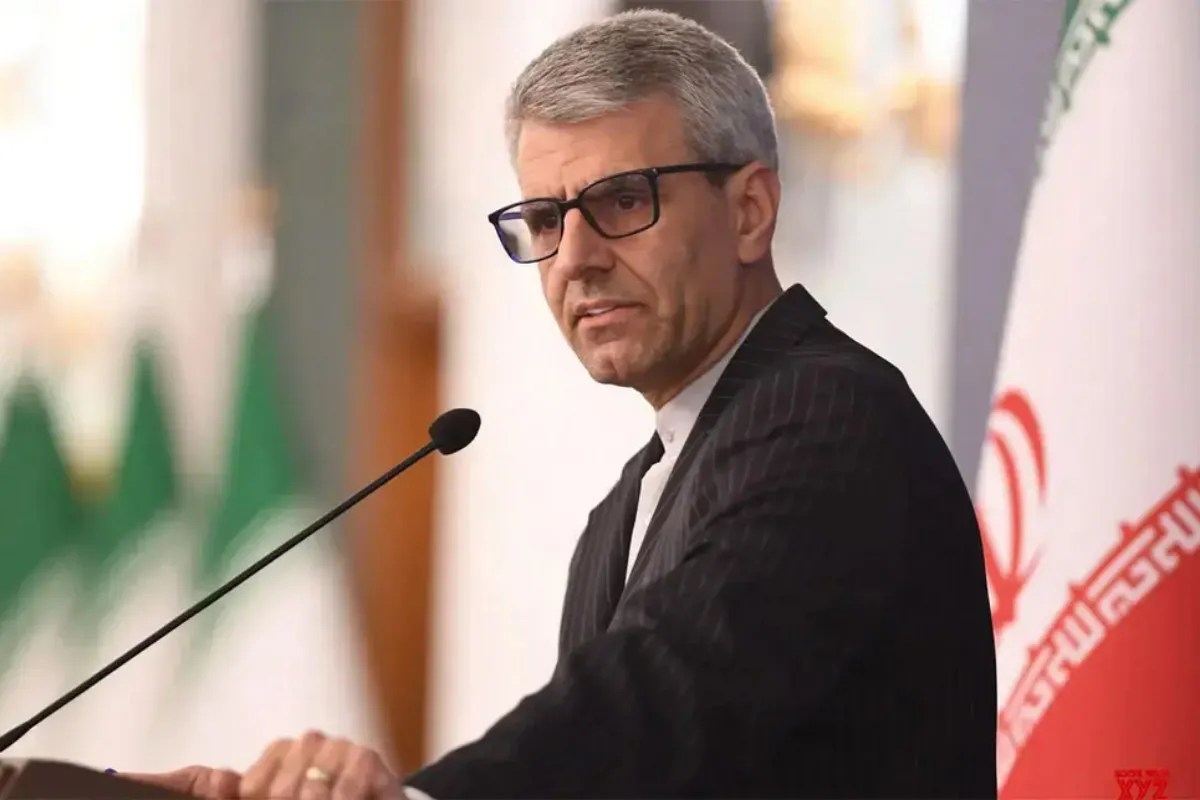
Yet, behind the stone facades of government ministries, the response is calculated with the precision of a master carpet weaver knotting silk into a grand design. The Iranian Ministry of Foreign Affairs issued a rejoinder that bypassed the noise of cable news entirely, settling instead on a timeless axiom: there is no weapon forged that can replace the quiet dignity of dialogue and peace.
It sounds like diplomacy. It is actually a declaration of stubborn endurance.
Consider what happens when two opposing forces refuse to yield an inch of ground, yet find themselves tethered to the same fragile planet. On one side stands the architecture of maximum pressure—sanctions designed to squeeze an economy until the currency weeps, tariffs that bite into the daily bread of ordinary families, and a military posture that casts a long, gray shadow over the Persian Gulf. On the other side stands a regime born of revolution, forged in an eight-year war of attrition, and deeply convinced that yielding to external dictation is a slow form of national suicide.
History teaches us a harsh lesson about corners. When you back an animal into one, it does not calculate the GDP of its opponent; it bares its teeth.
In the ministry offices overlooking the leafy avenues of central Tehran, officials look at the rhetoric of ultimatums not as policy, but as political theater meant for consumption six thousand miles away. They understand the electoral cycles, the domestic pressures, and the appetite for strongman narratives in Western capitals. But they also know the cost of blinking. Reza, pouring his tea in the bazaar, puts it more simply: "A man who shouts across a river is usually afraid to wet his boots."
The tragedy of modern geopolitics is that we have mistaken volume for strength. We treat international relations like a prize fight where the loudest corner wins the crowd, forgetting that nations are made of breathing, vulnerable human beings who bear the scars of every severed trade route and every blocked medical shipment. When a pharmaceutical import stalls because of financial blockades, it is not a statistic on a congressional ledger; it is a child in a Tehran hospital waiting for a specialized chemotherapy drug that sits frozen in a European port.
This is the invisible stakes of the game.
The Iranian response—insisting that peace and negotiation remain the only true currency—is deployed not out of sudden pacifism, but out of a cold, pragmatic realization. Bullets solve little when the battlefield is globalized and the fallout poisons everyone's well. But words, when backed by the sheer weight of historical survival, become a shield.
Imagine standing on the deck of a tanker moving silently through the Strait of Hormuz at midnight. The dark water laps against the hull, carrying the wealth of nations through a narrow channel where a single spark could ignite an inferno. Above you, the stars are indifferent. Around you, invisible radar sweeps paint the horizon with ghosts. The tension is so thick you could slice it with a knife. Yet, life goes on in the engine room below, where grease-stained engineers check valves and monitor gauges, deaf to the political shouting matches echoing across oceans.
They are the ones holding the world together. The engineers, the merchants, the teachers, the mothers packing school lunches in Isfahan and Shiraz. They do not want war. They know its face too well; their grandparents' generation still speaks of the mustard gas and the shattered cities of the 1980s.
When the Ministry of Foreign Affairs counters a threat with an appeal to peace, it is speaking for those engineers and mothers. It draws a line in the sand using the oldest ink available: human exhaustion with conflict.
We often wonder how nations step back from the brink. The answer is rarely a grand summit with flashing camera bulbs and champagne toasts. It happens in the quiet spaces, through back channels, through third-party intermediaries carrying messages written on plain paper, whispering in cool, shaded rooms while the world screams outside. It happens when both sides realize that the cost of destruction vastly outweighs the hollow victory of dominance.
The rhetoric will return tomorrow. Another headline will drop, another threat will be hurled across the digital ether, and the stock markets will twitch in response. But back in the bazaar, Reza will wipe down his copper counter, fold his hands over his apron, and watch the last bar of orange light fade from the floorboards. The iron in the word remains. And the tea stays warm.


