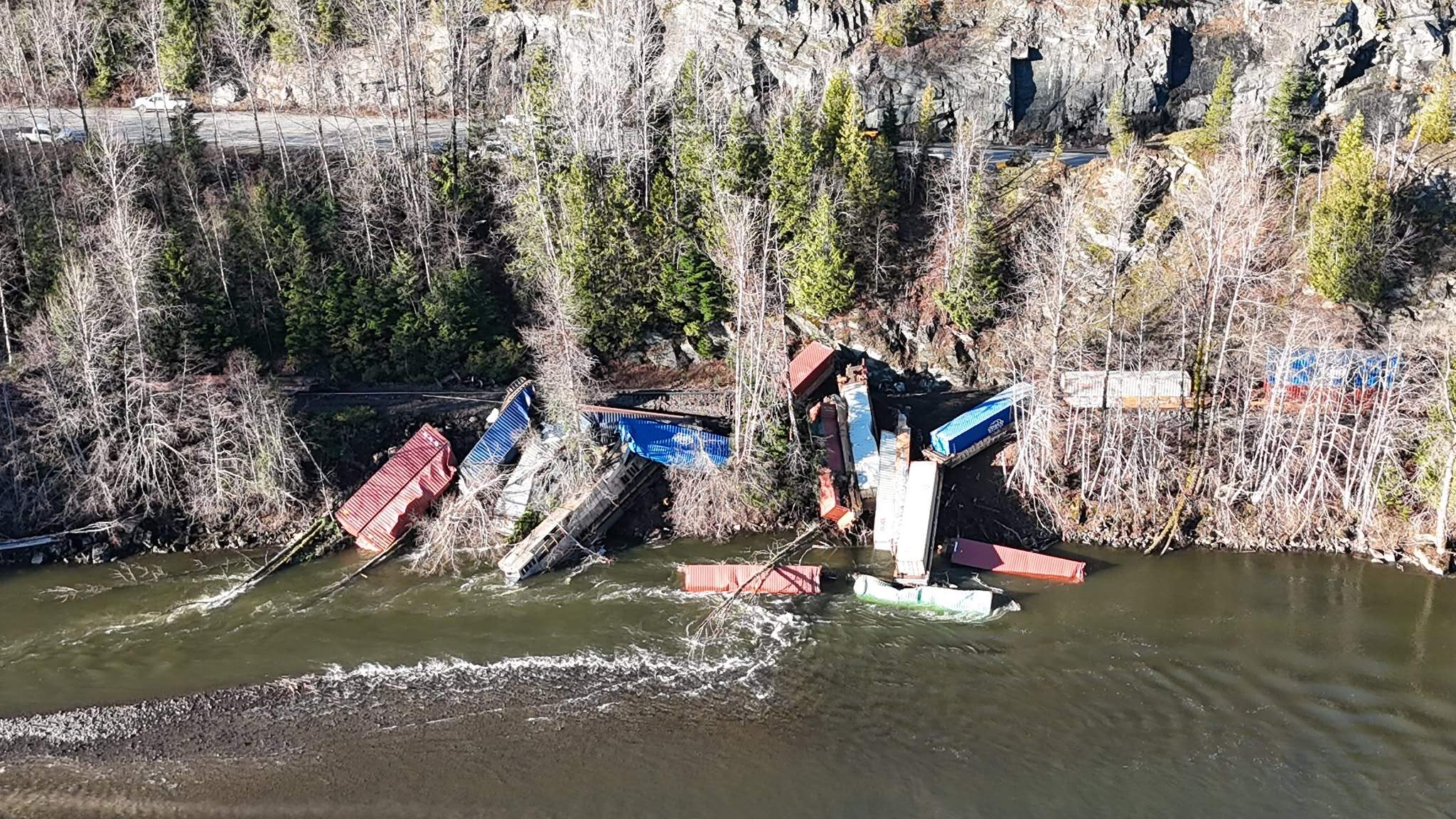
Steel screams before it breaks. Anyone who has spent a winter along the Skeena River knows the sound of heavy freight pushing through northern British Columbia—a low, rhythmic thunder that rattles the double-paned glass of riverside cabins and vibrates right up through the soles of your boots. Usually, it is the sound of commerce moving smoothly toward the Pacific ports. It is background noise, reliable as the tides.
Until the rhythm snaps.
Near Terrace, a stretch of track carved between granite mountains and the cold, rushing water of the Skeena became the site of that sudden silence followed by chaos. Two people were hurt when a train left the rails near this northern hub, turning an ordinary run along one of Canada’s most vital freight arteries into a sudden emergency response. Standard news briefs reduce an event like this to a tidy headline and three sentences about track closures and minor injuries. They give you the skeleton of the story and leave out the pulse.
To understand what actually happens when thousands of tons of rolling stock leave the steel near Terrace, you have to look beyond the twisted metal and step into the boots of the people who live and work along the corridor.
The Anatomy of a Northern Corridor
Let us picture a composite character—not a real person from the incident, whose medical privacy remains protected, but a hypothetical conductor we will call Martin, built from the lived realities of crews who run the northern line between Prince George and Prince Rupert.
For Martin, the cab of a locomotive isn't an office; it is a vibrating, climate-controlled capsule suspended over fifty miles of wilderness at a time. Out the front windshield, the Skeena River winds like a grey ribbon through stands of hemlock and spruce. In the colder months, frost clings to the shaded canyon walls long after the sun hits the peaks. The rails here do not run across flat, forgiving prairie. They hug the contours of ancient rockslides and riverbanks, threading a narrow needle where geography gives zero margin for error.
When you are inside that cab, physics is not an abstract concept from a high school textbook. Think of a fully loaded freight train like a long chain of bowling balls tied together with heavy elastic bands, rolling down a wet bowling alley. You cannot simply slam on the brakes and stop on a dime. Friction, momentum, and slack action—the violent wave of energy that ripples from the front of the train to the back when speeds change—dictate every second of the journey. A derailment happens in the space between heartbeats. One moment, the wheels are tracking true; the next, a sudden lateral lurch throws the cab sideways, the air brakes dump into emergency with a deafening hiss, and the world outside the glass tilts at an angle nature never intended.
When two people are injured in a derailment near Terrace, those injuries are rarely simple fender-benders. Even when authorities classify harm as non-life-threatening, the human body inside a derailing locomotive or maintenance vehicle absorbs violent kinetic energy. Whiplash, fractured ribs, lacerations from shattered safety glass, and the deep, lingering shock of surviving a sudden mechanical failure follow crews home long after the wreckage is cleared.
Why Remote Geography Changes Everything
If a train jumps the tracks in an urban rail yard in Vancouver or Toronto, ambulances arrive in four minutes on paved roads under streetlights. Near Terrace, rescue is a logistical puzzle fought against terrain and distance.
Terrace sits at a crucial crossroads in northwestern British Columbia, roughly 140 kilometers east of the coastal port of Prince Rupert. Highway 16 runs parallel to the rail line for much of the way, separated in spots by dense timber, steep embankments, and the river itself. When emergency dispatchers receive the call that a train has derailed outside town, paramedics, firefighters, and railway emergency response officers cannot simply pull up to a curb.
They have to navigate narrow access roads, haul heavy extraction gear over uneven ballast rock, and stabilize injured crew members while diesel fumes hang in the damp northern air. Every minute stretches. If you have ever stood beside a rural highway in northern BC waiting for tow trucks in sub-zero weather, you know how quickly the isolation presses in on you. Multiply that feeling by ten when someone is bleeding in a tilted cab beside a fast-moving river.
According to Transportation Safety Board of Canada data over the past decade, main-track derailments across the country often stem from a familiar triad of culprits: track infrastructure defects, equipment failures like broken wheels or axles, and human or operational factors. In the northern corridors, Mother Nature adds her own heavy thumb to the scale. Freeze-thaw cycles heave the ground beneath the ties. Heavy rain saturates steep slopes, triggering rockfalls onto the rails just around blind curves. Steel itself grows brittle when temperatures plunge, making tiny, invisible micro-fractures suddenly give way under the crushing axle loads of modern freight cars.
I have walked along inactive stretches of northern rail beds in the shoulder seasons, feeling the loose gravel shift underfoot and seeing how close the water creeps to the embankment. Looking at that narrow shelf of crushed rock, it is hard not to feel a sudden flash of vulnerability. We build trillion-dollar supply chains across these tracks, yet from a few hundred yards away, a railway looks fragile—just two thin ribbons of steel pinned to wooden or concrete ties, holding back tens of thousands of tons of momentum.
The Invisible Shockwaves in a Small Town
When a rail incident makes the regional news, outsiders often ask a predictable set of questions: Was hazardous cargo spilled? Is the highway closed? How long until freight starts moving again?
Those are fair questions, especially in a region where the Skeena River sustains wild salmon runs that form the lifeblood of Indigenous communities and local economies alike. Whenever steel leaves the tracks near water, the first wave of anxiety in Terrace isn't about delayed shipping containers; it is about what might be leaking from the cars into the watershed. Containment booms and environmental assessments become immediate priorities alongside medical evacuation.
Yet there is another shockwave that rarely shows up in corporate press releases.
Terrace is not an anonymous metropolis where accidents disappear into the daily noise. It is a tight-knit community of roughly twelve thousand people where railroaders, mill workers, paramedics, and nurses drink coffee at the same diners and coach the same youth hockey teams. When word spreads through town that two people were hurt on the tracks just outside city limits, phone trees light up instantly. Spouses stare at their screens waiting for a text message confirming their partner is safe. Shift workers at the local hospital prepare for neighbors to roll through the ambulance bay doors.
Consider what happens next in the days following the crash. Heavy cranes and yellow excavators roll in to clear the crumpled cars and rebuild torn-up sections of roadbed. Investigators from the rail company and federal safety regulators walk the ties with clipboards and cameras, measuring wheel marks and inspecting fractured steel to piece together the exact sequence of failure. To passing motorists on Highway 16, it looks like a construction site—an inconvenience, a temporary bottleneck in the flow of goods between the interior and the coast.
For the two people recovering from their injuries, however, the timeline moves much slower.
Living With the Echo of the Rails
We tend to treat transportation accidents like isolated glitches—an error code on a screen that gets cleared once the wreck is hauled away and the trains start rolling again. That perspective misses the human ledger entirely.
Railroaders carry a quiet pride in moving the things modern life depends on: grain, lumber, fuel, minerals, and containers packed with everyday goods. They work irregular hours in punishing weather, trusting the steel beneath them and the signals ahead. When that trust is broken, the physical bruises heal faster than the hypervigilance that replaces them. Every rattle in the undercarriage, every sudden sway around a river bend, becomes a reminder of how fast control can vanish.
The next time a freight train rumbles past a crossing, rattling your dashboard while you wait for the gates to rise, look past the graffiti on the boxcars and the sheer scale of the machinery. Think about the two people sitting in the cab at the front, reading the tracks ahead in the dark, betting their safety on miles of cold steel winding through the mountains.
Out near Terrace, the heavy cranes eventually pack up, fresh ballast is tamped down beneath new ties, and the low thunder returns to the Skeena valley—leaving behind two injured workers, a scarred stretch of riverbank, and the quiet reminder that nothing moves across this country without someone putting their body on the line to keep it on the rails.


