The air in the command center at Boufarik was thick with the scent of stale espresso and ozone. Outside, the desert night pressed against the reinforced glass like a heavy, dark velvet curtain. Inside, men and women in crisp uniforms stared at a glowing green arc tracing a path across a digital map.
That line represented more than navigation data. It represented a line in the sand.
For decades, the southern horizon was treated as a distant weather system. You watched it gather. You tracked the low pressure of instability, the rising heat of extremism, the sudden storms of military coups that seemed to sweep through the Sahel with terrifying predictability. Algeria watched from its northern balcony, maintaining a posture of strict, almost monastic non-interference. Boundaries were sacred. Sovereignty was a shield. You secured your own perimeter, locked your gates, and let the neighbors solve their own fires.
Then the roof caught flame.
Consider what happens when a doctrine forged in the fires of an independence war meets the messy, bleeding reality of the twenty-first century.
To understand why a gray transport aircraft painted with Algerian colors crossing into Niger changes the strategic map of North Africa, you have to stand on the tarmac of Tamanrasset. The wind there doesn't just blow; it scours. It strips the paint off vehicles and fills the eyes with grit. I stood there years ago, talking to a border logistics officer whose face was lined like an old map. He pointed south into the emptiness of the Ténéré desert and said something that stayed with me.
"The border is a mapmaker's lie," he told me, wiping dust from his goggles. "Trouble doesn't need a passport. It walks on two legs, and it doesn't care about coordinates."
That philosophy—long whispered in the mess halls of the Armée Nationale Populaire—has finally become state policy.
The immediate trigger was not subtle. Niger, buckling under the weight of international sanctions, domestic insurgencies, and a shifting geopolitical chess match that saw traditional Western partners packing their bags, found itself staring at a humanitarian and security abyss. The coup in Niamey was not just a change of government; it was the collapse of a dam.
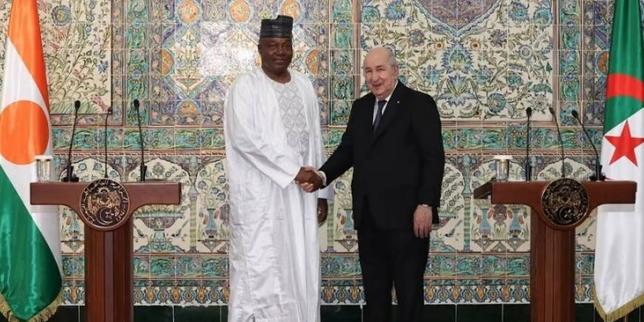
When Niamey turned its gaze northward for air support, for lifelines, for a neighbor who understood that a failed state on the southern border is an existential threat rather than a foreign policy puzzle, Algiers faced a stark choice. Stick to the dogmatic playbook of non-intervention, or rewrite the rules in real-time.
They chose the iron bird.
Transport planes do not carry bombs. They carry gravity. They carry urgency. They carry pallets of medical supplies, flour, spare parts, and, crucially, a message.
Military analysts in Paris and Washington blinked hard when the flight logs cleared. For years, Western capitals tried to enlist Algeria in various regional security architectures, only to be met with polite, firm refusals based on the constitutional prohibition against deploying troops beyond national borders. Algeria preferred quiet diplomacy, back-channel mediations, and heavily guarded fences.
Yet doctrine is only useful until it stops working.
Imagine sitting in a mud-brick compound in Agadez, listening to the rotor wash of a helicopter overhead, wondering if the next wave of gunmen is a mile away or an hour away. That is the reality for millions in the Sahel today. The collapse of regional bodies like ECOWAS to effectively manage the crisis, combined with the sudden withdrawal of French and American counter-terrorism footprints, left a vacuum so vast it could be seen from space.
Nature abhors a vacuum. Geopolitics fears it even more.
By dispatching military aircraft, Algeria crossed a Rubicon of its own making. This was not an act of aggression. It was an act of profound, pragmatic survival. A burning Niger bleeds into southern Algeria. An ungoverned space in the Sahara becomes a superhighway for arms traffickers, drug syndicates, and jihadist franchises whose ultimate ambition is the overthrow of the North African political order.
The transition from passive neighbor to active stakeholder is messy. It invites suspicion. Critics in foreign capitals wonder if Algiers is trying to fill the shoes of a departed hegemony, building a sphere of influence through logistics and air bridges. Other factions worry about mission creep, the slippery slope that begins with humanitarian transport and ends with boots on the ground in a quagmire.
These are fair fears. History is littered with the bones of well-intentioned interventions that curdled into disasters.
Yet staying home was no longer an option.
To grasp the human stakes, look past the generals and the policy papers. Look at Fatima, a schoolteacher I met years ago in a border town whose name has long since faded from my notebooks. She had three brothers who vanished into the caravan trade across the Sahara when work dried up. Two came back with stories of brutality and extortion by armed groups operating in the lawless zones between Mali, Niger, and Libya. The third didn't come back at all.
For Fatima, geopolitics is not an abstraction of doctrine or defense budgets. It is the sound of an engine in the night. It is the fragile hope that someone, somewhere, is finally taking control of the chaos before the chaos takes her children.
The flight of those military planes is a signal that Algiers finally understands what Fatima has known for a decade. You cannot quarantine a continent. You cannot build walls high enough to keep out the consequences of your neighbors' collapses.
The doctrine has shifted because the desert has shifted. The dunes move, the wind changes direction, and nations that refuse to turn with the weather eventually find themselves buried beneath it.
The green arc on the radar in Boufarik reached its destination hours later. The cargo was unloaded in the dry heat of the Sahelian night. The engines whined down, cooling in the dark, ticking softly as the metal contracted.
Out there in the vast, indifferent expanse of sand and stars, the map was being redrawn. And the ink was still wet.