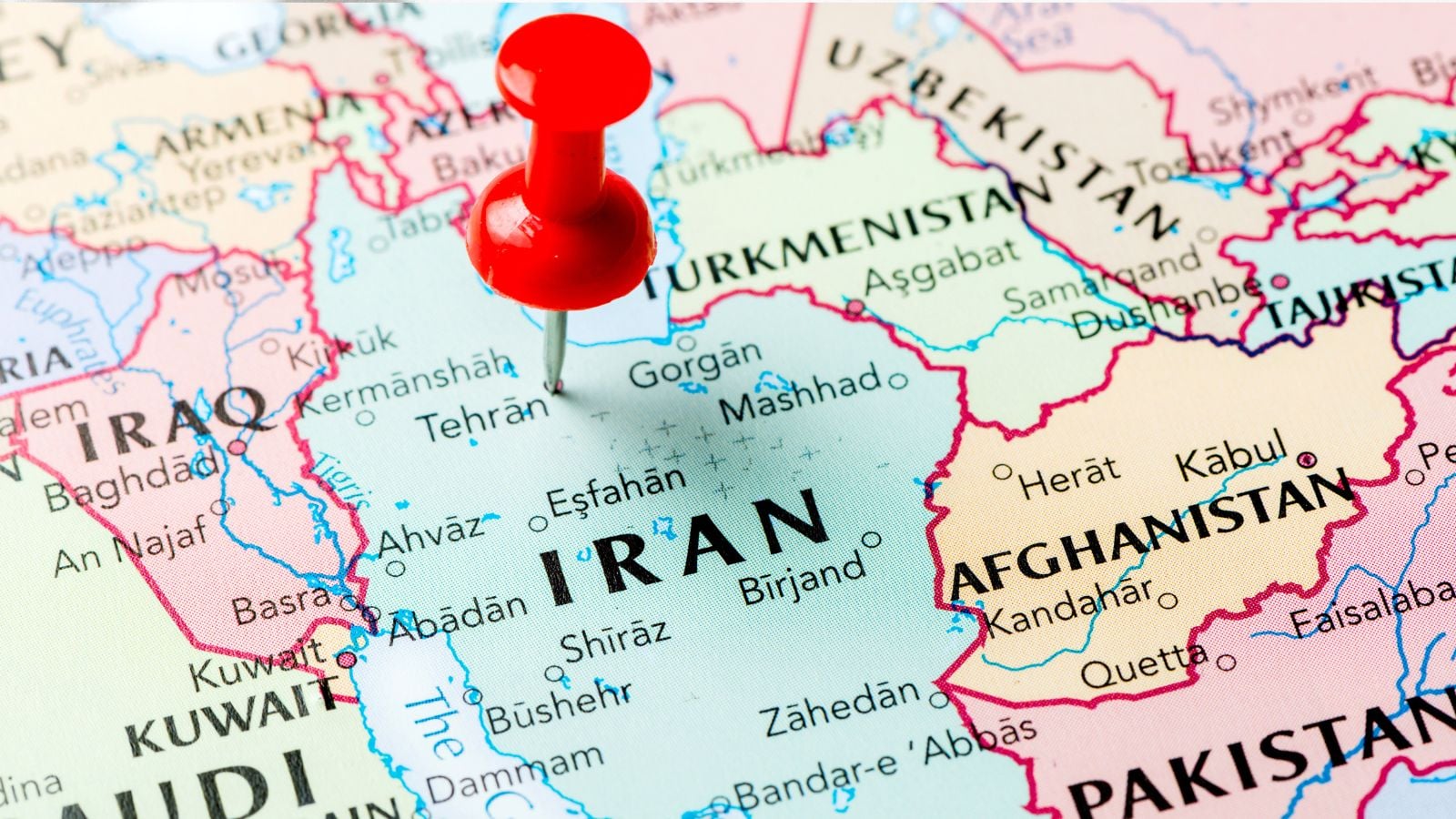
Every November 4, thousands of people march through the streets of Tehran carrying flags, burning effigies, and chanting slogans against the United States and Israel. If you only glance at the wire photos, it looks like a frozen moment from 1979. Same banners. Same chants. Same location outside the former American diplomatic compound on Taleghani Street.
Most Western coverage treats these rallies as simple annual theater, a predictable photo-op of state-sponsored anger. That misses the actual point. For Iran’s leadership, the anniversary of the US embassy takeover isn't just a history lesson—it's an active political tool used to project domestic control and send calibrated warnings abroad, especially when regional tensions with Israel and Washington are running hot.
What Happened on November 4, 1979
To understand why the Iranian government pours so much energy into this specific date, you have to look at what the event actually did for the Islamic Republic's founders.
On November 4, 1979, just months after the Pahlavi monarchy collapsed, a group calling itself the Muslim Student Followers of the Imam's Line scaled the walls of the US Embassy in Tehran. They took 66 Americans hostage, eventually holding 52 of them for 444 days until January 20, 1981. The immediate trigger was Washington's decision to admit the ousted Shah, Mohammad Reza Pahlavi, into the United States for cancer treatment. Many Iranians feared a repeat of the 1953 CIA-backed coup that had toppled Prime Minister Mohammad Mossadegh and restored the Shah to power.
But inside Iran, the crisis served a much bigger purpose. Ayatollah Ruhollah Khomeini used the standoff to sideline moderate factions within the post-revolutionary coalition and consolidate power around a hardline, anti-imperialist ideology. The embassy itself was famously dubbed the "Den of Espionage" by Iranian officials, a label that still appears on street signs and state broadcasts today.
In the official Iranian calendar, November 4 (13 Aban) is designated as the "National Day of the Fight Against Global Arrogance." Schools close or organize field trips to the rallies. State television broadcasts live feeds from Tehran, Mashhad, Isfahan, and Qom. It is baked directly into the institutional memory of the state.
Why Israel Always Shares the Spotlight at These Rallies
If you look closely at recent November 4 photos from Tehran, you'll notice something distinct. While the event commemorates a 1979 confrontation with the United States, Israeli flags and imagery targeting Israeli leaders often dominate the crowd.
This isn't accidental. In the worldview promoted by Tehran's political and military establishment, the United States and Israel are treated as a single, indivisible strategic bloc—frequently referred to in state rhetoric as the "Great Satan" and the "Little Satan."
Over the past several years, as direct and indirect military confrontations between Iran, Israel, and US forces in the Middle East have escalated, the November 4 rallies have morphed into a real-time barometer of Tehran's foreign policy posture. The speeches delivered from the podium outside the former embassy rarely stay stuck in 1979. Instead, senior commanders from the Islamic Revolutionary Guard Corps (IRGC) or high-ranking officials use the stage to address current conflicts in Gaza, Lebanon, and the wider region, framing ongoing military standoffs as a direct continuation of the 1979 revolution.
How the State Organizes the Crowds
A common misconception among outside observers is assuming these crowds are entirely spontaneous, or conversely, assuming nobody in attendance genuinely supports the message. Both views are overly simplistic.
If you've ever watched how large-scale state rallies operate in Iran, you know the logistics are heavily managed. Public sector employees, university students affiliated with the Basij paramilitary organization, and schoolchildren are routinely bused in from across the city. State media uses tight camera angles to emphasize density, showing seas of Iranian, Palestinian, and Hezbollah flags stretching down Taleghani Street.
At the same time, a core ideological base genuinely turns out for these events. For hardline supporters of the Islamic Republic, November 4 represents the ultimate act of defiance against foreign intervention—a moment when a newly formed revolutionary state stood up to a global superpower and didn't blink.
What the Former Embassy Looks Like Today
The physical compound where the crisis took place hasn't been used as a diplomatic mission in over four decades. Today, it operates as a museum managed by the Basij, officially called the "13 Aban Museum" or the "Den of Espionage Museum."
Visitors can walk through the rooms where diplomats once worked. Inside, the Iranian government preserved—and heavily curated—shredded documents that students painstakingly pieced back together after the takeover, alongside old encryption machines, telex terminals, and communication gear. The exterior walls are covered in anti-American murals, including altered versions of the Statue of Liberty and motifs referencing past US military actions in the region, such as the 1988 shootdown of Iran Air Flight 655 by the USS Vincennes.
Honestly, walking past those murals gives you a clear sense of how the state curates grievance. Everything is designed to link historical complaints directly to modern geopolitical friction.
What Analysts Actually Look For in the Photos
When foreign policy researchers and journalists examine photos from the annual November 4 rallies, they aren't just counting heads. They look for specific signals that reveal what Tehran is thinking right now:
- Who gives the keynote speech. Whether the main address comes from an IRGC commander, the speaker of parliament, or a civilian cabinet member tells observers whether the state wants to emphasize military deterrence or political messaging.
- The specific banners and mock-ups. Rallies frequently feature scale models of Iranian ballistic missiles, drones, or captured foreign hardware, signaling technological capability alongside ideological resolve.
- Slogans targeting current diplomatic tracks. When nuclear negotiations or backchannel talks with Washington are active, the tone of the official chants often shifts subtly to manage domestic hardliner expectations without completely closing the door on diplomacy.
How to Read Future Coverage of November 4
The next time photos of Iran's November 4 rallies hit your news feed, skip past the surface-level headlines and look at the details. Check who spoke at the podium in Tehran, look at the banners printed by state organizations rather than handwritten signs, and compare the rhetoric to whatever military or diplomatic standoff is unfolding in the Middle East that week. You'll get a much sharper read on Tehran's actual priorities than any generic wire caption will ever give you.