Tehran is displaying its ballistic missile arsenal to establish leverage ahead of high-stakes negotiations with the Trump administration, which is seeking a comprehensive, permanent agreement to replace the expired constraints of the 2015 nuclear accord. By parading solid-fuel rockets and underground missile facilities, Iranian military commanders are signaling that their conventional deterrent is non-negotiable, even as President Donald Trump’s foreign policy team insists that any durable settlement must address both uranium enrichment and regional ballistic capabilities.
The competitor headline—"Iran shows off missiles as President Trump aims for permanent deal"—captures the surface friction of this standoff, yet it misses the structural mechanics driving both capitals. In diplomatic terms, military parades in Tehran and maximalist rhetoric in Washington are rarely signs that talks are dead. More often, they represent the opening bids of a complex bargaining cycle where both sides must satisfy skeptical domestic audiences before making concessions at the negotiating table.
The Mechanics of Deterrence Signaling
To understand why the Islamic Revolutionary Guard Corps (IRGC) stages public displays of hardware during diplomatic overtures, one has to look at Iran’s asymmetric defense doctrine. Lacking a modern air force capable of matching United States or Israeli air superiority, Tehran relies on its missile force—the largest and most diverse in the Middle East—as its primary deterrent against direct military strikes.
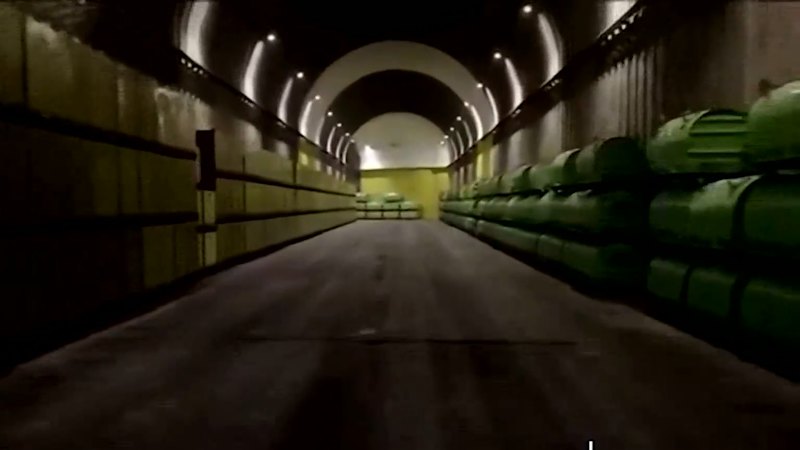
When Iranian state media broadcasts footage of subterranean "missile cities" or unveils upgraded variants of the Fateh and Khorramshahr ballistic lines, the target audience is threefold:
- Washington negotiators, who are being reminded that military action carries steep retaliatory costs for U.S. bases and regional allies.
- Regional neighbors, particularly Gulf states that host American assets and have spent recent years hedging their security bets through diplomatic normalization with Tehran.
- Hardline factions inside Iran, who view any engagement with a Trump administration—the same administration that unilaterally exited the Joint Comprehensive Plan of Action (JCPOA) in 2018—with deep suspicion.
According to defense analysts at institutions like the International Institute for Strategic Studies (IISS), Iran’s transition over the past decade from liquid-fuel to solid-fuel propellants has fundamentally altered the strategic calculus. Liquid-fueled missiles require hours of fueling prior to launch, leaving them vulnerable to satellite detection and preemptive strikes. Solid-fuel systems can be stored ready to fire, rolled out of underground tunnels on transporter-erector-launchers (TELs), and launched within minutes. Showing off these specific systems is a calculated reminder that Iran’s strike capability is mobile, survivable, and difficult to neutralize entirely from the air.
What Washington Means by a Permanent Deal
On the other side of the ledger, the Trump administration’s insistence on a "permanent deal" is a direct critique of the 2015 nuclear agreement brokered under the Obama administration. That framework relied heavily on sunset clauses—provisions that gradually lifted restrictions on Iran’s centrifuge research, enrichment capacity, and ballistic missile testing over a 10-to-15-year window.
Critics of the 2015 accord argued that those expiration dates merely delayed, rather than prevented, Iran’s path to a nuclear weapons threshold. By framing the current objective around permanence, White House officials are signaling a desire for an agreement without expiration dates, paired with intrusive International Atomic Energy Agency (IAEA) verification protocols and strict caps on missile range and payload.
Yet the gap between Washington’s definition of permanence and Tehran’s red lines remains wide. Iranian officials, including Supreme Leader Ayatollah Ali Khamenei and senior diplomats in the Foreign Ministry, have consistently stated that while Iran’s nuclear program is open to technical verification, its defensive missile program is off-limits. From Tehran’s perspective, surrendering ballistic capabilities without receiving ironclad security guarantees—and a mechanism that prevents a future U.S. president from tearing up the agreement again—would amount to unilateral disarmament.
The Economic Engine Behind the Diplomacy
Beneath the military posturing lies an acute economic reality that forces both sides toward the table. Years of U.S. "maximum pressure" sanctions, targeting oil exports, banking access, and shipping networks, have inflicted severe structural damage on the Iranian economy. Inflation remains persistently high, the rial has suffered prolonged depreciation, and aging energy infrastructure requires billions of dollars in foreign investment to maintain output.
Sanctions relief is the only currency that matters to Tehran. However, Iranian negotiators learned a hard lesson between 2015 and 2018: lifting sanctions on paper does not automatically bring Western capital back into the country if global banks fear secondary U.S. penalties. Consequently, Iranian officials are demanding not just the removal of executive-order sanctions, but tangible guarantees of financial access and oil revenue repatriation.
For the Trump administration, the economic leverage is clear, yet it is not absolute. Over the past several years, Iran has built a resilient, sanctions-evading oil supply chain—often referred to as the dark fleet—that moves crude primarily to independent refiners in China via ship-to-ship transfers and reflagged tankers. While tightening enforcement on these networks can squeeze Tehran’s revenues further, cutting Iranian oil off entirely risks tightening global crude supplies and driving up energy prices, an outcome any White House seeks to avoid.
The Regional Equation and Shifting Alliances
Any bilateral negotiation between Washington and Tehran operates within a volatile regional ecosystem. Israel’s leadership has repeatedly warned that a diplomatic agreement that leaves Iran’s enrichment infrastructure intact or ignores its missile and drone transfers to regional proxies—such as Hezbollah in Lebanon, the Houthis in Yemen, and militias in Iraq—would be unacceptable. Israeli officials continue to maintain that a credible military option must remain on the table if diplomacy fails to dismantle Tehran’s nuclear threshold status.
Meanwhile, Arab Gulf states, led by Saudi Arabia and the United Arab Emirates, have adopted a markedly more cautious posture than they held a decade ago. Having experienced the vulnerability of their energy infrastructure to drone and missile strikes, Riyadh and Abu Dhabi have prioritized regional de-escalation. While they share American concerns about Iran’s ballistic arsenal, Gulf leaders have largely signaled that they prefer a negotiated containment framework over a direct military confrontation that could spill across the Persian Gulf and disrupt global shipping lanes through the Strait of Hormuz.
The Verification Dilemma
Even if negotiators bridge the political divide, technical experts point out that verifying a permanent deal in the current environment is vastly more complicated than it was in 2015. Over the last several years, Iran has accumulated extensive technical knowledge in operating advanced centrifuges—such as the IR-6 and IR-9 models—and has enriched uranium up to 60 percent purity, a short technical step away from weapons-grade levels of 90 percent.
You cannot un-invent scientific knowledge. Even if physical centrifuges are placed under seal or dismantled, the engineering expertise remains inside Iran. Furthermore, tracking ballistic missile production requires an entirely different verification architecture than monitoring nuclear fuel cycles. Missile components, dual-use machine tools, and solid-fuel precursors are smaller, easier to conceal in hardened underground facilities, and far harder for international inspectors to audit without unprecedented military site access—access that Iran’s military establishment has historically rejected as espionage.
Where Leverage Meets Reality
The spectacle of Iranian missile parades alongside American calls for a permanent settlement illustrates the central paradox of coercive diplomacy. Both governments are attempting to project strength to mask their respective constraints. Tehran wants sanctions lifted without giving up the asymmetric weapons it believes keep the regime secure; Washington wants permanent restrictions on Iran’s nuclear and missile programs without getting drawn into another protracted Middle Eastern conflict.
Whether these parallel tracks converge into a durable treaty or collide into a sharper crisis depends on how both capitals define compromise when the cameras leave the parade grounds and the technical teams enter the room. In diplomacy, hardware on a flatbed truck is a statement of intent, but the final terms are always dictated by how much economic pain one side can endure and how much strategic risk the other is willing to accept.