Picture trying to let an auditor walk through your damaged warehouse while someone stands outside aiming a wrecking ball at the front door. That's basically how Tehran frames its latest standoff with the world's atomic watchdog.
In November 2026, Iran officially informed the International Atomic Energy Agency (IAEA) that talks over resuming nuclear monitoring cannot move forward while the country remains under the threat of military strikes. The message landed right alongside a tense quarterly IAEA report circulated to member states, exposing a massive blind spot in global nuclear oversight. Since June 2025, international inspectors have been shut out of almost every atomic site inside Iran.
Most headlines treat this like routine diplomatic stubbornness. It isn't. When you look closely at what happened on the ground over the past seventeen months, the freeze in nuclear monitoring looks less like a bureaucratic delay and more like a high-stakes standoff over intelligence, survival, and 440.9 kilograms of near-weapons-grade uranium.
What Actually Happened Between Iran and the IAEA
To understand why nuclear monitoring hit a brick wall in November 2026, you have to rewind to June 2025. Between June 13 and June 24, 2025, military strikes hit several of Iran's declared nuclear facilities. Those attacks destroyed or heavily damaged Iran's three operational uranium enrichment plants at Natanz and Fordow, along with facilities in Isfahan.
Safety vanished overnight. By the end of June 2025, the IAEA pulled all of its inspectors out of the country because of active security risks. Days later, on July 2, 2025, Iranian President Masoud Pezeshkian signed a law passed by parliament suspending cooperation with the UN agency until Iran's Supreme National Security Council decides specific security conditions have been met.
Fast forward to November 2026. IAEA Director General Rafael Grossi has spent months urging Tehran to accept "technical and gradual measures" so inspectors can return. Instead, Iran told the agency flatly that nuclear monitoring discussions can't go anywhere while military threats persist. At the IAEA Board of Governors meeting in Vienna later that month, Iranian representatives argued there is no solid guarantee that information gathered during inspections wouldn't leak to the United States and get used to plan fresh strikes.
Honestly, whether you buy Tehran's argument or think it's a convenient excuse, the result on the ground is identical. The world's primary safeguard against nuclear proliferation in the Middle East is flying blind.
The Bushehr Exception and Why It Doesn't Solve Anything
You might hear diplomats point out that IAEA inspectors did visit Iran in September 2026. That's true, and it's also completely misleading if you think it means oversight is working.
Between September 12 and 15, 2026, inspectors visited the Bushehr nuclear power plant on the Persian Gulf coast. Bushehr remains the only Iranian facility the IAEA has inspected since June 2025. Here is why that single exception doesn't calm proliferation fears:
- Low enrichment levels: The active reactor at Bushehr runs on Russian-supplied uranium enriched to just 4.5 percent. That's standard fuel for civilian electricity generation and useless for a bomb.
- Strict bilateral oversight: Moscow supplies the fuel and oversees the reactor's fuel cycle, leaving zero room for covert diversion at that specific plant.
- Zero visibility elsewhere: Granting access to Bushehr costs Tehran nothing strategically while allowing officials to claim they haven't totally severed ties with Vienna.
Meanwhile, the facilities that actually matter for weapons proliferation—damaged enrichment halls, underground tunnels, and storage vaults—remain off-limits.
The 440.9 Kilogram Question Keeping Diplomats Awake
Strip away the diplomatic jargon, and the entire crisis boils down to one number: 440.9 kilograms.
According to IAEA estimates, Iran had amassed 440.9 kilograms (about 972 pounds) of uranium enriched up to 60 percent purity prior to the June 2025 strikes. Under normal IAEA rules, inspectors verify material enriched to that level every single month. Why? Because jumping from 60 percent enrichment to the 90 percent weapons-grade threshold is a short, technical step.
IAEA chief Rafael Grossi has warned that this stockpile could theoretically provide enough fissile material for roughly 10 nuclear bombs if Tehran chose to weaponize it.
Since June 2025, nobody outside Iran knows for sure where that 440.9 kilograms is sitting, how much survived the bombings intact, or whether any of it has been moved. In its November 2026 quarterly report, the IAEA admitted it can no longer verify that nuclear material hasn't been diverted from peaceful use. Even worse, Tehran declared a fourth enrichment facility at Isfahan right on the eve of the June 2025 strikes. Inspectors never got to verify its design before the bombs fell, and the agency still doesn't know its exact layout or whether it holds enriched uranium.
Relying on Satellites Instead of Boots on the Ground
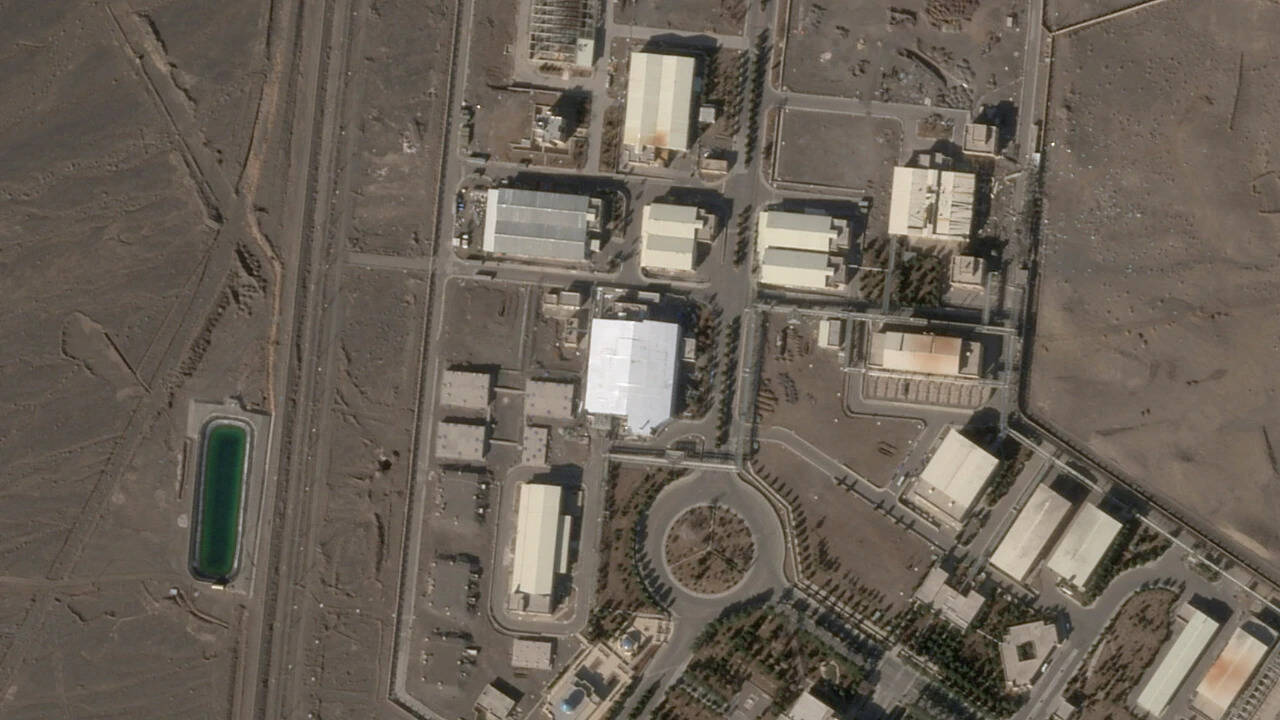
Without human inspectors inside the country, the IAEA has been reduced to analyzing commercial satellite photos and open-source intelligence. Satellites are great at spotting big physical changes. For example, commercial imagery through 2026 showed workers covering bombed structures at Natanz and Isfahan with roofing and fortifying tunnel entrances around Isfahan and Pickaxe Mountain.
Satellites can't see through reinforced concrete or steel drums. You can't measure isotopic purity from orbit, and you definitely can't count missing cylinders of uranium hexafluoride from space. Commercial imagery tells analysts that trucks drove up to a tunnel entrance; it never tells them what was inside the trucks.
What Most People Miss About Iran's Security Argument
Western diplomats—including officials from the United States, Britain, France, and Germany—argue that Iran is legally obligated under the Treaty on the Non-Proliferation of Nuclear Weapons (NPT) to let inspectors back in immediately. Legally, they are right. Under standard safeguards agreements, a country doesn't get to pause inspections just because tensions are high.
Yet dismissing Tehran's security excuse entirely misses the real tactical dilemma driving Iranian decision-makers.
From Tehran's perspective, IAEA verification creates precise geolocation data. Inspectors catalog where centrifuges sit, how deep underground halls go, and which vaults hold enriched stockpiles. When your nuclear infrastructure has already been bombed once and military threats remain active, handing over exact inventory maps feels like painting fresh targets for the next airstrike.
At the same time, keeping inspectors out gives Tehran massive leverage. Ambiguity is a shield. As long as Washington and European capitals don't know where the 440.9-kilogram stockpile is hidden, military planners face a nightmare scenario: bombing a facility without knowing if it's empty or if a strike will scatter radioactive material.
Inside Iran, that ambiguity is also fueling an open debate over nuclear doctrine. Hardline factions and some officials have increasingly questioned Iran's longstanding ban on nuclear weapons, arguing that conventional deterrence failed to stop direct strikes on Iranian soil. While Tehran officially insists its program remains peaceful—and Western intelligence agencies maintain Iran halted its organized weapons program back in 2003—the longer monitoring stays frozen, the easier it becomes for hardliners to push for a breakout.
How to Track This Crisis Without Falling for Noise
If you're following Middle East geopolitics, energy markets, or nuclear policy, headlines about IAEA resolutions can get repetitive fast. Most diplomatic statements at Vienna board meetings generate heat without changing facts on the ground.
Instead of reacting to every press conference, watch three concrete indicators over the coming months:
- Changes to the July 2025 parliamentary law: Diplomatic promises mean very little until Iran's Supreme National Security Council formally authorizes renewed access under the legal framework passed in July 2025. Look for official directives out of Tehran, not vague remarks on the sidelines of UN meetings.
- Design information questionnaires (DIQs) for Isfahan: Before inspectors even walk into a new facility, a country submits formal design blueprints. If Tehran finally hands over the exact coordinates and layout for the underground Isfahan enrichment plant declared in June 2025, that signals genuine de-escalation.
- Containment and surveillance equipment installation: Before full human inspections resume, the IAEA often negotiates the return of tamper-proof cameras and electronic seals. Watch for reports that Iranian technicians have allowed IAEA engineers to service monitoring hardware at damaged sites.
Until at least one of those three shifts happens, nuclear monitoring in Iran remains deadlocked. Every month that passes without eyes on that 440.9-kilogram stockpile widens the intelligence gap, raises the risk of miscalculation, and pushes both Washington and Tehran closer to another military confrontation.

