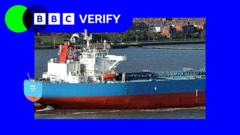
The English Channel looks serene from the white cliffs of Dover. On a clear day, you can watch the ferries slice through the gray-blue water, carrying tourists, freight, and everyday life between Britain and Europe. It looks ordered. It looks safe. But beneath that placid surface lies the world’s most congested maritime highway, a narrow choke point where a single mistake can trigger an environmental or geopolitical catastrophe.
A few weeks ago, something slipped into these waters.
It didn't fly a flag of defiance, nor did it signal its intentions to the world. It was a ghost ship in broad daylight—a massive, rusting oil tanker belonging to Russia’s "shadow fleet." This wasn't just another routine transit. It was the first time an aging vessel of this specific, sanctioned network dared to enter the English Channel since the dramatic boarding of the Smyrtos by international authorities.
To understand why this matters, you have to look past the dry maritime registries and international sanctions paperwork. You have to imagine standing on the bridge of a vessel that technically, legally, does not exist.
The Ghostly Anatomy of a Shadow Tanker
Picture a ship built twenty years ago. In the shipping industry, two decades is old age. The steel is tired. The engines have been pounded by millions of barrels of heavy crude and thousands of miles of rough seas. Under normal circumstances, a ship like this would be bound for a scrapyard in Alang or Chittagong, broken down for recycled metal.
Instead, it gets a second life in the shadows.
A shell company registered in a tropical tax haven buys the vessel for cash. The name on the hull is hastily painted over. A new flag is hoisted—perhaps from a landlocked country or a tiny island nation with no capacity to regulate maritime safety. The transponder, the automated system meant to broadcast the ship's position to prevent collisions, is flipped off.
Blackout.
This is the shadow fleet. It is a armada of hundreds of aging, poorly maintained vessels assembled specifically to bypass Western sanctions on Russian oil. They carry millions of barrels of highly flammable crude across the globe, operating entirely outside the traditional banking, insurance, and regulatory systems that have kept global shipping relatively safe for decades.
When a shadow fleet tanker enters the English Channel, it isn't just carrying cargo. It is carrying a ticking environmental time bomb through one of the most densely populated coastal regions in the world.
The Echoes of the Smyrtos
The tension in the Channel didn't appear out of nowhere. The current standoff is defined by what happened to the Smyrtos.
When maritime authorities and naval forces intercepted and boarded the Smyrtos, it sent a shockwave through the illicit shipping networks. It was a rare, aggressive assertion of international law—a declaration that the waters surrounding Europe would not become a free-for-all zone for uninsured, unregulated hazards. For months afterward, the shadow fleet hesitated. They took the long way around. They avoided the narrow, heavily monitored waters of the Channel, choosing instead to loop around the north of Scotland or linger in the deep ocean.
But deterrence has an expiration date.
The recent re-entry of a shadow fleet vessel into the Channel is a calculated test. The operators are probing the boundaries, watching to see how coastal states react. They are betting that Western nations, distracted by domestic politics and economic pressures, will look the other way rather than risk a major diplomatic or physical confrontation at sea.
Consider what happens next if the gamble pays off. One ship becomes three. Three become a dozen. Soon, a steady stream of unmapped, uninsured hazards becomes a permanent fixture of European waters.
The Insurance Illusion and the Threat of the Slick
If a standard commercial oil tanker suffers an engine failure or collides with another vessel in the Channel, a massive, highly sophisticated safety net swings into action. Lloyds of London or other major Western maritime insurers step in immediately. They fund emergency salvage operations, dispatch tugboats, and guarantee billions of dollars to clean up any spilled oil and compensate local communities.
The shadow fleet operates with no such net.
Their insurance policies are often written by obscure, state-backed entities inside Russia or domestic firms with zero track record of handling a multi-billion-dollar disaster. If one of these ships loses power in a winter storm and drifts onto the rocks of the French or British coast, there is no corporate entity to hold accountable. There is no pool of insurance money to pay for the cleanup.
The cost lands squarely on the shoulders of the people who live along the coast.
Imagine the fishermen in Kent or Normandy waking up to find their livelihoods coated in thick, black sludge. Imagine the decades of environmental damage to fragile marine ecosystems, paid for not by the oligarchs profiting from the oil, but by local taxpayers. It is privatization of profit and socialization of catastrophic risk on a global scale.
Navigating the Blind Spot
The true danger isn't just mechanical failure; it is human error driven by isolation.
The crews aboard these shadow vessels are often caught in a desperate trap. Many are sailors from developing nations, lured by the promise of high wages but stripped of their basic rights once at sea. They operate under intense pressure from their anonymous employers to keep moving, to keep the oil flowing, no matter the weather or the state of the ship’s machinery.
Because these vessels frequently turn off their Automatic Identification Systems (AIS) to hide their origins, they effectively go blind to the tracking systems used by coastal coastguards. They become massive, moving obstacles that other commercial vessels must actively dodge.
In the narrow lanes of the Channel, where giant container ships, passenger ferries, and fishing boats cross paths every few minutes, navigating without AIS is the maritime equivalent of driving a semi-truck down a crowded highway at night with the headlights turned off.
The authorities watching from shore are not blind, of course. Satellite imagery, radar tracking, and aerial reconnaissance allow Western intelligence and maritime agencies to spot these rogue actors. But spotting a ship is very different from stopping it. International law regarding the freedom of navigation gives vessels wide latitude to transit through international straits, even when their motives and safety standards are deeply questionable.
The sun sets over the Channel, painting the water in shades of amber and gold. To the casual observer on the shore, the distant silhouette of a tanker on the horizon looks like a symbol of global commerce, a quiet engine of the modern economy. But look closer, and the illusion fades. That silhouette represents a fraying global order, a high-stakes game of hide-and-seek played out with millions of gallons of oil and the safety of our coastlines. The ghost ship has returned to the Channel, and the quiet waters may not stay quiet for long.


