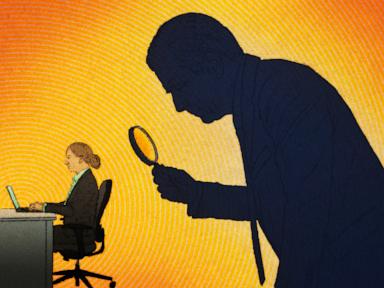
The coffee was still warm on the desk, but the digital clock at the bottom of the monitor had already recorded five minutes of inactivity.
To a human manager walking past the cubicle, those five minutes might represent a brief mental reset, a stare out the window, or a moment spent gathering thoughts for the next difficult email. To the software running quietly in the background of the machine, those five minutes represented a drop in productivity metrics. A red flag. A tiny entry in a database that would eventually inform an algorithm whether the person sitting in that chair deserved a bonus, an extra project, or a quiet conversation about efficiency.
We built computers to free us from tedious labor. Instead, they became the ultimate timekeepers.
When workplace monitoring moved from the factory floor to the software layer, it shed its heavy boots and put on invisible shoes. Nobody punches a physical clock anymore. Nobody stands by the door with a clipboard tallying bathroom breaks. The tracking is subtler now. Keystroke telemetry, webcam gaze detection, active window tracking, and periodic random screenshots combine to form a digital shadow of every working hour.
Consider a hypothetical employee named Sarah. Sarah is a senior copywriter at a mid-sized marketing firm. She spends her mornings pacing her apartment, mumbling fragments of sentences to herself, waiting for a hook to land. For twenty minutes, her hands do not touch the keyboard. In the old days, her boss might have noticed her staring into space and known she was deep in thought. Today, her software notes that the active window has not changed and the mouse has not moved.
To the system, Sarah is idle. To her craft, Sarah is working.
This tension sits at the very heart of modern employment. We have traded the messy, empathetic friction of human management for the clean, unfeeling certainty of data analytics. Employers argue that monitoring tools are simply a response to remote and hybrid work models, a necessary way to maintain accountability when physical presence is no longer an option. There is a logic to this. When teams scatter across time zones, leaders look for proxies for trust. Dashboards replace office chatter. Metrics replace observation.
Yet, numbers are notoriously bad at capturing nuance.
A keystroke counter does not know the difference between a panicked message to a client and a leisurely chat with a friend. It records the action, not the intent. It strips away the context that makes human work valuable. Creativity is inefficient. Strategy often looks like staring blankly at a wall. Deep work requires long stretches where nothing appears to be happening on the surface.
When employees realize they are being watched by an algorithm, their behavior changes instantly. This is not a matter of paranoia; it is a rational response to surveillance. People begin to optimize for the metric rather than the outcome. They pad their days with artificial activity to keep the green status light glowing. They write longer emails than necessary. They move their mice in circles while thinking. They perform productivity.
Trust is a fragile ecosystem. Once you introduce a digital warden into the room, the nature of the relationship shifts from collaboration to compliance.
Management experts often frame software tracking as a neutral tool, a dashboard for operational awareness. But tools are never truly neutral. They encode a specific philosophy about human nature. Workplace monitoring software encodes the assumption that employees will steal time if given the chance, that every minute must be accounted for, and that human judgment is inferior to automated measurement.
Think about the psychological toll of that environment. Chronic low-grade anxiety settles into the bones. The knowledge that every pause, every shift in focus, and every second of hesitation is being logged creates a constant state of low-level performance stress. People stop taking risks. They stop experimenting. They stick to the safe, measurable path because coloring outside the lines leaves a messy trail of data that an algorithm might misinterpret.
We are measuring the wrong things because the right things are difficult to count.
How do you quantify mentorship? How do you measure the value of the colleague who stays late to talk through a struggling team member's problem? How do you capture the flash of inspiration that happens during a ten-minute walk around the block? You cannot. And because you cannot count them, systems built on tracking tend to devalue them.
The companies deploying these tools are rarely acting out of malice. Leadership teams are under intense pressure to deliver results in volatile markets. They want visibility. They want to know where the bottlenecks are. But visibility is not understanding. Looking at a stream of telemetry data is like looking at a musical score without hearing the music. You can see the notes, but you miss the melody entirely.
There is a better way, though it requires something much harder than installing software: actual management.
Real management involves talking to people. It involves setting clear expectations, defining outcomes, and then stepping back to let professionals do their jobs. It requires leaders to evaluate work based on its quality rather than its velocity. It takes courage to trust people, especially when the technology promises an easy shortcut to control.
The software will only become more sophisticated. Facial recognition, sentiment analysis, and predictive behavioral models are already waiting in the wings, promising even deeper insights into the human engine. We are approaching a fork in the road where organizations must decide what kind of workplaces they want to inhabit. Do we want a culture of surveillance where compliance is the highest virtue, or do we want a culture of trust where people are empowered to do their best work on their own terms?
The clock at the bottom of the screen keeps ticking. The software keeps logging. But the choice of what to do with that data remains entirely human.


