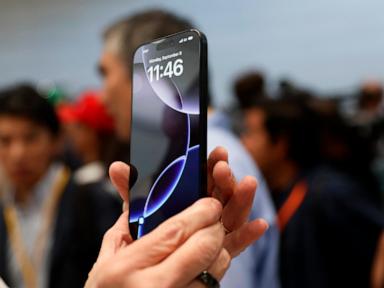
Sarah sits in a parked car, the blue light of her phone washing out the tired lines around her eyes. It is 11:42 PM. She didn't mean to stay this long. She came for a quick check on a message from her sister, but forty minutes have dissolved into the ether. Her thumb swipes upward, a rhythmic, Pavlovian twitch. Each flick of the glass brings a new burst of color, a snippet of a song, a stranger’s outrage, or a curated glimpse of a life more polished than hers.
She is not lazy. She is not weak-willed. She is currently the subject of the most sophisticated psychological siege in human history.
Behind that glass lies a digital architecture designed by people with PhDs in behavioral neuroscience, all working toward a single, cold metric: time on device. While Sarah thinks she is choosing what to watch, a massive array of server farms is calculating her specific vulnerabilities. This is the reality of algorithmic curation, a force that has quietly moved from suggesting songs to dictating the very texture of our social reality.
The Mirror That Only Reflects Your Shadows
To understand how we lost the steering wheel, we have to look at how these systems actually function. They aren't "smart" in the way humans are smart. They are statistical engines. They don't know what a "good" video is; they only know which video makes you stay.
If you show a child two toys, and they pick the red one, you might think they like red. If you then show them a hundred red toys and they keep playing, you feel validated. But the algorithm takes this a step further. It realizes that if it shows the child something that makes them slightly anxious or intensely curious, the child will grip the toy tighter. It learns that outrage is a more effective glue than joy.
Consider a hypothetical user named David. David is worried about the economy. He clicks on one video about rising inflation. The system notes the engagement. It doesn't offer him a balanced lecture on macroeconomics to "inform" him. Instead, it serves him a more alarmist video. Then a video about a coming collapse. Within two weeks, David’s entire digital world is a screaming siren of financial doom. He isn't being lied to by a person; he is being trapped by an echo of his own initial fear, amplified by a machine that mistakes his panic for interest.
The Ghost in the Machine
The problem isn't just that we are seeing more of what we like. It is that we are losing the ability to see anything else. This creates a phenomenon known as the "Filter Bubble," a term coined by activist Eli Pariser. It describes a personal ecosystem of information that has been scrubbed of anything that might cause "friction."
Friction is where growth happens. Friction is the uncomfortable conversation with a neighbor who votes differently. Friction is the difficult book that challenges your worldview. But in the world of high-velocity engagement, friction is a profit-killer. If you see something you disagree with, you might close the app. Therefore, the algorithm ensures you rarely do.
We are becoming a society of people living in the same physical towns but entirely different psychic universes. We have different facts, different villains, and different dreams, all because our feeds have been custom-tailored to stroke our existing biases. It feels like the world is getting more polarized, and it is, but not necessarily because people have changed. The lens through which we view the world has been narrowed to a pinhole.
The Dopamine Loophole
At the heart of this architecture is a chemical called dopamine. For a long time, we thought dopamine was about pleasure. We were wrong. Dopamine is about the anticipation of reward. It is the "seeking" chemical.
When Sarah swipes her thumb, she is playing a slot machine. Most of the content is mediocre. But every tenth post is a "hit"—a funny meme, a compliment on her photo, a piece of shocking news. This intermittent reinforcement is the most addictive pattern known to psychology. It is the same mechanism that keeps a gambler at a terminal in a windowless casino at 4:00 AM.
The tech industry even has a term for it: "Brain Hacking." It involves using "bottom-up" cues—bright red notification dots, auto-playing videos, and the "pull-to-refresh" gesture (which mimics the lever of a slot machine)—to bypass our conscious "top-down" reasoning. You don't decide to spend three hours on a Friday night looking at strangers' vacations. Your lizard brain was simply hijacked by a red dot and a clever UI.
The High Cost of Free
We often hear that these services are free. This is the great lie of the digital age. You pay with the only currency you can never earn back: your attention.
When a product is free, you are the product. Specifically, your "behavioral surplus" is the product. This is a concept explored by Shoshana Zuboff in her work on surveillance capitalism. Every click, every pause in your scrolling, every "like" is harvested as data. That data is then used to build a "digital twin" of you. This twin is so accurate that companies can predict your future actions—what you'll buy, who you'll vote for, or when you're feeling depressed enough to be susceptible to a specific type of advertisement.
It is a silent, bloodless extraction. We are being mined for our interior lives.
Reclaiming the Driver’s Seat
So, do we throw our phones into the river? Not necessarily. But we must acknowledge that we are in an asymmetrical fight. You are one human brain against a trillion-dollar infrastructure designed to keep you scrolling.
The first step is manual intervention. We have to introduce "intentional friction" back into our lives. This means turning off every notification that isn't from a real human being. It means moving social media apps off the home screen so they require a conscious effort to find. It means "greyscaling" your phone to make it less visually stimulating, stripping away the candy-coated lures that trigger the dopamine spikes.
More importantly, it requires a shift in how we value our time. We need to treat our attention as a sacred resource.
Imagine if Sarah, sitting in that car, realized that her forty minutes weren't just "lost." They were taken. Imagine if she looked at her phone not as a window to the world, but as a highly efficient vacuum for her life force.
The next time you feel that itch to scroll, stop. Breathe. Notice the weight of the device in your hand. Look at the world outside the windshield—the way the streetlights hit the pavement, the sound of the wind, the physical reality of your own body.
The algorithm can predict what you will click on, but it cannot feel the sun on your skin. It cannot understand the depth of a silent moment. It is a map, not the territory. The greatest act of rebellion in a world designed to keep you looking down is to simply look up.
We are not merely sets of data points to be optimized. We are the architects of our own meaning, provided we don't let the machine draw the blueprints for us. The screen is small. The world is vast. Do not mistake one for the other.