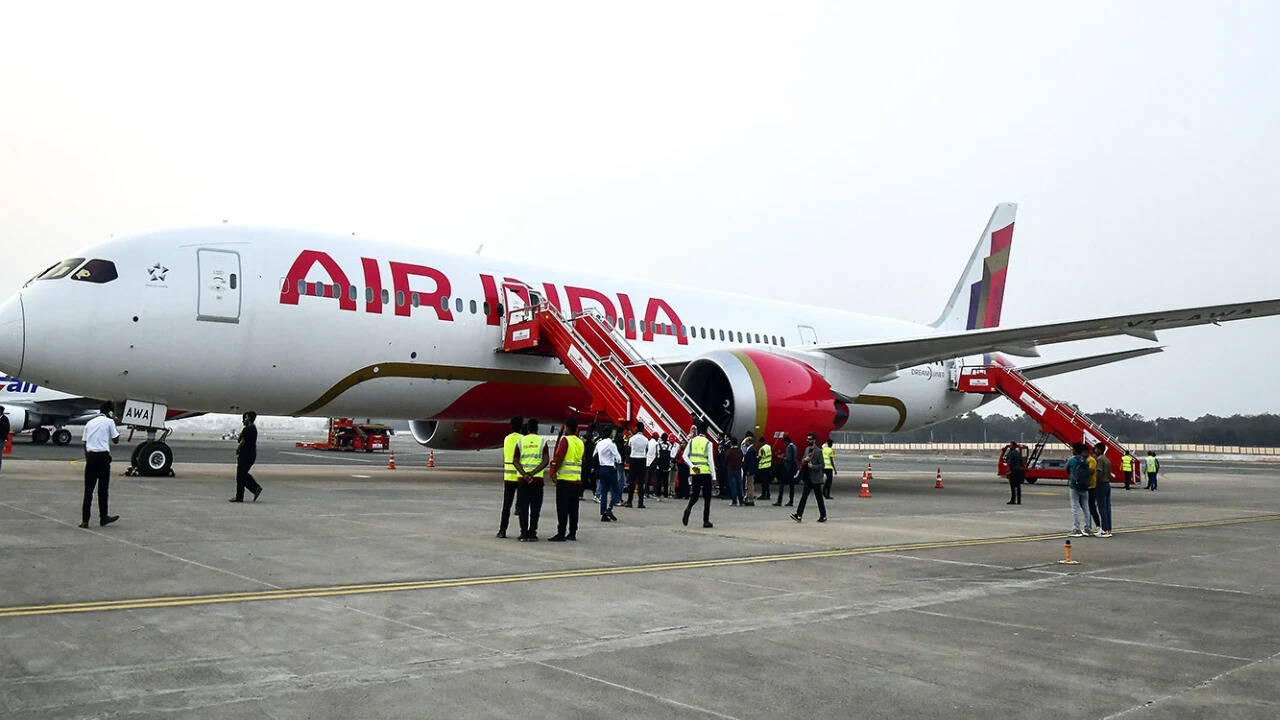
Air India has issued a formal travel advisory warning passengers of potential delays and schedule disruptions across its ultra-long-haul routes to the United States. The immediate trigger stems from widespread operational bottlenecks in American airspace, including severe weather patterns, air traffic control staffing shortages, and localized airport congestion that ripple across transcontinental schedules. Because these flights operate on razor-thin turnaround windows and strict international crew duty limits, even a minor departure hold in Newark, Chicago, or San Francisco can cascade into multi-hour delays or sudden cancellations back in New Delhi and Mumbai.
For travelers holding tickets between India and North America, this advisory is far more than routine corporate caution. It is a symptom of a fragile aviation corridor where geopolitical detours, aging fleet transitions, and strained American infrastructure collide. When an airline flying fifteen-hour polar or Atlantic routes flags disruption, the domino effect hits connecting passengers, cargo schedules, and airport ground operations within minutes. If you liked this piece, you might want to check out: this related article.
The Anatomy of a Transcontinental Bottleneck
Most travelers look at a flight delay through the narrow window of their own departure gate. They see a boarding pass, a clock ticking past the scheduled pushback time, and an airline agent offering vague updates about late-arriving aircraft. In the cockpit and inside airline operations centers, the reality is a brutal exercise in geometry and regulatory math.
Ultra-long-haul flights between India and the United States do not have the luxury of slack in their schedules. An aircraft departing Delhi for New York or San Francisco covers roughly seven thousand to eight thousand miles in a single bound. To make these routes commercially viable, airlines turn those widebody jets around on the ground in American hubs as quickly as federal inspection services, refueling crews, and catering trucks allow. Usually, that ground window sits between three and four hours. For another look on this event, see the recent coverage from NBC News.
When US airspace experiences a ground delay program—whether triggered by convective thunderstorms over the Eastern Seaboard, low visibility along the Pacific coast, or air traffic control sector closures—those three hours vanish instantly. An inbound flight forced into a forty-minute holding pattern over New Jersey loses its gate slot. By the time the passengers clear customs and the cabin is cleaned, the outbound return flight is already behind schedule.
Once a flight slips past its planned departure window, it runs straight into the wall of flight duty time limitations. Pilots and cabin crew operating ultra-long-haul sectors work under strict, non-negotiable rest mandates enforced by both the Directorate General of Civil Aviation in India and the Federal Aviation Administration in the United States. If a ground delay pushes a crew past their legal maximum duty hours, the airline cannot simply ask them to push through the fatigue. The flight must be scrubbed or delayed until a fresh reserve crew can be positioned, a process that rarely takes less than twelve to twenty-four hours at an outstation.
Why US Airspace Keeps Breaking Down
Blaming a single storm system or a temporary radar glitch misses the structural rot inside American aviation infrastructure. Over the past several years, the US National Airspace System has operated with a chronic deficit of certified air traffic controllers, particularly in high-density terminal radar approach control facilities serving the New York metro area, Chicago, and Northern California.
These exact regions represent the primary gateways for Air India’s North American network. Newark Liberty, John F. Kennedy, Chicago O’Hare, Washington Dulles, and San Francisco International are not forgiving airports. They operate near maximum runway capacity even on clear, calm afternoons. When staffing levels dip below target thresholds in the control towers or en-route centers, the FAA deliberately slows down the flow of traffic to maintain safety margins.
Spacing between arriving aircraft increases. Departure queues stretch down taxiways for miles. Domestic regional jets take the brunt of the cancellations, yet international widebodies suffer the most expensive consequences. A regional hop from Boston to Newark can be canceled and rebooked onto five other flights that afternoon. A Boeing 777 bound for Bengaluru cannot be easily replaced or absorbed into another departure.
Consider a hypothetical scenario involving an evening departure out of JFK. Suppose afternoon thunderstorms close two departure corridors heading north toward the Canadian Maritimes, the standard gateway for transatlantic tracks. Air traffic control routes dozens of European and Asian carriers onto a single remaining corridor. Separation standards require ten to fifteen minutes between heavy jets entering oceanic airspace. Forty aircraft waiting for a single slot creates a multi-hour bottleneck on the tarmac. While the plane burns auxiliary fuel on the taxiway, the cockpit crew watches their duty clock tick toward zero. Before the wheels ever leave the pavement, the flight risks timing out.
The Geopolitical Detour Nobody Mentions
While US domestic congestion grabs the headlines, Air India operates under an additional layer of operational friction that many of its Western and Middle Eastern competitors face differently. Airspace restrictions across parts of Eastern Europe and the Middle East continue to dictate how Indian carriers plan their fuel loads and flight paths to North America.
Historically, the fastest and most fuel-efficient routes between northern India and the US East Coast cut cleanly over Central Asia, Russia, and the Arctic circle. Navigating around restricted or high-risk airspace forces dispatchers to plot longer southern or modified polar tracks. These detours add anywhere from forty-five minutes to nearly two hours of flying time depending on seasonal jet streams.
Longer flight times carry immediate operational penalties.
- Payload restrictions force airlines to leave profitable cargo—and occasionally passengers—behind so the aircraft can carry enough reserve fuel to reach distant alternate airports.
- Narrower crew margins mean pilots arrive at their US destination closer to their maximum legal flight hours, leaving almost zero buffer for arrival holding patterns.
- Tighter maintenance windows compress the time mechanics have to inspect critical systems, resolve minor technical snags, and sign off on ETOPS certifications required for extended overwater operations.
When you combine a ninety-minute geopolitical detour with a two-hour FAA ground stop in Newark, the schedule collapses. The aircraft arrives in India hours late, missing the morning wave of domestic connections across Delhi and Mumbai. Passengers heading onward to Hyderabad, Chennai, or Kochi find themselves stranded in transit terminals, while the outbound plane for the next day’s US departure is already delayed before boarding begins.
Fleet Realities and the Cabin Transition
Air India’s ongoing transformation under Tata Group ownership adds another variable to this equation. The carrier has been working aggressively to overhaul an aging long-haul fleet while integrating leased aircraft and waiting on delayed deliveries of new Airbus A350s and Boeing 787s from global manufacturers experiencing their own supply chain paralysis.
Running a mixed fleet across ultra-long-haul routes creates logistical headaches when disruptions strike. If a Boeing 777-300ER goes technical in San Francisco due to a faulty sensor or a hydraulic leak, Air India cannot simply swap in a different aircraft type sitting at a neighboring gate without triggering a seating nightmare. Cabin configurations vary widely across legacy Air India jets, ex-Delta aircraft, and ex-Etihad frames. Swapping equipment often means downgrading business-class passengers, separating families, or leaving dozens of travelers behind because the replacement plane has fewer economy seats.
Furthermore, global aviation supply chains remain painfully slow. Spare parts for widebody engines and avionics that once arrived via overnight courier can now take days to clear customs and reach an international outstation. For a carrier operating thousands of miles from its primary engineering base in Mumbai or Delhi, a minor mechanical issue in North America quickly escalates into a forty-eight-hour delay.
The Hidden Economics of a Delayed Widebody
Airlines do not issue preemptive delay warnings lightly. Doing so invites customer anxiety, spikes call center volume, and prompts savvy travelers to rebook onto rival carriers. When Air India flags potential disruptions on its US network, it is making a calculated risk-management decision designed to soften the financial and reputational blow of irregular operations.
A single delayed or canceled ultra-long-haul flight costs an airline hundreds of thousands of dollars. The direct expenses pile up rapidly.
- Hotel and meal vouchers for three hundred or more stranded passengers in high-cost US cities like New York or San Francisco.
- Rebooking fees paid to partner airlines within the Star Alliance network or rival carriers to accommodate urgent travelers.
- Airport parking and gate overstay charges levied by municipal port authorities when a massive widebody occupies a prime international stand overnight.
- Cargo claims resulting from spoiled pharmaceuticals, perishable goods, or missed manufacturing deadlines sitting in the belly hold.
By issuing an early advisory, the airline encourages flexible travelers to voluntarily shift their travel dates before they even leave for the airport. Every passenger who accepts a fee-free date change from home is one less angry customer standing at a check-in counter demanding a hotel room at midnight.
What Competitors Are Doing Differently
To understand the pressure on Air India, look at how rival carriers handle the exact same India-to-US market. European giants like Lufthansa, British Airways, and Air France, alongside Gulf super-connectors like Emirates and Qatar Airways, rely on a fundamentally different operating model. They run high-frequency hub-and-spoke networks rather than point-to-point ultra-long-haul nonstops.
When US airspace snarls up, Emirates does not have a single sixteen-hour flight hanging by a thread. They have multiple daily A380 and Boeing 777 departures out of Dubai feeding a dozen American cities. If one JFK flight gets delayed, they can redistribute connecting Indian passengers across flights to Newark, Boston, or Washington, or absorb them onto the next wave out of Dubai six hours later.
Air India’s core competitive advantage—and its greatest vulnerability—is the nonstop flight. Business travelers, elderly passengers, and families visiting relatives overwhelmingly prefer flying direct from Delhi to Chicago without enduring a four-hour layover in Frankfurt or Doha. That nonstop convenience commands premium ticket prices, yet it removes the safety net of intermediate hubs. When the nonstop chain breaks, there is no immediate backup flight waiting at a midpoint airport.
Navigating the Disruption as a Passenger
If you are booked on a US-bound service or returning to India during an active disruption window, passive waiting is the worst strategy you can adopt. Airline automated rebooking algorithms prioritize high-tier elite frequent flyers and full-fare business passengers first, leaving standard economy travelers to fight over remaining middle seats days later.
Monitor the inbound aircraft, not just your own flight status. Use public flight-tracking platforms to look up the tail number assigned to your departure. Since Air India operates on tight turnarounds, your plane’s fate is sealed the moment the inbound leg takes off from India or the US. If that inbound flight is running four hours late over the Atlantic, your departure is going to be delayed regardless of what the airport departure board currently claims.
Keep separate domestic connections on a single ticket whenever possible. One of the deadliest mistakes travelers make on India-US itineraries is booking a separate domestic ticket on IndiGo, Akasa Air, or a US domestic carrier like United or American to reach their international gateway. If Air India delays your flight due to US airspace congestion, they are legally obligated to get you to the destination printed on their ticket, not to reimburse you for a missed separate flight to Austin or Ahmedabad.
Know your passenger rights under both jurisdictions. Flights departing from the United States are governed by Department of Transportation rules, which mandate full cash refunds—not just travel vouchers—if a flight is canceled or significantly delayed and you choose not to travel. Flights departing from India fall under DGCA Civil Aviation Requirements, which stipulate specific tiers of meal, hotel, and compensation obligations depending on the length of the delay and whether the cause falls within the airline's control. Weather and air traffic control strikes generally exempt airlines from cash compensation penalties, though carriers are still expected to provide basic care and re-routing assistance.
The Structural Reality of Long-Haul Aviation
The current friction on Air India’s US routes exposes an uncomfortable truth about modern commercial aviation. Airlines are selling ultra-long-haul schedules built on best-case assumptions in a world where infrastructure, weather, and geopolitics routinely deliver worst-case scenarios. Air India’s warning is not an isolated operational hiccup; it is an honest admission that the margin for error on the world’s longest flights has effectively disappeared. Until American air traffic control staffing stabilizes and global fleet bottlenecks ease, passengers flying nonstop between India and North America must pack patience alongside their passports and treat departure times as rough estimates rather than guarantees.