Decades after the Algerian War ended, families of harkis are demanding formal accountability for how their relatives who died inside French transit and reception camps during the 1960s were buried, recorded, and forgotten. Those who fought alongside the French army or served in auxiliary units fled Algeria in 1962 only to be housed behind barbed wire on French soil. Many died in these makeshift facilities from harsh living conditions, illness, or despair. Their graves were frequently anonymous, poorly documented, or lost entirely to municipal land shifts.
I have spent years covering state secrecy, contested archives, and post-colonial reckoning across Europe. When a government moves tens of thousands of people in a panic, paperwork is the first casualty. Human dignity is often the second.
What Happened Inside the 1960s Camps
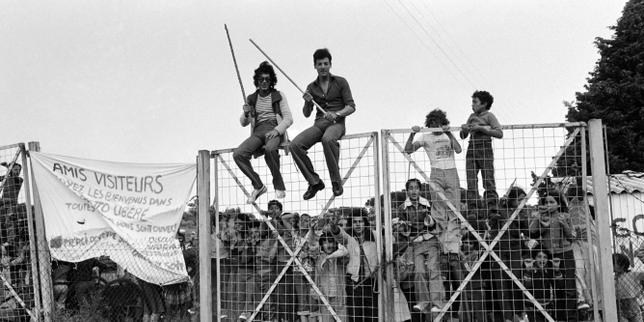
To understand the anger surrounding harki graves, you have to look at the chaotic administrative reality of mainland France in the summer and autumn of 1962. The French state had not planned for a mass arrival of Algerians who had sided with French forces or worked with civil administration during the war. Military authorities and ministries scrambled to improvise housing in former internment sites, forest hamlets, and military barracks, places such as Rivesaltes in the Pyrénées-Orientales and Saint-Maurice-l'Ardoise in the Gard.
Living conditions in several of these camps were grim. Families lived in barracks or tents exposed to cold winters, poor sanitation, and inadequate medical care. Infants, elderly relatives, and traumatized veterans died at rates that reflected both physical deprivation and psychological shock.
When a resident died inside a camp, the burial process rarely resembled a solemn state tribute. Instead, deaths were often handled as local administrative tasks rather than national obligations. Bodies were sometimes buried in segregated sections of nearby municipal cemeteries or in unmarked plots where headstones were absent, temporary wooden markers rotted away, or civil registry entries contained misspelled names, birth dates listed as January 1, or incomplete parentage records.
For surviving relatives, that bureaucratic sloppiness feels deliberate. A missing grave turns mourning into a permanent search. You cannot visit a headstone that was never carved or cannot be located in a town ledger.
Why State Neglect Took Root
State neglect rarely stems from a single villain twirling a mustache in a ministry office. It grows out of institutional convenience, political embarrassment, and a desire to close a painful chapter quickly.
In the aftermath of Algerian independence, the French government faced immense domestic and diplomatic pressures. Many harkis had been evacuated against official policy or in defiance of orders meant to curb departures. Once on French soil, they occupied an awkward legal and social space. They were not treated as ordinary citizens enjoying full integration, yet they were tied to the French military effort in ways the state preferred not to advertise too loudly while rebuilding relations with Algeria.
Local mayors and municipal clerks often absorbed the practical burden without extra resources or clear national directives. When a camp sat outside a small village, local officials had to manage burials, registries, and cemetery space. Without standardized national protocols to track camp residents from admission to grave, records splintered between military archives, camp administration files, prefectures, and town halls.
Over time, urban expansion, cemetery reorganizations, and expired concession periods compounded the problem. Graves without paying families or active local advocates were vulnerable to being cleared or reassigned. A family living hundreds of miles away in a relocation hamlet—known as a hameau de forestage—often had neither the money nor the administrative leverage to challenge a municipal decision made decades earlier.
The Legal and Archival Battle
Demanding justice for harki dead means fighting two battles at once. One is moral and political. The other is technical and archival.
Families and descendants' associations are pushing for official recognition that the treatment of camp fatalities fell short of basic human dignity and state responsibility. Recognition matters because official acknowledgment changes how archives are opened, how research is funded, and how local authorities respond to inquiries.
Yet recognition alone does not instantly locate a buried grandparent. Finding a grave requires tracing paper trails across institutions that did not always talk to one another in the 1960s.
A researcher or family member looking for a relative who died in a camp may need to check:
- Camp and military records housed in defense archives, which sometimes note transfers, hospitalizations, or camp deaths.
- Prefectural files from the department where the camp operated, containing correspondence on camp management and public health.
- Municipal civil registries (registres d'état civil) and cemetery plans from nearby communes, where death certificates and burial plots were logged.
- Hospital admission logs if the person died outside the camp perimeter after being transferred for treatment.
Even when a record exists, obstacles pile up. Handwriting can be illegible. Names were routinely Gallicized or misspelled by clerks unfamiliar with Arabic or Amazigh names and naming customs. Some camp residents had no formal identity papers upon arrival, making positive identification years later an exercise in detective work.
Consider a hypothetical example to see how easily a grave vanishes. Suppose a man born in rural Algeria dies of pneumonia in a camp infirmary in early 1963. A camp clerk records his name phonetically with two wrong letters and lists his birth year as approximate. He is buried in a simple plot in the nearest village cemetery with a wooden cross. Ten years later, the wooden cross has rotted, his widow has moved to another region for factory work, and the municipality reviews old plots with no active family contact. By the time his grandchildren ask where he lies, the physical marker is gone and the index card is hard to match. That scenario repeated itself in variations across France.
Overlooked Factors in the Reckoning
Much public coverage focuses on the headline clash between grieving families and the state. That framing is real and justified, yet several overlooked factors shape what happens next.
First, generational distance is changing the nature of the demand. Many original camp residents who arrived as adults are now gone. Their children and grandchildren are leading the push for answers. For younger descendants, locating a burial site is tied to identity, family history, and a refusal to accept second-class memory.
Second, local communities vary sharply in how they react. Some municipalities have cooperated actively, digging into old cemetery ledgers and working with historians and associations to identify lost graves and install plaques. Others have been defensive or under-resourced, fearing legal claims, administrative headaches, or reopening local divisions.
Third, there is a tension between symbolic gestures and concrete remedies. Official apologies, commemorative days, and speeches carry weight, especially when delivered plainly without evasion. Still, families often care more about practical steps: clear access to records, state-backed genealogical and archival support, preservation of remaining graves, and transparent rules when historical burial sites are disturbed or redeveloped.
A critic might argue that governments cannot be held to modern archival standards for chaotic events sixty years ago. That point has a grain of practical truth—record-keeping technology and administrative norms in 1962 were far less rigorous than today's. Yet that argument only goes so far. Even by the standards of the 1960s, burying people without reliable identification or durable markers reflected indifference toward a vulnerable population placed under state supervision.
What Accountability Requires Now
If the French state and local authorities want to move past recurring grievances over the 1960s harki camps, vague promises will not suffice. Accountability requires method, patience, and money.
Archival access must be straightforward for families, not a maze of opaque exemptions and slow responses. Dedicated teams or partnerships between historians, archivists, and associations can cross-reference camp registers, hospital logs, and municipal burial books systematically rather than leaving every family to start from scratch.
Municipalities holding historical camp burial plots need clear guidance and technical support to audit their records before old graves are lost to time or construction. Where graves are confirmed or reasonably established, dignified marking and preservation should be treated as a matter of public duty rather than an optional favor.
Truth in post-colonial history is rarely neat, and digging into old files will uncover uncomfortable truths about how vulnerable people were treated when nobody outside the camp walls was paying close attention. Facing those records honestly is the only way the dead stop disappearing twice—first in unmarked earth, and then in official silence.