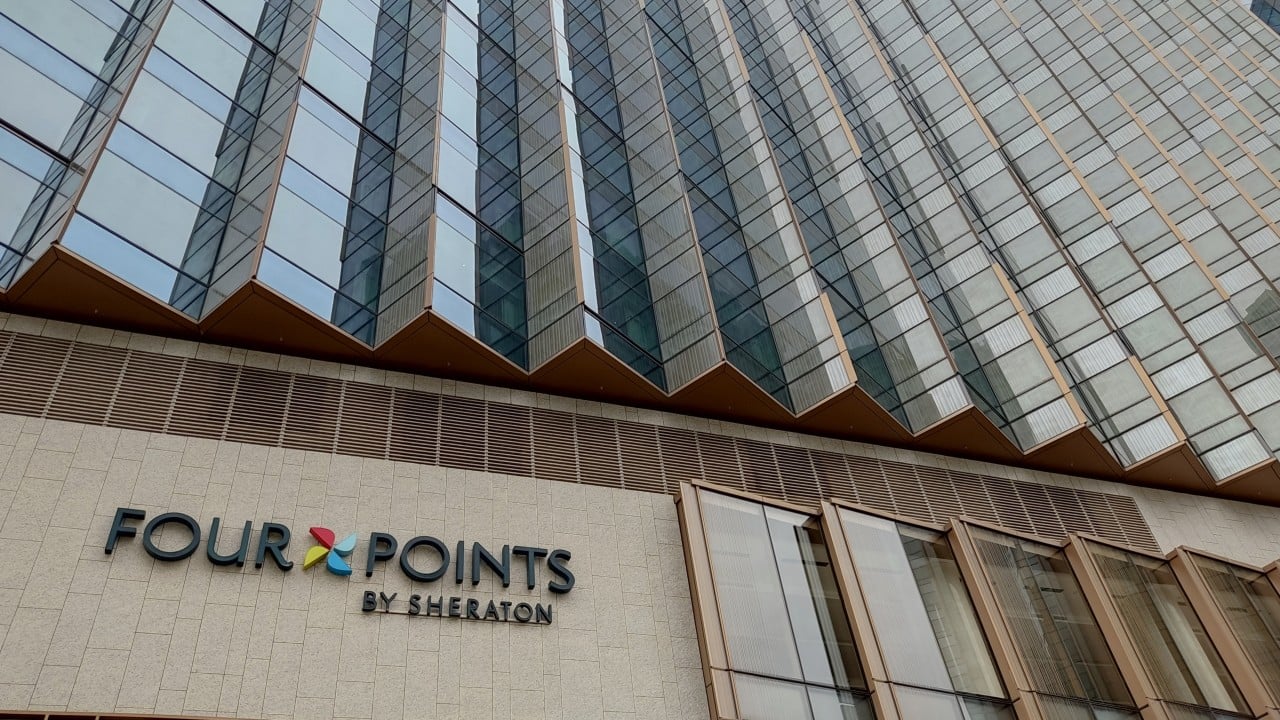
When Shimao Group offloaded two prime hotel properties in Hong Kong’s Tung Chung district—the Sheraton Hong Kong Tung Chung Hotel and the Four Points by Sheraton Hong Kong, Tung Chung—at a steep discount to their original valuation, it did far more than chip away at a multi-billion-dollar offshore debt pile. The transaction exposed a structural fracture in how distressed Chinese property developers restructure debt under Hong Kong law. Rather than paving a clean path toward creditor recovery, the sale laid bare a brutal reality: when offshore holding companies pledge onshore and Hong Kong ring-fenced assets across competing syndicates, traditional Hong Kong debt workouts devolve into zero-sum trench warfare where secured lenders cannibalize value before unsecured bondholders ever see a cent.
For decades, the playbook for Asian corporate distress relied on predictable rules. A borrower hit a liquidity crunch, creditors formed an ad hoc committee, a standstill agreement froze enforcement actions, and everybody negotiated a haircut based on orderly asset disposals. That era is dead. The Chinese real estate crisis has flooded Hong Kong’s courts and restructuring desks with sprawling, multi-tiered balance sheets that were engineered for endless credit expansion, not orderly liquidation.
The Anatomy of a Distressed Trophy Sale
To understand why the Tung Chung hotel disposal rattled institutional desks across Central, you have to look at the mechanics of the asset itself. Located near Hong Kong International Airport and the Hong Kong-Zhuhai-Macau Bridge, the dual-branded Sheraton complex was supposed to be a crown jewel in Shimao’s hospitality portfolio. Built during a period when mainland developers treated Hong Kong real estate as an indestructible store of value, the project carried heavy project-level financing alongside corporate guarantees.
When Shimao defaulted on its offshore obligations in 2022, the hotels became immediate targets for value recovery. Yet selling a distressed hospitality asset in a post-pandemic market with elevated interest rates is nothing like offloading a residential land parcel. Buyers know the seller has no holdout power. Syndicate lenders holding project-level mortgages hold all the cards, and their primary mandate is principal preservation, not maximizing equity upside for downstream bondholders.
The resulting transaction cleared at a valuation well below pre-crisis appraisals. In a normal market, a sale of that scale would be celebrated as a liquidity breakthrough. In the context of Hong Kong debt workouts, it functioned as a warning flare. Every dollar generated by the sale went straight toward satisfying senior project-level claims and transaction friction, leaving almost nothing to trickle down to the broader pool of offshore creditors fighting over Shimao’s overarching restructuring plan.
Why Trophy Assets Fail to Rescue Holding Companies
There is a persistent myth among retail investors and optimistic distressed-debt tourists that a developer’s offshore assets act as a safety net for its dollar bonds. In theory, a Cayman Islands-incorporated issuer holding Hong Kong real estate gives international creditors clean jurisdictional reach. In practice, corporate structuring turns that safety net into a sieve.
- Structural Subordination: Offshore bondholders typically sit at the top holding company level. Between them and the physical bricks and mortar of a Hong Kong hotel sit layers of intermediate subsidiaries, each carrying its own bilateral loans, mezzanine facilities, and cross-guarantees.
- Ring-Fenced Cash Flows: Hotel operating revenues rarely flow freely up to the parent company during distress. Cash traps, debt service reserve accounts, and lender-controlled lockboxes ensure that every room night booked goes toward paying local bank syndicates first.
- Valuation Decay Under Fire-Sale Conditions: Once a developer enters default, potential buyers apply an immediate distress discount. They know the banks want out, they know maintenance capital expenditure has likely been deferred, and they price in the cost of stepping into a messy corporate transition.
The Friction Between Project Lenders and Bondholders
The core tension revealed by Shimao’s hotel exit comes down to a fundamental misalignment of incentives between two distinct classes of creditors: secured project banks and unsecured offshore bondholders.
Banks that underwrote the construction and operation of the Tung Chung hotels lent against specific, tangible collateral. Under Hong Kong’s creditor-friendly legal framework, secured lenders enjoy formidable enforcement rights. They can appoint receivers, force asset sales, and block transactions that do not pay them out in full. Their horizon is short, and their tolerance for prolonged restructuring negotiations is virtually zero.
Unsecured bondholders—ranging from global asset managers to distressed hedge funds—play an entirely different game. Because they have no direct lien on physical property, their only hope for meaningful recovery lies in keeping the corporate group intact long enough to execute a holistic restructuring scheme. They need time for property markets to stabilize and for asset values to recover.
When secured banks force the early liquidation of prime Hong Kong collateral, they effectively strip the restructuring estate of its best-performing cash generators, leaving bondholders with illiquid mainland projects buried beneath local government pre-sale escrows.
This dynamic creates a classic prisoner's dilemma. If banks wait, their collateral might deteriorate further in a sluggish commercial real estate market. If they enforce early and sell at the bottom, they lock in recoveries for themselves while destroying the viability of the parent company's broader workout. In Shimao’s case, the hotel sale demonstrated just how aggressively project-level creditors will move to ring-fence their recoveries, even as the parent company attempts to corral thousands of disparate creditors into a single scheme of arrangement.
How Hong Kong Legal Mechanics Complicate Cross-Border Workouts
Hong Kong’s judicial system has long been praised for its sophistication, predictability, and adherence to common law principles. Yet the sheer scale and cross-border complexity of mainland developer defaults have pushed the city’s restructuring machinery to its operational limits.
A typical Hong Kong debt workout for a mainland builder involves a delicate choreography between multiple jurisdictions. Most issuers are incorporated in the Cayman Islands or the British Virgin Islands, listed in Hong Kong, and hold the vast majority of their operational assets in mainland China. To bind dissenting creditors to a restructuring plan, companies rely on Schemes of Arrangement—a court-approved process requiring approval from 75% by value and more than 50% by number of creditors in each voting class.
The Class Composition Bottleneck
The Shimao hotel disposal highlights why class composition has become one of the fiercest battlegrounds in Hong Kong’s High Court. You cannot lump a secured project lender with a first-ranking mortgage on a Tung Chung hotel into the same voting class as an unsecured holder of a 2026 dollar note. Their legal rights are fundamentally different.
As developers carve out specific Hong Kong assets to appease bilateral lenders or raise emergency liquidity, they fracture the creditor base into ever-smaller, fiercely protective factions. Each faction demands bespoke treatment. Each threatens to derail the broader scheme if its specific collateral package is diluted. Legal fees skyrocket as armies of King’s Counsel and financial advisors debate whether a particular subsidiary guarantee constitutes a separate class or a common interest.
The Mainland Enforcement Blind Spot
Even when creditors manage to hammer out an agreement in Hong Kong, enforcing that deal across the border remains a massive hurdle. While Hong Kong and mainland China established a mutual recognition mechanism for insolvency proceedings across designated pilot cities, that framework does not grant Hong Kong liquidators unfettered authority to seize onshore construction sites or override local municipal directives.
In mainland China, local governments prioritize social stability and the delivery of pre-sold apartments above all else. Onshore bank loans and supplier claims routinely take practical precedence over offshore creditor rights, regardless of what an offshore bond indenture says. Consequently, offshore creditors fixate obsessively on whatever hard assets exist outside the mainland firewall—primarily properties in Hong Kong. That obsession turns every Hong Kong hotel, office tower, or luxury residential plot into a high-stakes battleground.
The Myth of the Clean Asset Disposal
Observers outside the restructuring industry often assume that selling an asset to pay down debt is a straightforward accounting exercise. Subtract the sale price from the total debt, reduce interest expense, and move on. In distressed Asian real estate, nothing is ever that clean.
Consider a hypothetical scenario that mirrors the structural traps seen across recent Hong Kong workouts. Suppose an offshore developer owns a commercial building appraised at $500 million, encumbered by a $300 million syndicated bank loan. On paper, there is $200 million of equity value available to support the parent company’s unsecured bondholders.
Now watch what happens when distress hits:
- Appraisal Reality Check: In a high-rate environment with rising capitalization rates, institutional buyers bid only $350 million for the building. Instantly, $150 million of theoretical equity vanishes.
- Default Interest and Penalties: Because the borrower missed a coupon payment, the syndicated loan accrues default interest, waiver fees, and legal expenses, swelling the bank claim from $300 million to $325 million.
- Tax and Transaction Friction: Stamp duties, brokerage commissions, receiver fees, and tax liabilities on capital gains consume another $15 million.
- The Residual Illusion: Out of a building once valued at half a billion dollars, only $10 million remains. And even that $10 million is frequently trapped by intercompany loan disputes or pledged as collateral for a separate mezzanine facility.
This mathematical erosion is precisely why asset sales during active workouts rarely deliver the windfall that bondholders hope for. By the time a property hits the block under distressed circumstances, friction costs and senior claims have already eaten the meat off the bone.
Why Hospitality Assets Are Uniquely Vulnerable
The fact that Shimao’s transaction centered on hotels rather than commercial offices or residential flats adds another layer of complexity to the workout puzzle. Hotels are operating businesses, not passive rent collectors.
An office tower with five-year leases generates predictable cash flows even if the landlord is technically insolvent. A hotel, by contrast, resets its revenue every single night. If corporate travel managers or tour operators catch wind that a hotel’s owner is fighting off liquidation petitions in the Hong Kong High Court, bookings can dry up overnight. Vendors demand cash on delivery for food, linen, and utilities. Key management personnel jump ship to stable competitors.
Brand Management Friction
International hotel operators like Marriott—which manages the Sheraton and Four Points brands—wield immense contractual power through long-term Hotel Management Agreements (HMAs). These agreements typically contain strict covenants regarding brand standards, capital expenditure reserves, and owner solvency.
When a developer defaults, the hotel operator sits in a powerful position. Any prospective buyer of the hotel must either negotiate a continuation of the existing HMA—often requiring massive capital injections to bring the property up to brand standards—or pay exorbitant termination fees to rebrand the asset. That dynamic narrows the pool of eligible buyers to well-capitalized private equity funds, sovereign wealth vehicles, or cash-rich local tycoons who know they have zero competition from leveraged buyers.
The Shifting Power Dynamic in Asian Restructuring
The fallout from Shimao’s hotel sale signals a permanent shift in how international capital prices risk in Hong Kong and mainland China. For years, credit analysts relied on loan-to-value (LTV) ratios calculated during boom periods, assuming that hard assets in a transparent jurisdiction like Hong Kong provided an ironclad floor against total loss.
That assumption has been thoroughly dismantled. Lenders now understand that recovery rates depend less on headline asset valuations and more on structural seniority, ring-fencing, and control over the enforcement timeline.
- Bilateralism Over Syndication: Credit funds and banks are increasingly demanding isolated collateral packages rather than participating in broad, unsecured corporate facilities. If a lender cannot take direct, first-ranking security over an asset with independent cash flow, the cost of capital becomes prohibitive.
- The Rise of Predator Capital: Traditional long-only bond funds have largely retreated from distressed Chinese property debt, replaced by specialized special-situations funds that thrive on litigation, receiverships, and aggressive enforcement. These players do not want a consensual five-year extension; they want to force asset sales, trigger control changes, and extract immediate value.
- Skepticism Toward Restructuring Support Agreements: Developers used to win breathing room by announcing Restructuring Support Agreements (RSAs) backed by a handful of friendly creditors. Today, the market treats RSAs with deep cynicism unless every major secured syndicate and onshore stakeholder has explicitly signed off on the collateral waterfall.
What Comes Out of the Wreckage
Shimao’s disposal of the Tung Chung hotels did not resolve its overarching debt crisis, nor did it establish a neat blueprint for other distressed developers still fighting to survive in Hong Kong’s courts. Instead, it stripped away the last comforting illusions surrounding offshore real estate workouts.
When an empire built on leverage begins to unwind, assets do not sell at appraisal value, cash does not flow smoothly up corporate org charts, and secured banks will never volunteer to subsidize unsecured bondholders. Every asset sale becomes an isolated battle over shrinking liquidity, governed by strict property law rather than corporate goodwill. Until offshore creditors account for the brutal math of structural subordination and distressed friction before underwriting a single dollar of debt, Hong Kong’s restructuring courts will remain crowded with lenders fighting over the scraps of trophy properties that were never truly theirs to claim.



