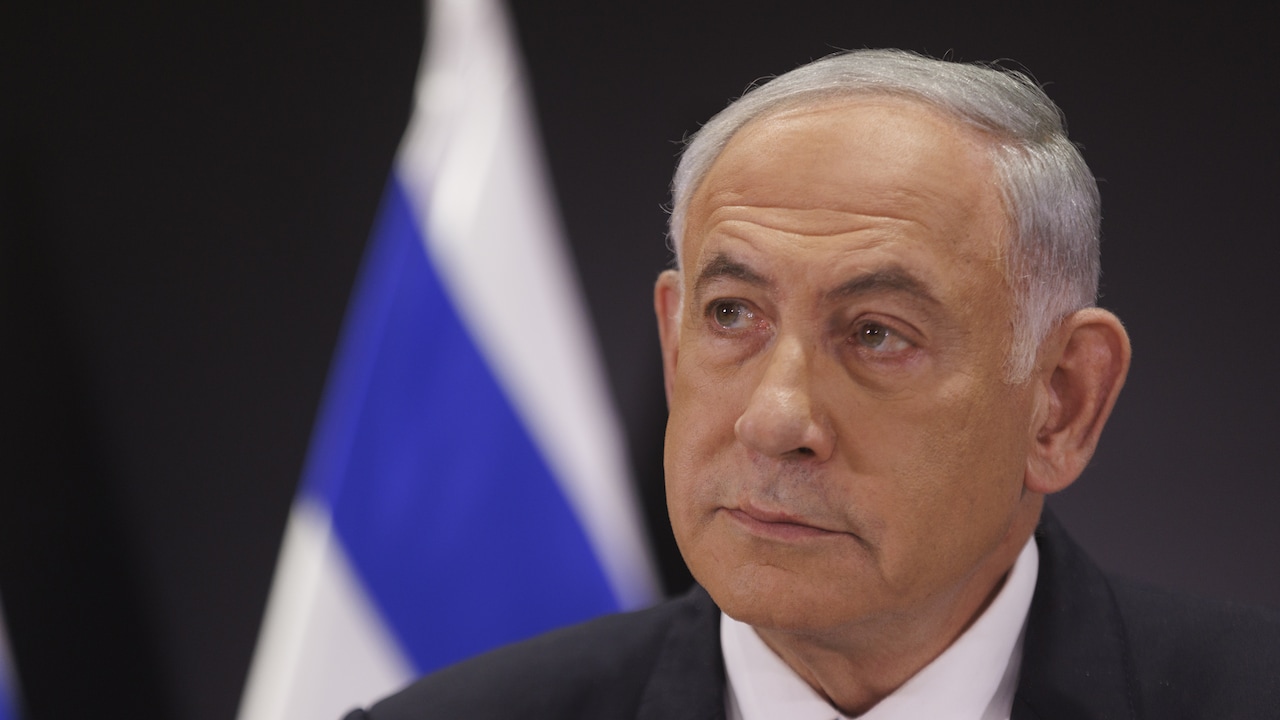
Reports that Israeli Prime Minister Benjamin Netanyahu pushed for military strikes against Iran ahead of an Israeli election expose a recurring collision between domestic political survival and regional security. When an embattled leader faces voters, external existential threats routinely shift from strategic defense problems into powerful electoral currency. By framing the Iranian nuclear and missile programs as an immediate crisis requiring wartime leadership, Netanyahu sought to consolidate right-wing support, fracture opposition alliances, and recast himself as the indispensable protector of the state. Yet military commanders and intelligence officials repeatedly pushed back, warning that a unilateral strike risked catastrophic retaliation without permanently eliminating Iran’s nuclear capabilities.
That friction is not new. It sits at the core of modern Israeli civil-military relations.
To understand why an Israeli prime minister would advocate for a preemptive strike during an election cycle, you have to look at how national security dominates the Israeli ballot box. Economic policy, housing costs, and judicial reforms matter to voters, certainly, yet nothing moves the electorate quite like perceived existential danger. When rockets fly or nuclear deadlines loom, political debates over domestic governance tend to evaporate overnight. Voters instinctively rally around the flag, and by extension, around the sitting prime minister who commands the military apparatus.
For Netanyahu, whose political career has long been defined by his self-styled image as "Mr. Security," elevating the Iranian threat served a dual purpose. Externally, it maintained pressure on Washington and European allies to adopt harder lines on Tehran. Internally, it reminded hesitant right-wing and centrist voters why they had trusted him for decades, diverting attention away from coalition instability, corruption trials, or domestic unrest.
The Anatomy of the Civil-Military Divide
In Jerusalem, the decision to go to war rarely rests on a single man’s whim, regardless of how powerful that leader appears on the international stage. Israel’s security establishment—comprising the Israel Defense Forces (IDF), the Mossad, and the Shin Bet—operates with a deeply ingrained culture of professional dissent. During critical cabinet meetings over the past decade and a half, security chiefs have consistently demanded answers to three operational questions before endorsing any strike on Iran.
First, can the military actually destroy the target? Iran learned hard lessons from Israel’s 1981 destruction of Iraq’s Osirak reactor and the 2007 strike on Syria’s al-Kibar facility. Tehran dispersed its nuclear infrastructure across dozens of sites, burying key enrichment halls beneath mountains of reinforced concrete at facilities like Fordow. Military planners have long cautioned that while Israeli airstrikes could set the Iranian program back by several years, they could not erase the technical knowledge Iranian scientists already possess. A strike might delay a bomb, or it might convince Tehran to abandon diplomatic restraints altogether and sprint toward weaponization in secret.
Second, what happens the morning after? Unlike Iraq in 1981 or Syria in 2007, Iran possesses an extensive, deeply entrenched regional network capable of immediate, multi-front retaliation. Intelligence assessments consistently highlight that an Israeli attack on Iranian soil would likely trigger massive ballistic missile barrages from Iran alongside coordinated rocket fire from Hezbollah in Lebanon, militias in Iraq and Syria, and the Houthis in Yemen. For IDF commanders, launching a strike without clear assurances of how to absorb and end the resulting regional war represents an unacceptable gamble.
Third, where does Washington stand? Israel’s military superiority in the Middle East relies heavily on American diplomatic backing, intelligence sharing, and continuous resupply of precision munitions and missile interceptors. Senior defense officials have repeatedly warned that launching a major offensive against American wishes—particularly during a sensitive U.S. political window or diplomatic negotiation—could jeopardize the strategic alliance that underwrites Israel’s long-term survival.
How Electoral Timelines Distort Strategic Patience
Military strategy operates on multi-year horizons. Electoral politics operates in weeks and months.
When those two clocks run simultaneously, friction becomes inevitable. Intelligence agencies prefer covert attrition—cyberattacks, targeted assassinations of nuclear scientists, sabotage of centrifuge facilities, and interdiction of weapons shipments. These shadow operations degrade Iranian capabilities quietly, keeping escalation below the threshold of full-scale war while preserving international deniability.
Covert victories, however, make terrible campaign slogans. A prime minister cannot easily boast on the campaign trail about an unacknowledged cyber operation or a mysterious explosion at an Iranian centrifuge plant without inviting direct retaliation or burning intelligence assets. By contrast, overt military posturing, dramatic intelligence reveals, and cabinet debates over imminent airstrikes generate immediate headlines. They project strength, decisiveness, and urgency to a domestic audience preparing to cast ballots.
Historical Precedents in Israeli Politics
The intersection of Israeli elections and military action has a long, documented history, and analysts across the political spectrum recognize the pattern. In June 1981, Prime Minister Menachem Begin ordered the daring airstrike on Iraq’s Osirak nuclear reactor just three weeks before a fiercely contested Knesset election. Begin’s Likud party had been trailing badly in the polls, weighed down by runaway inflation and domestic economic woes. Following the successful raid, public sentiment shifted dramatically, and Likud narrowly retained power.
Critics at the time, including opposition leader Shimon Peres, accused Begin of timing the strike to rescue his flagging campaign. Begin fiercely denied the charge, insisting the timing was dictated purely by intelligence indicating the reactor was about to go hot, which would have made bombing it an environmental catastrophe. Regardless of Begin’s true motives, the political lesson was permanently etched into Israeli political DNA: bold military action against a foreign nuclear threat can instantaneously rewrite an electoral map.
Netanyahu watched that history unfold firsthand, and throughout his tenure, similar debates resurfaced whenever election cycles coincided with escalating tensions with Tehran. Between 2010 and 2012, reports repeatedly emerged from Jerusalem that Netanyahu and then-Defense Minister Ehud Barak were pushing for unilateral strikes against Iranian nuclear sites, only to be blocked by IDF Chief of Staff Gabi Ashkenazi, Mossad Director Meir Dagan, and Military Intelligence chief Amos Yadlin. Dagan later took the extraordinary step of publicly calling a potential strike on Iran "the stupidest thing I have ever heard," arguing that it would unite the Iranian population behind a fractured regime and ignite a regional conflagration.
The Washington Factor and Diplomatic Leverage
Even when an Israeli prime minister does not intend to immediately pull the trigger, pushing aggressively for a strike serves a calculated diplomatic function in Washington. By convincing the White House that Israel is on the brink of acting unilaterally, Jerusalem forces American administrations to take the threat more seriously, tighten economic sanctions, or deploy additional military assets to the region to deter Tehran.
This brinkmanship relies on credible unpredictability. If American officials believe Israeli threats are merely campaign bluster, the diplomatic pressure loses its teeth. Conversely, if intelligence intercepts and cabinet leaks suggest the prime minister is genuinely prepared to order planes into the air before an election, Washington is compelled to intervene—often offering Israel upgraded weaponry, stronger security guarantees, or tougher diplomatic stances in exchange for holding fire.
Yet this tactic carries diminishing returns. Overusing the threat of an imminent strike breeds skepticism among allies and adversaries alike. When intelligence agencies in both Washington and Tel Aviv assess that a leader’s push for action is driven primarily by domestic polling rather than a sudden, verifiable intelligence breakthrough, institutional resistance hardens. Defense ministers, generals, and intelligence directors become far more willing to leak their objections to the press to prevent a political leader from sleepwalking the nation into an unwinnable war for short-term electoral gain.
The Cost of Weaponizing Existential Threats
The danger of blending election strategy with military planning extends far beyond the immediate risk of miscalculation with Iran. Over time, it erodes public trust in the very institutions tasked with keeping the country safe.
When citizens begin to suspect that warnings of imminent existential peril are timed to coincide with Knesset dissolutions, judicial hearings, or dips in approval ratings, cynicism sets in. Security assessments become politicized. Military leaders who counsel restraint are painted by partisan media as weak or disloyal, while politicians who advocate for immediate force are accused by opponents of gambling with soldiers’ lives to stay in office.
In a region where intelligence misreadings can trigger devastating wars within hours, clarity of purpose is an operational necessity. A nation’s decision to launch a preemptive strike must rest on sober, unvarnished military reality—whether the target can be destroyed, whether the home front can withstand the blowback, and whether the day after leaves the country safer than the day before. The moment those questions become secondary to the math of parliamentary coalitions, strategy ceases to serve national security and begins serving only the survival of the person holding the map.


