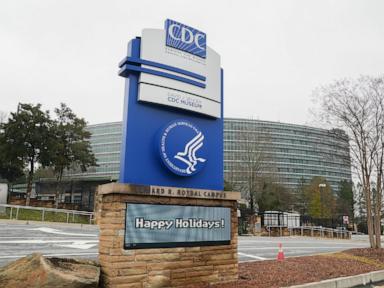
More than 4,400 measles cases had been tallied across the United States when federal officials moved to send an Epidemic Intelligence Service officer—commonly called a disease detective—into Pennsylvania to help contain a surging outbreak. That milestone marked a turning point in an epidemic that quickly blew past 5,400 confirmed American infections, triggered double-digit state-reported deaths, and ended more than a quarter-century of U.S. measles elimination status. Yet dispatching a single epidemiologist to a county that lacks its own local health department tells only half the story. The deeper crisis lies in fractured public health infrastructure, political warfare over mortality counts, and an airborne pathogen exploiting every drop in MMR vaccination coverage.
Headlines often treat a federal deployment as a cavalry charge. On the ground, one investigator stepping into a sprawling outbreak across dozens of counties is more like a forensic accountant auditing a collapsed ledger after the vaults have already been breached.
How a Single Dispatch Exposes Fractured Infrastructure
Sending a disease detective to Pennsylvania underscored how thin local public health defenses have become in places where outbreaks take root. Lancaster County has sat at the epicenter of Pennsylvania's surge—logging over 500 cases out of more than 1,500 statewide—while operating without its own county health department. In counties without a dedicated local health agency, state health staff and regional partners must stretch across wide rural and suburban footprints, managing contact tracing, clinic logistics, and hospital alerts all at once.
Measles is unforgiving of administrative lag. One infected person can pass the virus to roughly 90% of susceptible close contacts. Worse, the virus lingers in the air and on surfaces for up to two hours after an infectious person walks out of a waiting room, hallway, or grocery aisle. By the time a rash appears and a lab confirms the diagnosis, the person has often been contagious for days.
Waiting weeks or months to bring in specialized federal field support creates a compounding delay. Every missed exposure window allows another generation of transmission to seed into schools, households, and clinics. When outbreaks flare in tight-knit or under-vaccinated communities—including areas in Pennsylvania with large Plain and Amish populations where vaccination coverage has historically trailed state averages—trust and access matter just as much as epidemiology. Public health workers cannot simply drop pamphlets at a crossroads and declare victory. They need local relationships, translated or culturally resonant guidance, and low-barrier vaccination clinics that meet families where they live.
The Death Count Dispute Behind the Numbers
Even as cases climbed past 4,400 and later topped 5,412 nationwide, a bitter dispute erupted over something far more basic than transmission curves: how to count the dead. State health officials in Pennsylvania reported multiple measles-associated deaths during the 2026 surge, while federal leadership and the Centers for Disease Control and Prevention clashed over definitions, coroner findings, and reporting channels.
Pennsylvania Governor Josh Shapiro and Health Secretary Robert F. Kennedy Jr. traded sharp accusations in public view. Kennedy questioned whether the reported deaths had been verified as caused directly by measles and suggested some claims were premature or politically motivated, pointing to local coroner remarks and raising concerns over data sharing. Shapiro accused federal leaders of downplaying the threat and undermining vaccine confidence. Meanwhile, reporting shifted toward relying more heavily on mortality records tracked through the National Center for Health Statistics rather than rapid state-by-state tallies, prompting epidemiologists to warn about reporting lags and potential undercounts during an active emergency.
Measles Associated Versus Underlying Cause
To a casual reader, public arguments over whether someone died "with" measles or "from" measles can sound like semantic hair-splitting. In clinical medicine and epidemiology, the distinction has real technical meaning—and real blind spots.
A patient infected with measles does not always die of an uncomplicated rash. Measles inflicts immune amnesia, wiping out a portion of the body's existing immune memory and leaving patients vulnerable to secondary bacterial pneumonia, severe dehydration, respiratory failure, or acute encephalitis. If an unvaccinated infant or medically fragile adult contracts measles and dies weeks later from pneumonia or secondary complications, a death certificate or coroner's review may list the immediate terminal event without clearly capturing the upstream viral trigger.
Conversely, state health departments often track measles-associated deaths early to alert clinicians and the public to severe outcomes in real time, before final autopsy or vital-statistics coding is complete. Both approaches have trade-offs. Fast state reporting can include cases where measles was a contributing factor rather than the sole proximate cause, whereas slow vital-statistics confirmation can hide fatalities while the outbreak is still accelerating. When politicians turn those methodological differences into partisan ammunition, public confusion grows—and people stop trusting any number coming out of either Harrisburg or Washington.
Why Herd Immunity Cracked Across the Country
Pennsylvania did not ignite in a vacuum. The 2026 surge unfolded alongside dozens of outbreaks nationwide, pushing U.S. case totals dramatically higher than in 2024 and 2025 and culminating in the Pan American Health Organization declaring that the United States had lost its measles elimination status after more than 25 years.
Elimination does not mean zero cases forever. It means continuous, uninterrupted transmission of the same measles strain has been stopped within a country for at least 12 months. Crossing back over that line is a flashing warning light. It tells us that imported cases or local sparks are no longer burning out quickly against a wall of immunity.
Measles has one of the highest basic reproduction numbers of any human virus. To stop sustained spread, community immunity generally needs to sit around 95% with two doses of the MMR vaccine, which is roughly 97% effective against infection. Across the 2026 U.S. cases tracked by the CDC, roughly 96% occurred in people who were unvaccinated or whose vaccination status was unknown. Even small pockets where vaccination rates dip into the 80s or lower create fuel beds for explosive chains of transmission.
Consider a hypothetical example. Suppose a rural school district has an overall 91% vaccination rate, which looks reassuring on paper. Within that district, two elementary classrooms and a youth sports group cluster together with only 74% coverage because of overlapping exemptions and missed pediatric visits. One unvaccinated child picks up the virus while traveling, attends two practices before feeling sick, and exposes dozens of unimmunized peers. Within six weeks, what looked like a minor district blip becomes a multi-county outbreak.
Adults and infants face distinct vulnerabilities as well. Adults born after 1957 who never received two doses—or who cannot verify their records—can still get sick and experience serious complications, with adult cases making up a substantial share of the 2026 tally. Infants under 12 months old are too young for their routine first MMR shot under standard schedules, leaving them dependent on community protection unless outbreak guidance authorizes an early dose between 6 and 11 months in high-risk zones.
Counterarguments and Overlooked Realities
Any honest examination of this crisis has to wrestle with uncomfortable counterarguments and blind spots rather than reducing everything to a single villain.
One common argument is that vaccine mandates and aggressive public messaging backfire when trust is already frayed. Critics of heavy-handed mandates argue that forcing compliance without addressing underlying questions about vaccine safety, medical autonomy, or institutional credibility hardens opposition and drives skeptical families further underground. There is real weight to that point. When families feel lectured or dismissed by distant authorities, resistance often stiffens. Yet abandoning baseline school and outbreak standards carries an immediate, measurable cost: more hospitalizations, more missed school and work, and preventable deaths among children who had no say in the decision.
Another overlooked factor is health system strain and diagnostic drift. For over two decades, most U.S. clinicians never saw a real case of measles outside a textbook. A young urgent-care doctor or emergency physician evaluating a child with a high fever, cough, red eyes, and a blotchy rash might reasonably suspect influenza, adenovirus, roseola, or a drug reaction first. Early misdiagnosis means patients are not isolated fast enough in triage or waiting rooms, exposing staff and other patients.
Resource constraints in public health departments also shape what gets counted. Contact tracing a single measles case can take dozens of hours of phone calls, record checks, and exposure site mapping. When caseloads jump from a handful of cases to hundreds in a single state, even committed epidemiologists must triage their time, which can leave mild or unlinked cases under-detected.
| Dimension | Short-Term Outbreak Response | Long-Term Prevention Strategy |
|---|---|---|
| Primary Goal | Stop active chains of transmission quickly | Rebuild and maintain roughly 95% community immunity |
| Key Tools | Rapid contact tracing, isolation, ring vaccination, early infant MMR in outbreak zones | Routine childhood MMR at 12–15 months and 4–6 years, adult catch-up checks |
| Main Bottleneck | Staffing shortages, delayed lab confirmation, local agency gaps | Declining confidence, missed well-child visits, fragmented records |
| Political Risk | Disputes over case and death definitions | Culture-war polarization over routine pediatric care |
What Real Containment Demands Now
Sending a single disease detective into Pennsylvania will not reverse a national trend on its own. Real containment requires pairing sharp field epidemiology with unglamorous, durable execution: funding local public health capacity where gaps exist, standardizing transparent mortality reporting so the public hears straight facts rather than political sparring, and making MMR vaccination effortless through local clinics, pharmacies, and pediatric offices.
Individuals and families do not need to wait on a federal press conference to act. Check your own and your children's immunization records, confirm two MMR doses if you were born in or after 1957 and lack prior immunity or documentation, ask a pediatrician whether an early dose applies if you live in or plan to visit an active outbreak area, and call ahead before walking into a clinic or emergency room if measles is ever suspected. A virus that moves at airborne speed punishes hesitation; check your records today before an exposure forces the question for you.