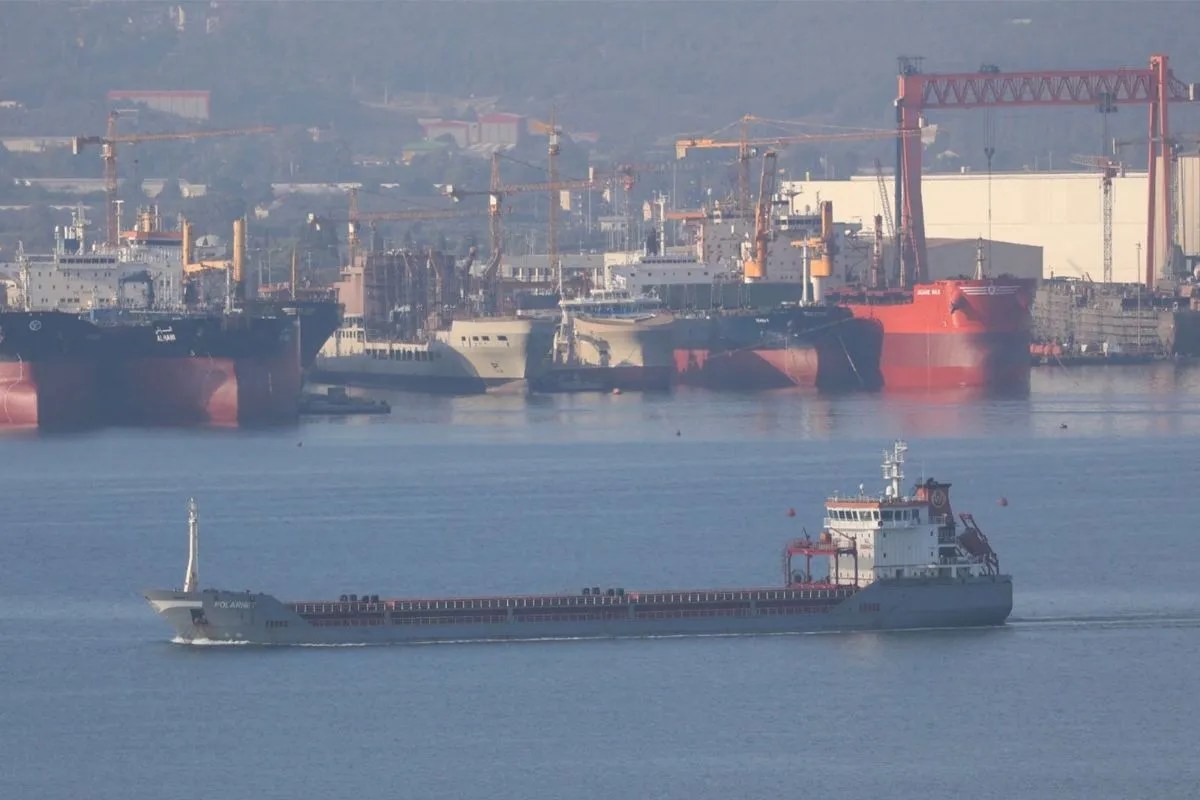
The Sea of Marmara does not forgive navigational hubris. At precisely 3:15 a.m., deep in the dark waters roughly twenty miles south of Silivri, the Turkish-flagged cargo vessel Tugberk Imamoglu crossed paths with the chemical tanker Alsu. Eleven minutes later, the 90-meter cargo carrier had vanished from the surface, plunging nearly 900 meters to the seabed with all ten members of its crew.
Transport Minister Abdulkadir Uraloglu confirmed that the speed of the sinking left zero margin for survival. An emergency signal was logged at 3:26 a.m., but subsequent attempts to raise the vessel or reach the crew via mobile phone yielded only dead air. Coast Guard vessels and helicopters deployed to the coordinates found floating life buoys and an empty lifeboat, yet no living soul has been recovered from the icy depths.
Anatomy of a High Seas Bottleneck
To understand how two commercial vessels managed to collide in heavily monitored waters, one must look at the geography of the Turkish Straits. The Sea of Marmara serves as a maritime highway connecting the Black Sea to the Aegean and Mediterranean via the Bosphorus and Dardanelles straits. Thousands of tankers, bulk carriers, and container ships squeeze through these narrow aquatic corridors daily.
The Tugberk Imamoglu was northbound from the Mediterranean port of Iskenderun, hauling nearly 4,200 tonnes of coiled steel and rebar toward the Black Sea coast. Meanwhile, the tanker Alsu was transiting west from Kocaeli toward Aliaga. Operating empty of cargo, the Alsu sustained no visible structural damage during the impact, acting essentially as a steel battering ram against the older, heavily laden cargo ship.
Initial statements from Imamoglu Denizcilik, the owners of the sunken vessel, point directly to the actions of the oncoming tanker. Company representatives assert that their captain radioed warnings to the Alsu prior to impact, noting that the tanker was drifting into the cargo ship's designated right-of-way lane. The counter-argument from shipping analysts centers on the relentless pressures of modern commercial transit schedules, where watchkeeping standards can degrade under the weight of fatigue and radar complacency.
The Weight of Cargo and Human Error
Steel is an unforgiving cargo. Carrying approximately 4,200 tonnes of coiled sheet metal fundamentally changes a vessel's center of gravity and its reaction time during emergency maneuvers. When a heavy bulk carrier built in 1990 takes a direct mid-ship or quarter blow from a moving tanker, the shifting weight of internal cargo can trigger a catastrophic loss of stability.
Maritime engineers familiar with the Marmara corridor note that vessels rarely sink spontaneously in these waters unless structural integrity fails catastrophically or flooding occurs faster than watertight doors can be sealed. An eleven-minute descent points to massive hull breaches compounded by cargo liquefaction or immediate downflooding through open deck hatches or ventilation trunks.
Ten Turkish seafarers are gone. Their families are left waiting at port authorities for answers that may take months of sonar mapping and black-box data analysis to uncover. The wreckage rests in pitch-black depths where sunlight never penetrates, a permanent monument to the thin line separating global commerce from maritime tragedy.
Search operations continue across the Silivri coastline as maritime investigators comb through radar logs and VHF radio transcripts.