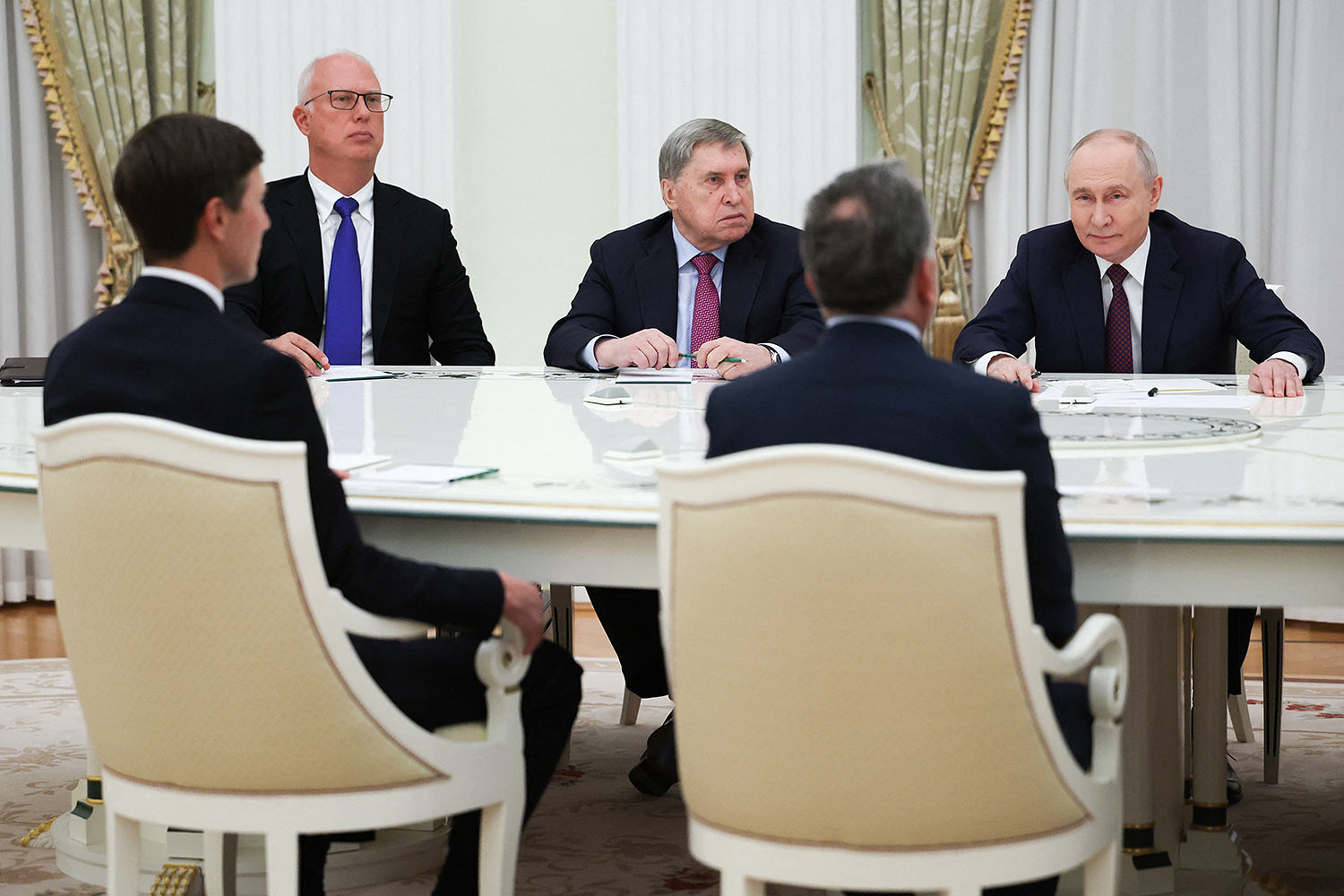
Vladimir Putin's push to tie talks on ending the war in Ukraine to a broader European security order threatens to split Washington from its allies and turn Moscow's aggression into a permanent regional veto. European leaders fear that negotiating over continental security rules while Russian troops occupy Ukrainian territory and test NATO's eastern flank rewards coercion rather than establishing peace.
After years of covering diplomatic summits from Brussels to Moscow, one pattern stands out whenever the Kremlin widens the agenda. Moscow rarely introduces a sweeping new framework out of goodwill. It does so to shift attention away from its own violations of existing international law and to drive wedges between capitals that already struggle to move at the same speed. You might also find this connected article interesting: Why MPs Keep Fighting Over Shakespeare In The UK Curriculum.
Recent diplomatic activity has underscored how high the stakes have become. Talks involving U.S. representatives—including Abu Dhabi discussions and subsequent trilateral engagements involving President Donald Trump, Chinese President Xi Jinping, and Putin—have collided with European warnings over security incidents along NATO's eastern flank and disputes over how to structure future negotiations. EU leaders have moved to coordinate through a smaller group, the E5+—bringing together the United Kingdom, France, Germany, Italy, and Poland alongside EU institutions—to prevent sidelining and protect sanctions leverage.
Why Moscow Wants a Broader Security Deal
A broader European security bargain sounds statesmanlike on paper. In practice, it serves a very narrow Kremlin goal. As discussed in recent articles by The Guardian, the effects are worth noting.
By insisting that any settlement address the wider European security architecture, Moscow tries to treat the post-Cold War settlement and Ukraine's sovereignty as open questions rather than settled commitments. Critics in European capitals note that Russia is already bound by existing security rules and the United Nations Charter; the core crisis stems from breaking those rules, not from a lack of treaties.
Demands around Ukrainian neutrality, limits on military posture, and economic normalization also function as pressure points. Even when talks stall, slow-rolling negotiations buys time, tests Western resolve, and lets Moscow dangle concessions or threats depending on how much leverage Washington applies.
- Agenda dilution: Turning a war of aggression into a grand continental bargain shifts focus from troop withdrawal and accountability to Western concessions.
- Leverage preservation: Keeping European security open-ended gives Moscow recurring excuses to contest NATO and EU decisions later.
- Sanctions relief: Moscow wants economic restrictions lifted without surrendering territorial gains or halting pressure on neighboring states.
The Friction Between Speed and Deterrence
Washington and European capitals do not always share the same urgency or risk calculation. A fast diplomatic track aimed at halting heavy casualties and avoiding prolonged entanglement can pull U.S. negotiators toward compromises that look very different from Berlin, Warsaw, or Tallinn.
European officials worry that a rapid deal could trade long-term deterrence for short-term calm. If security guarantees for Ukraine stop short of full alliance membership, or if sanctions ease before core territorial disputes are resolved, Moscow could treat a pause as breathing room rather than a permanent end to hostilities.
Consider a hypothetical example of how that gap plays out in practice. Suppose negotiators agree to a ceasefire along current lines paired with partial sanctions relief and vague assurances about eastern border patrols. Within eighteen months, cyber intrusions, airspace probes, or energy disputes could flare again while European governments argue over whether sanctions should snap back. That ambiguity is precisely what a cautious Kremlin wants.
Europe's Own Fault Lines
Blaming Moscow alone is lazy journalism. Europe's biggest vulnerability in these talks is internal hesitation.
European states now carry a massive share of Ukraine's financial and military backing and hold economic levers Moscow wants back. Yet member states disagree sharply on defense spending, risk tolerance, and how far to push diplomatic engagement. Some capitals want firm containment until all occupied land is returned; others worry more about industrial costs, energy exposure, or political backlash at home.
| Factor | European Advantage | European Vulnerability |
|---|---|---|
| Economic Weight | Controls key sanctions and major financial aid to Kyiv | Uneven willingness to sustain costs or resist sanctions relief |
| Diplomatic Format | E5+ coordination gives key capitals a clearer voice | Risk of slow consensus or side-channel surprises |
| Security Posture | Growing defense investments and NATO eastern flank focus | Reliance on U.S. backing and uneven military readiness |
There is also a practical catch in how Europe enters the room. Joining talks late can look like reacting to a script already half-written by Washington and Moscow. To avoid being treated as a spectator paying the bill, European governments have to pair diplomatic unity with real military and industrial backing—otherwise their seat at the table will carry more formality than weight.
What Real Guardrails Look Like
Negotiating with an adversary does not require naivety, nor does refusing a trap mean refusing serious diplomacy. It requires clear red lines tied to observable actions rather than promises.
First, European security cannot be negotiated over the heads of frontline states or treated as a bargaining chip to appease Moscow. Any talk of regional stability has to start with halting attacks on Ukrainian territory and stopping hybrid pressure and border incidents against neighboring countries.
Second, sanctions and economic normalization should move strictly step-by-step with verified compliance, not upfront as an act of faith. If Russia wants normal trade and security dialogue with Europe, it has to prove through restraint—not speeches—that aggression no longer pays.
The trap is only sprung if Europe lets fear of being left behind push it into bad terms, or lets division paralyze it before the real bargaining even starts.