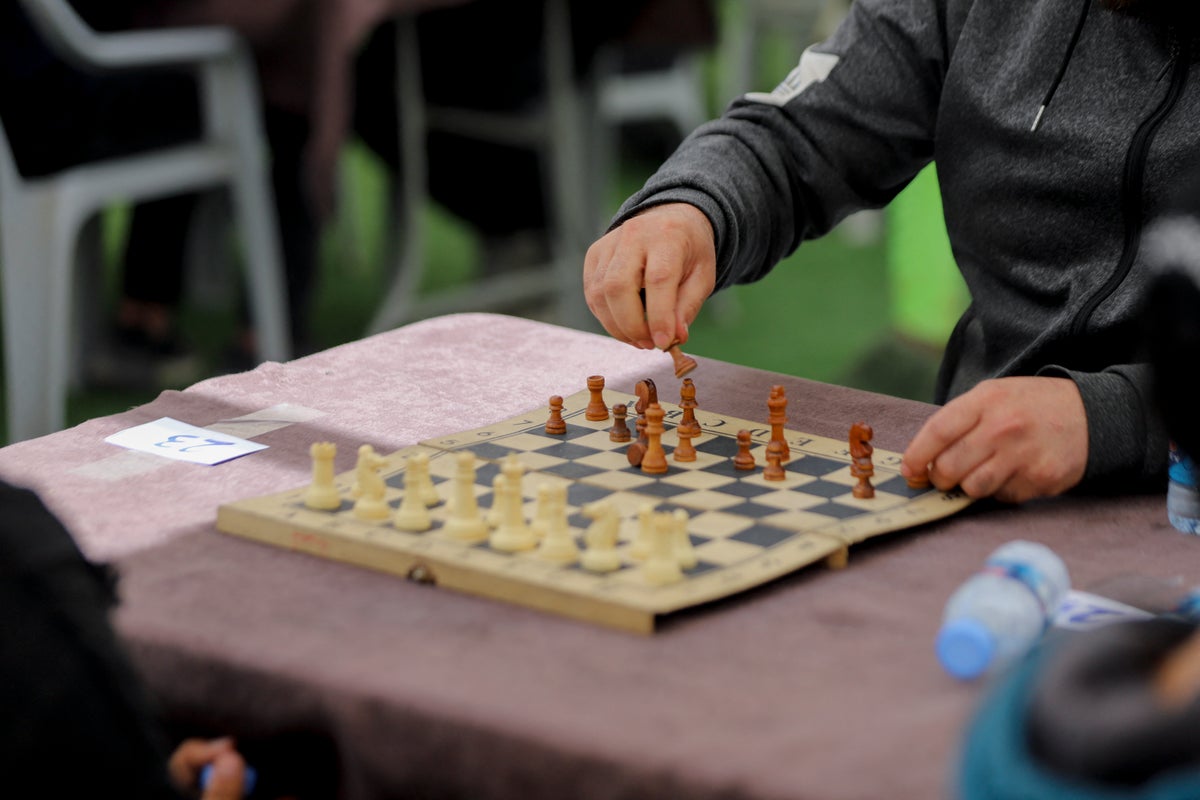
The International Chess Federation, universally known by its French acronym FIDE, has suspended the Russian Chess Federation following a relentless legal campaign mounted by Ukraine. This move strips the Russian body of its membership rights for two years, halting its ability to host official FIDE events and restricting its top officials. While the decision is being framed as a sudden, standard regulatory enforcement, it is actually the culmination of a bitter, multi-year internal war that exposes the deep geopolitical fractures within the highest echelons of board games and global sports diplomacy.
For decades, chess has served as a soft-power chessboard for the Kremlin. This ruling punctures that legacy. Yet, the suspension stops short of a total ban on Russian players, who can still compete under a neutral flag. This compromise satisfies neither side and ensures the political infighting will only intensify.
The Proxy War on the Board
The battle did not begin in a courtroom, but in the shifting geography of competition. Following the 2022 invasion of Ukraine, the Russian Chess Federation pulled off a logistical maneuver that caught many off guard. It exited the European Chess Union and integrated itself into the Asian Chess Federation. This was a deliberate attempt to bypass European sanctions and maintain international viability.
Ukrainian grandmasters and federation officials watched this migration with growing fury. They recognized that a simple geographical shift allowed Russian state-backed players to maintain their status and funding. Ukraine’s strategy shifted from public protests to a calculated legal assault. They targeted FIDE’s own ethics and disciplinary code, arguing that the Russian Chess Federation was actively operating in occupied Ukrainian territories, thereby violating FIDE's territorial integrity rules.
The Ethics and Disciplinary Commission of FIDE ultimately agreed. The panel found that by organizing tournaments in disputed regions and counting those regional bodies as part of its domestic structure, the Russian federation had breached the global body's statutes.
It was a textbook flank attack.
The Arkady Dvorkovich Dilemma
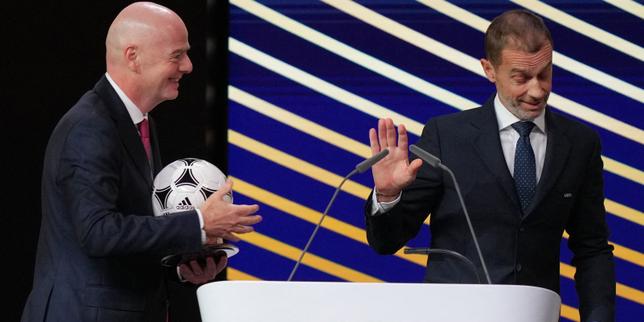
To understand why this suspension took so long, one must look at the man sitting at the top of FIDE. Arkady Dvorkovich is the President of FIDE. He is also a former Deputy Prime Minister of the Russian Federation. He served under Dmitry Medvedev and managed massive economic portfolios for the Kremlin before transitioning into sports administration.
This dual identity has placed FIDE in an impossible position for years. On one hand, Dvorkovich has managed to maintain his presidency by securing votes from developing chess nations across Africa, Asia, and Latin America. He achieved this through development grants and promises of globalization. On the other hand, his presence makes FIDE look like an extension of Russian foreign policy to Western nations.
"A sports federation cannot claim neutrality when its leadership is tied to the very state apparatus causing the geopolitical rupture."
During the disciplinary hearings, Dvorkovich himself faced intense scrutiny. Western federations openly questioned whether a body led by a former Kremlin official could fairly adjudicate a dispute involving Russia and Ukraine. While Dvorkovich has previously made carefully worded statements advocating for peace, his administration has consistently tried to walk a tightrope, attempting to appease Western corporate sponsors while refusing to completely alienate Moscow. The suspension of the Russian federation proves that this tightrope has finally snapped.
Money Power and the Neutral Flag Loophole
The financial reality of professional chess explains why the suspension is not a absolute ban. Russia has historically been one of the primary bankrolls for international chess tournaments. State-owned enterprises and oligarchs have poured millions into championship matches, grand prix events, and player stipends. Cut Russia out completely, and FIDE faces a massive revenue shortfall that Western sponsors have been slow to fill.
This financial dependency birthed the neutral flag compromise.
Under the current ruling, elite Russian grandmasters can still participate in the World Championship cycle, the Candidates tournament, and other high-profile events. They simply cannot wear the Russian tricolor or have the national anthem played if they win. To the Ukrainian federation, this is a distinction without a difference. Everyone in the chess community knows exactly which state funds these players, where they train, and who they represent back home.
Consider the mechanics of a top-tier grandmaster's training regimen. It requires a team of seconds, computer analysts, psychologists, and physical trainers. This infrastructure costs hundreds of thousands of dollars annually. For top Russian players, this capital frequently originates from domestic corporate entities closely aligned with the state. Changing the flag next to a player's name on a digital broadcast does nothing to alter the economic reality supporting their career.
The Broken Consensus of Global Sport
This ruling exposes a wider crisis across all international sports federations. From the International Olympic Committee to FIFA, governing bodies are finding that the old myth of "separating sports from politics" is completely dead.
FIDE Sanction Structure:
├── Russian Chess Federation: Suspended (No hosting rights, no voting power)
├── Russian Government Officials: Banned from FIDE positions
└── Individual Russian Players: Permitted to compete under neutral FIDE flag
FIDE tried to use administrative technicalities to delay this day of reckoning. They hoped the conflict would resolve or fade from the front pages. By forcing FIDE's independent ethics panel to issue a hard ruling, Ukraine has provided a blueprint for other nations looking to challenge Russian influence in amateur and professional sports. You do not argue the morality of war; you argue the literal wording of the federation's bylaws regarding geographic boundaries and membership obligations.
The immediate fallout will be felt in the upcoming tournament calendar. Event organizers who previously relied on Russian logistical support or corporate backing must scrambled to find alternative funding. European organizers face immense pressure from their local governments to bar any Russian players, neutral flag or not, from entering their borders to compete. This creates a fragmented competitive landscape where the best players in the world cannot face each other due to visa denials and border restrictions rather than skill.
The Looming Counteroffensive
Moscow will not accept this suspension quietly. The Russian Chess Federation has already signaled its intent to appeal the decision to the Court of Arbitration for Sport in Lausanne, Switzerland. They will argue that the suspension is politically motivated, discriminatory, and a violation of the principle that athletes should not be punished for the actions of their governments.
The legal battle ahead will likely drag on for the entirety of the two-year suspension period. During this time, the internal politics of FIDE will become toxic. Dvorkovich faces a looming re-election cycle where Western federations will almost certainly field a unified candidate to replace him, using this suspension as proof that his position is untenable.
Chess matches are won by calculating variations deep into the future, anticipating the opponent's responses three steps before they happen. In forcing this suspension, Ukraine played a long-game strategy that successfully trapped FIDE into a corner. Now, the governing body must survive the chaotic endgame of its own making, operating with less money, fractured alliances, and a leadership structure that satisfies absolutely no one.