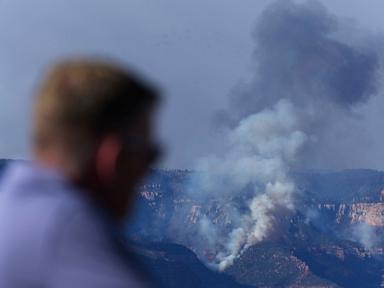
The destruction of the historic Grand Canyon Lodge was not a freak act of nature, nor was it an unavoidable tragedy born solely of extreme weather. According to federal investigative reviews into the blaze, the loss of one of America’s most iconic national park landmarks came down to preventable leadership failures, fragmented command structures, and delayed decision-making during the critical early hours of the incident. While initial public narratives focused heavily on dry fuels, erratic canyon winds, and the inherent difficulty of defending remote timber structures, internal assessments reveal a far more uncomfortable reality. When flames threatened the North Rim, the institutional machinery meant to protect it stalled.
Anatomy of a Preventable Loss
Wildfires in the American Southwest have grown hotter, faster, and more erratic over the past two decades. Every veteran fire analyst knows that once a crown fire establishes momentum on a steep canyon rim, suppression options narrow rapidly. Yet the Grand Canyon Lodge did not vanish in a sudden, unpredicted wall of flame without warning. Meanwhile, you can explore similar events here: Inside the Henry Nowak Murder Appeal and What Happens Next.
Federal reviews examining the incident highlight a sequence of missteps that began well before embers landed on the historic stone-and-timber roof. Incident commanders and park leadership struggled with unified command integration, creating friction between local National Park Service personnel, incoming interagency fire teams, and structural protection specialists. In wildland-urban interface fires—even those tucked inside remote federal lands—clarity of authority determines whether resources arrive in time or sit staged miles away waiting for sign-off.
Communication breakdowns compounded the delay. Radios operated on mismatched frequencies across responding units. Situation reports lagged behind real-time fire behavior on the canyon rim. By the time decision-makers recognized that passive monitoring and standard containment lines would not hold against wind-driven spotting, the window for aggressive structure protection had narrowed to minutes. To see the full picture, check out the recent article by TIME.
A building like the Grand Canyon Lodge carries unique vulnerabilities. Originally designed by Gilbert Stanley Underwood in the late 1920s and rebuilt after a 1932 fire, the lodge relied on massive ponderosa pine timbers, Kaibab limestone masonry, and expansive wooden decking perched directly above the canyon drop-off. That dramatic architecture made it an engineering marvel and a beloved sanctuary for generations of visitors. It also turned the structure into a chimney when convective heat and burning embers swept upward from the rim.
Why Federal Fire Command Keeps Stumbling
To understand how leadership failures happen at a flagship national park, you have to look past the individuals on the ground and examine the bureaucratic architecture governing federal wildfire response. The National Park Service, the U.S. Forest Service, and interagency incident management teams operate under shared protocols on paper, yet their operational cultures often collide under extreme stress.
Park superintendents hold ultimate jurisdictional responsibility for park resources, visitor safety, and historic preservation. Incoming Type 1 or Type 2 incident commanders, however, bring specialized wildfire suppression authority designed for large-scale perimeter control. When a fire transitions rapidly from a manageable backcountry burn or initial-attack incident into an immediate threat to irreplaceable cultural infrastructure, the handoff of authority becomes a dangerous gray zone.
Nobody wants to overstep, and nobody wants to own a bad call. That hesitation breeds risk aversion disguised as procedure. Instead of pre-positioning heavy structural engines, aerial retardant drops, and dedicated sprinkler systems at the first credible sign of rim-top wind shifts, leaders often wait for formal threat assessments and resource orders to clear multiple administrative layers.
History offers plenty of warnings that went unheeded. Similar coordination gaps surfaced during major western park fires over the past twenty years, including blazes that threatened historic lodges in Glacier, Yosemite, and Yellowstone. Each time, after-action reviews called for tighter pre-incident planning, clearer triggers for structure defense, and streamlined authority during rapid escalation. Each time, institutional memory faded once the smoke cleared and seasonal personnel rotated out.
The Myth of the Unstoppable Wildfire
Whenever an iconic structure burns, official statements lean heavily on environmental determinism. Officials point to prolonged drought, beetle-killed timber, steep topography, and shifting thermal winds. Those factors are real. Anyone who has stood on the North Rim during peak fire season understands how afternoon canyon updrafts can turn a manageable ground fire into a roaring plume in seconds.
Blaming weather alone, however, lets leadership off the hook.
Modern fire science and structural protection tactics have advanced dramatically. Defensible space clearing, ember-resistant roof retrofits, exterior foam gel applications, and high-volume portable water delivery systems exist specifically to save high-value buildings inside high-risk forests. When deployed early, these measures routinely save wooden structures even when surrounding timber burns to ash.
The federal review makes clear that the failure was not a lack of available technology or firefighting courage. Crews on the line worked under punishing conditions with limited water pressure and blinding smoke. The breakdown occurred higher up the chain, where strategic foresight failed to match tactical urgency.
Three specific operational gaps stood out in the post-fire scrutiny:
- Delayed Escalation Triggers: Leadership relied on optimistic containment projections rather than worst-case wind modeling, postponing the request for specialized structural strike teams until access routes were already compromised.
- Water Infrastructure Bottlenecks: Aging municipal-style water lines on the rim lacked the sustained pressure and redundancy required to support simultaneous firefighting operations once multiple spot fires ignited near the lodge complex.
- Ambiguous Evacuation and Defense Priorities: Dividing limited personnel between visitor evacuation logistics, perimeter scouting, and active structure defense left too few hands dedicated to protecting the main lodge during peak ember showers.
The Hidden Cost of Deferred Maintenance
You cannot separate wildfire leadership failures from decades of chronic underfunding across the National Park System. While command decisions on the day of the fire determined the immediate outcome, long-term budget priorities set the stage years earlier.
Historic park lodges sit at an awkward intersection of federal oversight. They are cultural artifacts subject to strict preservation rules under the National Historic Preservation Act, yet they function as active commercial hospitality facilities managed through concession contracts. Upgrading fire suppression systems, replacing aging water mains, or altering exterior timber features to improve ember resistance requires navigating an exhausting maze of compliance reviews, funding backlogs, and competing agency priorities.
Maintenance backlogs across national parks have routinely run into the tens of billions of dollars. When park superintendents have to choose between fixing failing wastewater systems, repairing crumbling roads, and overhauling legacy fire-suppression plumbing for a seasonal lodge, the invisible infrastructure upgrades almost always lose out.
Even basic fuels management around historic districts faces pushback. Removing mature trees close to iconic structures or thinning dense forest stands near scenic overlooks often sparks resistance from preservationists and visitors who prize the untouched aesthetic of the canyon rim. Leaders hesitate to take the political heat for aggressive thinning—until a fire removes the trees and the buildings together.
Accountability Without Scapegoats
Federal incident reviews occupy a tricky space in public administration. Their stated purpose is organizational learning rather than punitive discipline. Investigators interview crews, reconstruct radio logs, map fire progression, and identify systemic vulnerabilities so future teams do not repeat the same mistakes.
That non-punitive model has value. If firefighters and commanders fear career ruin every time they speak candidly to investigators, critical lessons get buried beneath defensive posturing. Yet when reviews repeatedly cite "leadership failures" and "communication breakdowns" without transparent follow-through, public trust erodes.
Real accountability does not mean hanging mid-level supervisors out to dry while senior executives issue carefully worded press releases about "lessons learned." It requires measurable structural changes before the next fire season begins.
First, national parks housing irreplaceable historic structures need automatic, non-negotiable trigger points for structural protection. When a wildfire reaches a defined distance or wind-alignment threshold relative to a historic district, pre-designated structure defense teams and aerial assets must deploy automatically, bypassing discretionary bureaucratic approval.
Second, water supply and backup pumping systems at remote park facilities must be audited against modern wildland-urban interface standards, not century-old hospitality codes. Gravity-fed tanks and aging pipes cannot be allowed to run dry twenty minutes into a major ember storm.
Third, unified command drills between park leadership, concession operators, and interagency fire teams must happen annually on-site, testing radio interoperability and rapid handoff protocols under simulated crisis conditions. Tabletop exercises in air-conditioned conference rooms do not prepare leaders for the sensory overload of a fast-moving canyon fire.
What Comes Next for Historic Park Landmarks
Rebuilding a lost landmark at the Grand Canyon will take years, tens of millions of dollars, and exhaustive architectural debate. Craftspeople can quarry matching Kaibab limestone and mill massive replacement timbers, but no reconstruction can restore the original ninety-year-old structure that witnessed generations of American history.
More troubling is the realization that dozens of other historic lodges, visitor centers, and ranger stations across the West face the exact same combination of aging infrastructure, dense surrounding fuels, and fragmented emergency command. From the high timber of the Rockies to the coastal ridges of the Pacific Northwest, climate realities have outpaced federal emergency management habits.
The federal review into the Grand Canyon fire delivered a blunt verdict that reaches far beyond one stretch of northern Arizona. Historic landmarks do not survive mega-fires on luck, tradition, or heroic last-minute stands. They survive when leaders make hard, expensive, decisive calls hours—and years—before the first spark hits the roof.