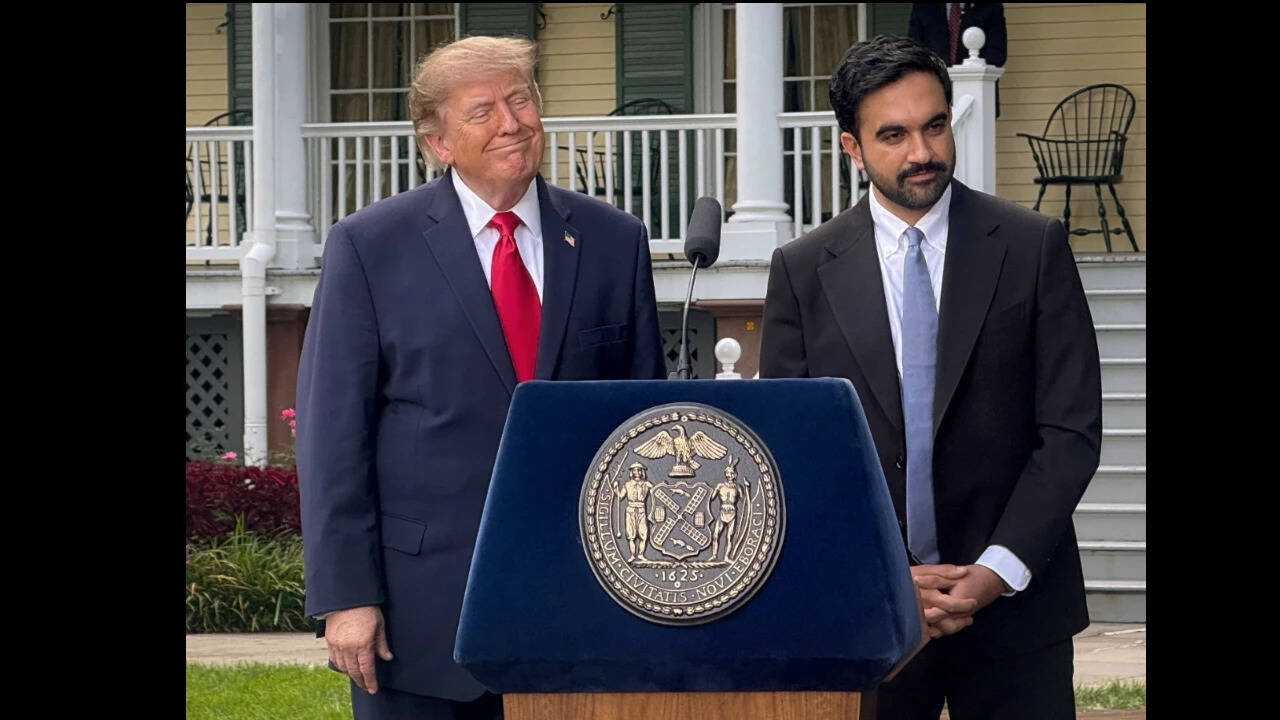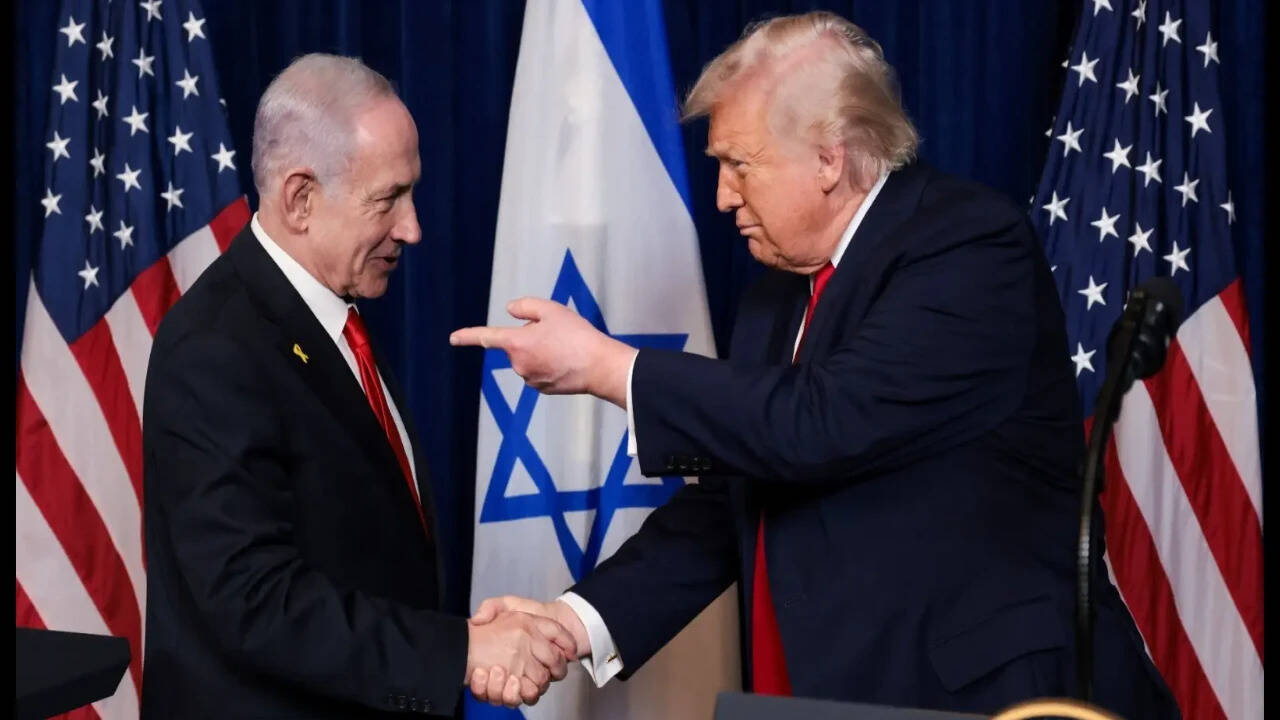
President Donald Trump told Fox News on Election Day, November 3, 2026, that the United States would stop paying roughly $4 billion in annual aid to Israel by the end of the year. It sounded like an earthquake in Washington foreign policy. It is not.
The existing ten-year memorandum of understanding between Washington and Jerusalem runs through September 2028, committing roughly $3.8 billion a year in Foreign Military Financing grants alongside additional missile defense funds. A presidential phone call does not erase multi-year appropriations already baked into defense procurement schedules, nor does it instantly sever decades of industrial and diplomatic wiring.
Strip away the campaign-trail bravado and the headline math, and the real story is far messier. Trump tied the pledge to midterm politics—pointing directly to vocal critics of unconditional aid such as Michigan Senate candidate Abdul El-Sayed—while claiming Israeli Prime Minister Benjamin Netanyahu had pushed for the shift. Yet even if Washington slows or restructures grant checks, Pentagon co-production, arms sales, and regional security commitments remain entangled in ways a single announcement cannot untangle.
Why an Election Day Pledge Collides with Budget Reality
Presidents talk about foreign aid in round numbers. Appropriations lawyers talk in statutory authority, multi-year contracts, and obligation windows.
That gap explains why analysts from the Congressional Research Service and foreign policy shops have urged caution since the November 3 interview. Foreign Military Financing is not a pallet of cash dropped at Ben Gurion Airport on January 1. Most of it functions as credit toward U.S. defense manufacturers, funding big-ticket platforms like F-35 fighter jets and joint missile defense systems. Abruptly cutting off financing before a contract cycle finishes forces a buyer to pay out of pocket, seek alternative credit, or cancel orders—moves that can trigger contract penalties and disrupt industrial production lines on the U.S. side too.
There is also the calendar problem. The current bilateral agreement governs funding through fiscal year 2028. Formal discussions on a post-agreement framework only began in June 2026 with a stated goal of moving gradually toward a more reciprocal relationship. Trying to slam the brakes at the end of calendar year 2026 compresses a multi-year transition into a matter of weeks.
A president can announce an end to "paying" a partner in a cable interview, but defense contracts and congressional appropriations move on slower, stiffer tracks.
Even critics of U.S. aid to Israel have noted the timing. When Trump made the remark on election morning, skeptical voices across the political spectrum pointed out how neatly the line fit an election-day media cycle while leaving the actual mechanics undefined.
The Numbers Behind the Four Billion Dollar Figure
Public debates around U.S. military aid to Israel routinely blur baseline grants with wartime spikes and missile defense lines. Clarity starts with separating the buckets.
For years, the headline baseline has hovered near $3.8 billion annually under the bilateral memorandum of understanding, supplemented by roughly $500 million in joint missile defense programs—a combined figure that casual shorthand rounds to "$4 billion". During 2024, emergency wartime packages pushed total U.S. assistance to Israel to roughly $12.5 billion.
In fiscal terms, even a $3.8 billion annual baseline represents a tiny fraction of total federal spending—roughly 0.05% of the federal budget, or about five cents out of every hundred dollars spent. Money alone is rarely why this issue ignites fierce arguments.
| Funding Component | Typical Role | Primary Friction Point |
|---|---|---|
| Foreign Military Financing grants | Covers purchases of U.S. military hardware such as aircraft and munitions | Faces pressure from both fiscal conservatives and critics of military operations |
| Joint missile defense programs | Supports cooperative interceptor and air-defense systems | Shifting oversight from foreign affairs to defense channels can reduce visibility |
| Direct commercial or government arms sales | Lets Israel buy weapons using its own funds or separate arrangements | Raises questions about transfer conditions, oversight, and regional balance |
Small budget share does not mean small political weight. For progressives and anti-war critics, ending grants is a moral and strategic demand tied to Gaza, the West Bank, and wider regional conflict. For fiscal hawks, cutting checks is a straightforward way to tell a wealthy ally to pay its own bills.
What Changes If Grants Give Way to Sales and Co-Production
Suppose, for the sake of a hypothetical example, Washington phases out traditional grant checks faster than expected and shifts toward direct arms purchases and joint research. The checkbook changes. The strategic entanglement does not automatically disappear.
Trump suggested during his remarks that Israel could still buy American weapons with its own money, and that the U.S. would still help if needed. Reports in late 2025 also pointed to Israeli interest in a longer-term framework focused more heavily on joint research and development, though Netanyahu's side disputed details at the time.
Watch what happens to congressional oversight if grant programs shrink while defense integration expands. Analysts at the Congressional Research Service have flagged that moving cooperation toward Pentagon-managed joint efforts can shift scrutiny away from foreign affairs committees toward defense committees. Critics of deeper integration warn that co-production, technology transfers, and intelligence sharing can lock in long-term military alignment with less public transparency than an annual aid line item.
There is also a regional domino question that Washington has wrestled with for decades. U.S. security assistance to Israel has long existed alongside parallel aid and security arrangements involving neighboring states like Egypt and Jordan under peace frameworks brokered by Washington. Pull one thread without examining the rest, and diplomatic assumptions across the Levant and Sinai start shifting.
Why Netanyahu and Trump Converged on the Message
At first glance, an Israeli prime minister welcoming—or at least floating—an end to U.S. aid sounds counterintuitive. Why give up billions in guaranteed military credit?
One reason is sovereignty and leverage. Aid comes with strings, debates, and domestic political baggage in both capitals. A relationship framed around mutual industrial and technological partnership—or self-financed purchases—lets a government argue it stands on its own feet rather than relying on charity.
Trump framed the move around domestic politics and burden-sharing, arguing Israel does not need the money and complaining that opponents used the issue as a political club during the campaign. Whether Netanyahu actually initiated that specific timeline years ago, as Trump claimed, has not been publicly confirmed by Jerusalem.
Still, politics in Washington is shifting under both parties. Following the November 2026 midterms, Democrats secured a House majority with Hakeem Jeffries nominated for speaker, while internal party friction over Israel policy—from West Bank settler violence to conditions on weapons—remains active even as centrist leaders hold broad support. On the right, skepticism of foreign outlays continues to test traditional consensus.
Where the Real Leverage Actually Lives
Anyone tracking this story after the November headlines should stop counting grant dollars alone and watch three concrete pressure points instead.
- Weapons transfer approvals: Whether the Pentagon approves or slows specific munitions, aircraft, or air-defense shipments—and what conditions attach to them—matters more day-to-day than a rhetorical pledge about ending cash payments.
- Defense bill language: Provisions inside annual defense authorization legislation governing joint weapons development, co-production, and tech sharing reveal how tightly the two militaries remain linked even without traditional grants.
- The 2028 memorandum clock: Watch whether negotiators actually hammer out a formal successor to the expiring agreement or let talks drag into legislative fights over appropriations and vetoes.
If Washington stops handing out grant checks, it will not automatically step back from Middle East military entanglement; the real test is whether lawmakers and the White House are willing to let go of the levers that come with selling weapons and sharing technology.