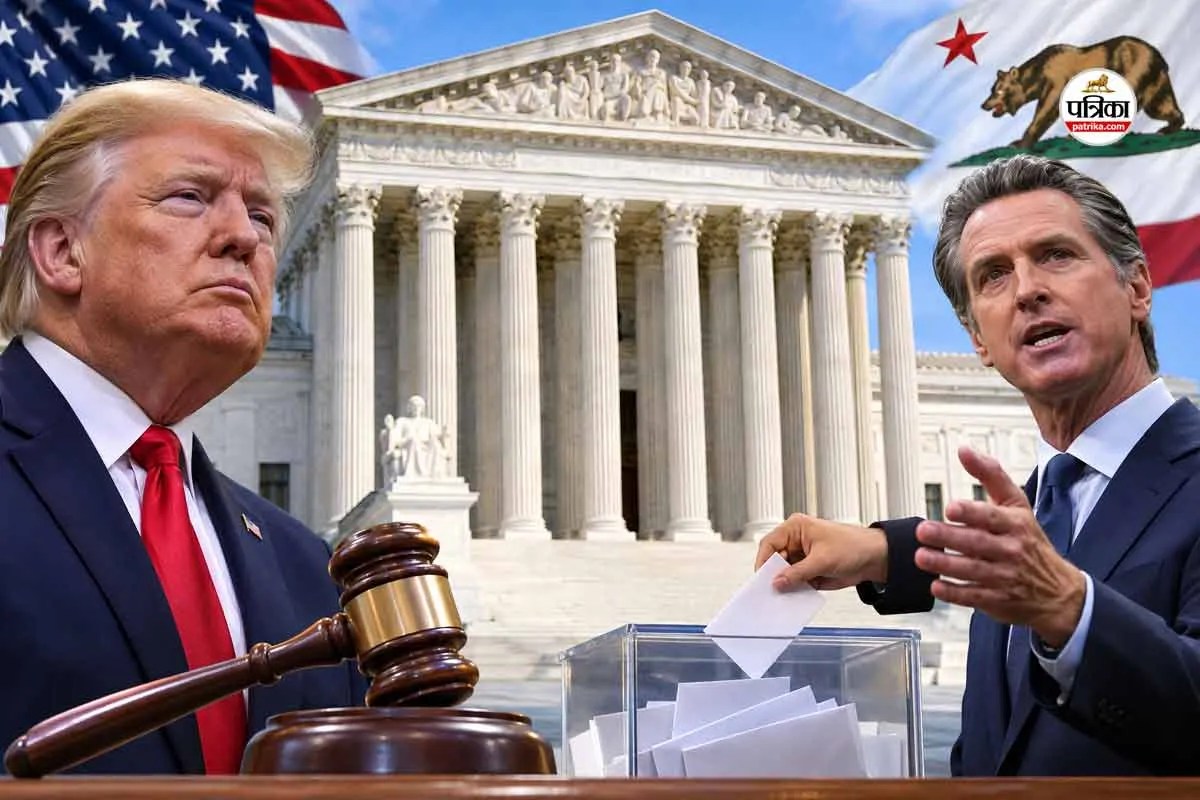
The Supreme Court refused to step in on the eve of the 2026 midterm elections, turning down the Trump administration's emergency request to force California to set aside and withhold from counting more than 20,000 ballots flagged as likely cast by noncitizens.
That single ruling settled the immediate legal question ahead of November's vote, yet it barely scratches the surface of what actually unfolded behind closed doors, inside county registrar offices, and across federal dockets. A surface reading treats this as just another partisan clash between Washington and Sacramento. Anyone who has covered election administration and federal court battles for decades knows better. Last-minute emergency interventions on the doorstep of a national election carry immense procedural baggage, and the justices routinely balk at upending state election machinery when the underlying proof looks thin, rushed, or contested. For a deeper dive into similar topics, we recommend: this related article.
To understand why the administration's push stalled—and why California officials pushed back so fiercely—you have to look past the headlines about 20,000 ballots and examine how voter rolls are compiled, how federal prosecutors built their case, and what happens when aggressive enforcement collides with election calendars.
What Sparked the Supreme Court Clash Over 20,000 Ballots
The legal battle did not materialize out of thin air on the first Monday of November. It built over weeks of escalating pressure from the Justice Department and federal prosecutors targeting California's election infrastructure ahead of the midterms. For further context on this development, comprehensive coverage can also be found on NBC News.
Federal officials had compiled a list pointing to more than 20,000 ballots or registrations tied to individuals the administration contended were not U.S. citizens. Rather than relying solely on routine administrative channels, the Justice Department moved to compel California to segregate those ballots and hold them back from being counted while citizenship verification took place.
California refused to comply. State leaders and local election administrators argued that federal authorities lacked the legal authority to dictate last-minute ballot segregation on the fly, particularly based on lists whose accuracy and methodology were sharply disputed.
Lower courts proved skeptical of the administration's push. A federal trial judge rebuffed the bid to force the state to set aside the 20,000 ballots, and a divided three-judge panel on the Ninth Circuit Court of Appeals turned down the Justice Department's request as well. When the administration took its emergency appeal to the Supreme Court on Monday, November 2—just one day before election day—the justices declined to intervene, leaving the lower-court rulings intact.
Timing matters enormously in election law. Courts of all levels hesitate to issue sweeping, last-minute orders that alter how ballots are handled right as voting is concluding or ballots are being processed. Doing so risks chaos, uneven application across counties, and valid votes getting caught in bureaucratic limbo.
The Numbers Behind the Noncitizen Ballot Claim
Numbers sound precise. In politics, they often function as a battering ram.
Saying 20,000 ballots sounds massive on a television chyron or a social media post. Yet election researchers, state officials, and county administrators immediately questioned how that figure was assembled and whether a raw flag equals an illegal vote cast by a noncitizen.
Voter registration databases are living, complex systems updated through multiple channels, including motor vehicle agencies, mail forms, and federal-state data cross-checks. Mismatches happen. Outdated records happen. People become naturalized citizens after an earlier government database snapshot was taken.
A database flag is a starting point for verification, not proof of a crime or an unlawful ballot.
Consider a hypothetical example to see how data errors creep into these disputes. Suppose a lawful permanent resident applies for a driver's license years ago, an agency record is logged with a noncitizen indicator, that person later naturalizes as a U.S. citizen and registers properly, and an automated sweep compares a newer voter roll against an older immigration or licensing file without real-time synchronization. Without careful case-by-case review, an automated match can sweep in eligible voters alongside actual mistakes or violations.
Audits and empirical studies have consistently found that noncitizen voting in U.S. elections is rare. Even when prosecutors brought criminal cases in California around the same period—such as charging dozens of green card holders over alleged voter improprieties—California Attorney General Rob Bonta dismissed the broader fraud narrative as a "fizzle," while defense attorneys argued in court that some defendants did not understand the forms they were filling out or intend to defraud anyone.
That gap between alleged numbers and proven unlawful ballots sits right at the heart of the controversy. Accusing 20,000 people or ballots of illegality is far easier than proving in court that each of those ballots was cast unlawfully by someone ineligible to vote.
Subpoenas, Letters, and Pressure on Local Election Workers
The Supreme Court's refusal to block the ballots was only one front in a broader campaign. Behind the scenes, local election offices were dealing with something even more disruptive to day-to-day operations: direct legal and prosecutorial pressure.
Federal prosecutors sent demand letters to county election officials across California—spanning all 58 counties—warning them to set aside ballots tied to the suspected noncitizen list or face potential criminal exposure. Some election officials also received federal grand jury subpoenas.
If you have ever watched a county registrar's office operate during an election cycle, you know how fragile the workflow is. Clerks and administrators work under strict statutory deadlines, chain-of-custody rules, signature verification protocols, and public observation requirements. Throwing threats of prosecution or sudden segregation demands into that mix creates immediate friction.
- Operational whiplash: County staff have to divert time and legal attention toward responding to federal demands and subpoenas during peak election processing.
- Conflicting directives: Local officials caught between state election law and federal warnings face acute legal uncertainty over which instruction governs ballot handling.
- Chilling effect on administration: When civil servants fear personal legal jeopardy for carrying out routine duties, turnover rises and institutional memory suffers.
Courts also had to weigh how threats against election workers affect the integrity of the process itself. A fair election requires administrators who can follow established law without intimidation, while still allowing legitimate investigations when credible evidence of wrongdoing exists.
Why Federalism and Election Rules Collided
At its core, this dispute exposed a perennial fault line in American government: how far federal executive power reaches into state-run elections.
Under the U.S. Constitution, states hold primary responsibility for administering elections and counting votes, subject to federal constitutional limits and federal statutes passed by Congress. States maintain voter rolls, train poll workers, process mail ballots, and certify results. When the federal executive branch tries to use litigation, prosecutorial warnings, or emergency court motions to force specific ballot-handling steps right before an election, it runs straight into questions of jurisdiction, statutory authority, and evidentiary proof.
Supporters of aggressive federal action argue that Washington has a duty to police federal election rules, protect voter roll accuracy, and prevent ineligible ballots from diluting lawful votes. That concern is easy to state in principle.
The difficulty lies in execution and restraint. Telling a state to quarantine tens of thousands of ballots on an emergency docket—without a full trial on the underlying list or settled appellate review—asks judges to make irreversible operational moves on compressed timelines. Both appellate judges on the Ninth Circuit and the Supreme Court declined to take that leap.
What This Fight Means for Voter Trust and Future Disputes
Even when a legal challenge fails in court, its political and psychological effects linger. A rejected motion does not automatically erase doubts planted during a heated campaign.
Voters on opposite sides take away completely different lessons from episodes like the 20,000 ballots dispute. Critics of the administration see overreach, faulty data, and an attempt to cast a shadow over California's vote count. Defenders of the effort see stubborn resistance from state officials and argue that noncitizen eligibility deserves tougher scrutiny.
Neither side gets a clean, cost-free win from a court fight waged at the eleventh hour. Emergency litigation right before a vote rarely produces thorough fact-finding; it produces speed, friction, and headlines. Real verification—checking citizenship records accurately, resolving database mismatches cleanly, and prosecuting proven fraud fairly—requires methodical work long before ballots are cast, not courtroom brinkmanship the night before polls open.
Watch how future election disputes frame their evidence from day one. When claims rely on raw database matches rather than verified eligibility records, courts will keep demanding proof before touching a single ballot.