Researchers in China have reported the first direct bioarchaeological evidence of ancient nose-chopping punishment tied to cattle theft, turning a phrase long read in legal commentaries into a physical record etched onto human remains. Headlines love a neat shock value angle—ancient mutilation for stolen livestock—but the real story sits in how early states enforced property when paper trails were scarce, herds were mobile wealth, and a missing ox could bankrupt a household overnight.
Most coverage stops at the brutality. That misses the mechanics of statecraft. In an agrarian economy where draft animals powered plowing, transport, and tax capacity, stealing cattle was not petty shoplifting. It was an attack on productive infrastructure. When local magistrates lacked modern forensic tracking, brand registries, or salaried police forces, the human body became a walking ledger of guilt.
Why Cattle Theft Triggered Extreme State Violence
Look closely at what a cow or ox meant before internal combustion, synthetic fertilizer, or electronic banking. Grain yields depended on timely plowing. Timely plowing depended on healthy draft stock. A family that lost a pair of oxen in late spring did not merely lose an asset; it lost the season's harvest, which meant failing to meet grain quotas owed to regional authorities.
In early Chinese legal traditions, codified punishments graded offenses by social order, intent, and economic consequence. Mutilation—cutting off the nose, known in classical texts as yi, or severing feet, ears, or genitalia—sat in a grim hierarchy below execution yet far above fines. Fines only work when offenders hold liquid wealth or compliant kin who will pay on their behalf. Transient rustlers, indebted peasants, or borderland opportunists often had neither.
Punishment in early agrarian states was rarely pure vengeance. It was resource management dressed in moral authority.
Consider how a mutilation sentence functioned once carried out. A missing nose could not be hidden in a crowded market, faked with a forged tally stick, or negotiated away by a wealthy uncle after the magistrate moved on. Every neighbor, gatekeeper, and tax collector saw the mark immediately. That visibility deterred repeat offenses far more reliably than a temporary jail cell, which consumed grain stores while housing idle bodies.
Still, bioarchaeologists face a stubborn hurdle when moving from legal code to skeleton. Soft tissue rots. Cartilage vanishes. Unless a blade nicked the surrounding maxilla or nasal aperture, or healed infection left unmistakable remodeling around the midface, an ancient researcher cannot prove why a face looked altered. Trauma from a fall, a saber slash in battle, or chronic facial infection can mimic judicial mutilation if a team rushes to match bones with a favorite text.
Reading Trauma on Bone Without Falling for Textual Shortcuts
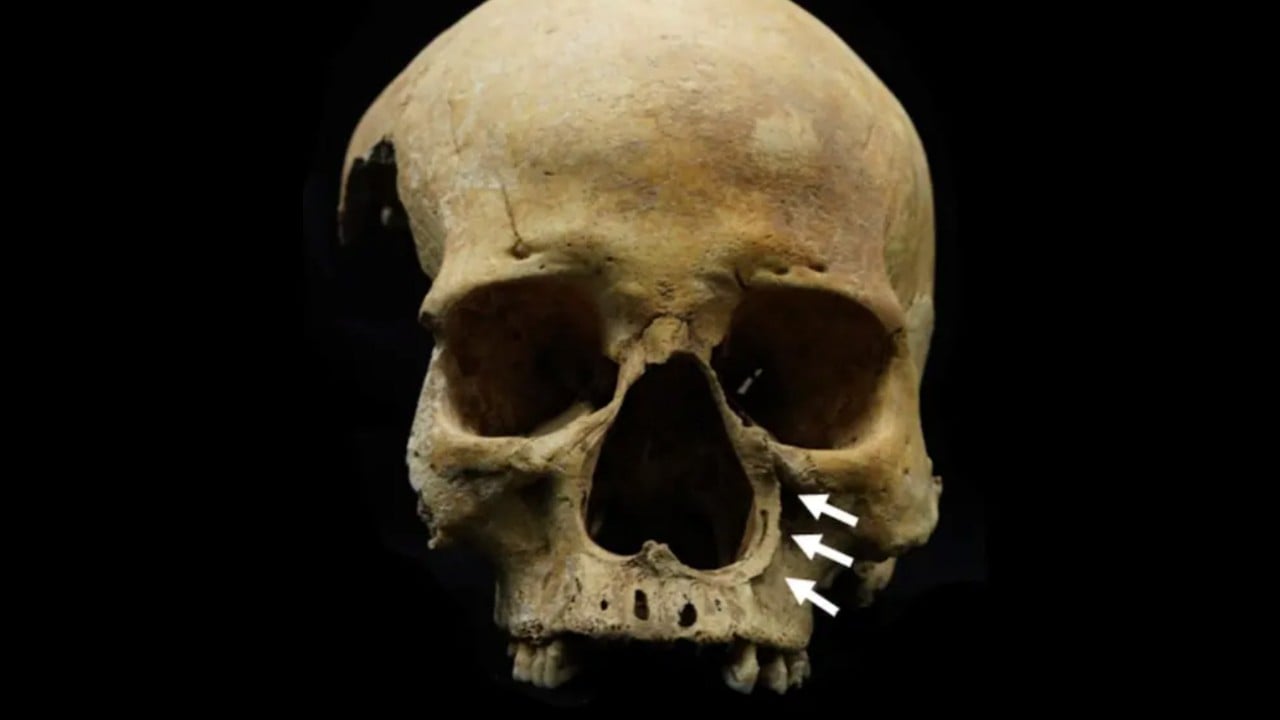
When Chinese researchers point to skeletal markers of ancient nose-chopping punishment for cattle theft, the burden of proof rests on pattern, context, and exclusion. A single notched nasal bone tells you a sharp instrument struck the center of the face. It does not automatically tell you the offender stole a heifer rather than losing a tavern brawl or catching a stray blade during a skirmish.
Strong bioarchaeological cases stack multiple lines of evidence. First comes anatomical specificity: clean, horizontal or angled cuts across the nasal aperture and anterior maxilla, distinct from chaotic blunt-force fractures or jagged battlefield wounds. Second comes healing profile. A person who survived a judicial mutilation lived long enough for bone margins to remodel, often with secondary osteomyelitis or tooth loss from compromised tissue coverage, proving the state wanted a scarred survivor rather than a corpse.
Third comes archaeological context. Burial placement, grave goods, demographic skew, and nearby administrative or settlement remains matter enormously. If skeletal markers cluster in a specific period or region where legal tablets, bamboo slips, or bronze inscriptions discuss livestock theft and facial mutilation, the link tightens. Even then, careful scholars separate what the bone proves—deliberate midfacial cutting followed by survival—from what the text supplies—the legal label attached to cattle rustling.
To see how easy it is to overread a skeleton, imagine a hypothetical example. Suppose a cemetery yields three adult males buried without grave goods, each showing healed cuts around the nasal opening. A sensationalist reading might declare them convicted cattle rustlers on sight. A disciplined investigator asks harder questions: Were their limb bones worn from heavy agricultural labor or cavalry riding? Did isotopic signatures in their teeth show they grew up in the local farming valley or migrated from a pastoral frontier where cattle raids ran both ways? Without those checks, bone becomes a Rorschach test for modern assumptions.
The Hidden Economics of Marking the Offender
Strip away the shock of ancient nose-chopping punishment for cattle theft and you find a ruthless accounting problem. Early states faced chronic labor shortages and thin administrative reach. Executing every thief destroyed usable hands; letting every thief walk free invited contagious lawlessness across grazing corridors.
Mutilation split the difference. It preserved the offender's life—and potential labor—while stripping social standing. In hierarchical societies where ritual purity, marriage eligibility, and public office depended on bodily integrity, a disfigured face acted like a permanent scarlet letter. The state outsourced surveillance to the public. A mutilated villager entering a livestock market drew immediate scrutiny, making it harder to fence stolen animals or blend into a new settlement.
| Enforcement Mechanism | Administrative Cost | Deterrence Horizon | Impact on Labor Supply |
|---|---|---|---|
| Monetary fine | Low if assets exist, high to collect from poor | Short-term, limited to payer | Preserves full labor capacity |
| Imprisonment | High, drains grain and guard manpower | Temporary, fades after release | Removes labor while confined |
| Execution | Low once captured | Absolute for individual | Permanently removes labor |
| Facial mutilation | Moderate at sentencing, near zero afterward | Lifelong, publicly visible | Keeps body alive, degrades status |
Look at that trade-off table and the logic sharpens. Why would early lawmakers endorse mutilation even when reformers later criticized it as cruel and counterproductive? Because in low-trust, cash-poor economies, visible bodily markers solved an identity problem centuries before fingerprints, passports, or databases existed.
Yet there is a counter-argument that critics in antiquity—and historians today—should not wave away. Public mutilation did not merely police thieves; it trained populations to accept state authority over human flesh. Once rulers normalized cutting off noses for property crimes, the boundary between economic regulation and political terror grew dangerously thin. A magistrate or warlord facing rebellion could widen the definition of theft—seizing grain, withholding corvée labor, harboring fugitives—and apply the exact same blade.
What Competitors Miss About Cattle, Borders, and Power
Surface-level reporting treats ancient nose-chopping punishment for cattle theft as a quirky museum curiosity. That framing flatters modern complacency. It lets readers say, "How primitive they were," and move on without noticing how closely early property regimes mirror modern enforcement dilemmas.
Think about the overlooked factors driving cattle theft in the first place. Herds moved across ecological edges—where settled millet or rice farmers met mobile pastoralists, or where newly conquered territories sat under shaky local rule. When droughts hit or tax collectors arrived ahead of harvest, stealing a neighbor's ox was often a desperate gamble rather than a career path. Harsh physical penalties hit hardest when economic stress peaked, creating a brutal feedback loop: famine drove theft, mutilation crippled offenders and shamed families, and impoverished households became even more vulnerable to the next bad season.
Another blind spot involves gender and age. Most headlines picture hardened male rustlers. Bioarchaeological scrutiny forces researchers to check whether trauma patterns skew toward young adult men, or whether women, youths, or enslaved dependents appear in the same skeletal sample. If mutilation marks show up among individuals whose limb bones show lighter agricultural wear, the punishment may have targeted brokers, go-betweens, or household members accused of hiding stolen stock.
There is also a methodological tension worth stating plainly. Bioarchaeology can confirm physical intervention on bone; it cannot reconstruct courtroom testimony, bribery, false accusation, or coerced confessions. Ancient legal records often praised swift justice while glossing over wrongful conviction. A notched nasal bone proves a blade met a face and the person lived. It does not prove the accused actually stole the cow.
How Bioarchaeology Changes Ancient Legal History
For generations, historians reconstructed early Chinese criminal law mostly from transmitted classics, commentaries, and excavated administrative texts. Those sources are indispensable, yet they carry elite bias. Scribes wrote to justify order, codify precedent, or argue with rivals at court. They rarely described how a mutilated farmer lived ten years after leaving the magistrate's courtyard.
Skeletal evidence fills that blind spot with uncomfortable intimacy. When researchers document healed midfacial cuts linked to ancient nose-chopping punishment for cattle theft, they anchor abstract legal categories in lived biology. You can examine healing times, secondary infections, dental changes, and burial context to judge how widespread the practice really was—whether it happened routinely in certain districts or remained rare and theatrical.
More broadly, this kind of research pushes scholars to treat law as a material system. Legal codes did not float in philosophical space. They interacted with draft animals, grain taxes, border geography, metallurgy, and human anatomy. A bronze knife or iron blade was a legal instrument just as much as a bamboo slip bearing a statute.
Anyone following this line of inquiry should watch three concrete markers in future studies:
- Differential diagnosis: How rigorously authors rule out combat trauma, accidental falls, and infectious diseases like treponematosis or leprosy before claiming judicial mutilation.
- Demographic and spatial clustering: Whether affected skeletons concentrate near trade routes, frontier garrisons, or administrative centers where livestock disputes flared.
- Integration with material culture: How closely skeletal findings align with excavated legal tablets, livestock burial pits, and regional agricultural shifts.
Strip away the headline shock and the first bioarchaeological evidence of ancient nose-chopping punishment for cattle theft leaves a stark takeaway. Early states protected their most valuable mobile capital by turning the human face into permanent evidence—proof that long before paper records or digital ledgers, power wrote its laws directly onto flesh and bone.