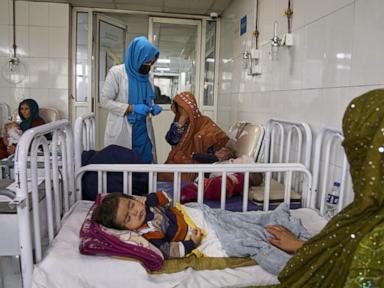
Child malnutrition has officially reached critical, record-breaking levels across a third of Afghanistan's provinces, driven by a catastrophic collision of international donor fatigue, sudden trade route blockades, and a collapsing domestic economy. According to the United Nations World Food Programme (WFP), approximately 14 million people—one in three Afghans—are currently grappling with acute food insecurity. Yet, due to a severe 59% drop in humanitarian funding since 2022, the agency is only capable of reaching a fraction of those desperately requiring immediate assistance. As funding shortfalls force widespread closures of health centers and the suspension of preventative nutrition pipelines, a generation of Afghan infants is quietly wasting away.
For veterans of humanitarian reporting, the mechanics of this disaster are brutally familiar, yet the current velocity of decline is unprecedented. Headlines often reduce the catastrophe to abstract budget deficits. The reality on the ground in clinics across provinces like Helmand, Ghor, and Kandahar is starkly biological. Desperate parents, themselves hollowed out by chronic hunger, are feeding newborns little more than weak tea and dry bread. When these infants finally reach overburdened medical facilities—if they survive the journey at all—they are frequently suffering from severe acute malnutrition, locally known as wasting.
The Anatomy of a Man-Made Collapse
To understand why child mortality is spiking now, one must look beyond simple donor reluctance and examine the compounding shocks battering the Afghan economy. Over the past three years, nearly six million undocumented Afghans have been forcibly expelled or returned from neighboring Pakistan and Iran. This sudden demographic shock flooded an already broken labor market with millions of job seekers, collapsing local wages and evaporating household purchasing power.
At the same time, geopolitical friction has choked off critical supply chains. Protracted border closures with Pakistan, alongside broader trade disruptions linked to instability across the Middle East, have sent staple food prices skyrocketing by 20 to 30 percent. Families are trapped in an impossible economic squeeze where wheat, oil, and rice are physically present in local bazaars, but completely out of financial reach.
WFP Country Director John Aylieff noted the cruel paradox of the situation. Malnutrition rates traditionally surge between July and October during the lean months, but this year, record numbers of children were classified as acutely malnourished even as the summer harvest began. The market has priced the vulnerable out of existence long before seasonal hunger even peaks.
The Mathematics of Denial
The humanitarian architecture in Afghanistan is rationing survival. With operations heavily underfunded—the broader UN humanitarian appeal sits at roughly 26 percent of its required target—agencies are forced to make agonizing triage decisions.
- The Rationing Ratio: WFP is currently funded to feed only a fraction of the acutely hungry, meaning roughly six out of seven severely malnourished children and mothers are turned away from clinics empty-handed.
- Infrastructure Bleed: At least 142 rural health centers shuttered permanently in 2025 due to funding cuts, stripping more than 13,000 children of ongoing therapeutic treatment.
- Preventative Halt: Specialized nutritional supplements designed specifically to stop children from sliding into lethal wasting were completely suspended.
These are not administrative adjustments. They are fatal omissions. When a mother walks miles to a clinic with a lethargic, skeletal toddler only to be told there are no therapeutic biscuits or high-energy milk left, the resulting death is entirely preventable. Yet international attention has largely drifted away, fractured by overlapping global conflicts and shifting foreign policy priorities in Western capitals.
The Looming Winter Threat
The immediate horizon offers no relief. As autumn transitions into winter, the country faces its ultimate flashpoint. Sub-zero temperatures across the central highlands and mountainous provinces routinely cut off remote communities entirely. Without an injection of $500 million before the snows set in, the WFP warns that its remaining pipeline will collapse entirely, leaving millions to face freezing temperatures on empty stomachs.
Political alienation toward the de facto authorities in Kabul complicates donor calculations, creating a diplomatic standoff where financial aid is tightly throttled. Yet political disputes do not alter the metabolic reality of a two-year-old child. The bones of infants do not care about geopolitical leverage. Every dollar withheld from nutrition pipelines translates directly into an irreversible physiological failure for a child whose only crime was being born at the epicenter of a forgotten collapse.