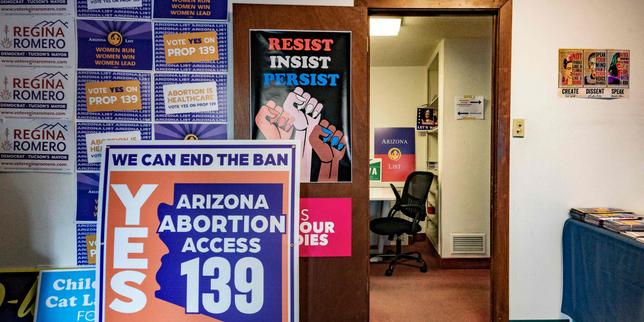
Voters in the November 2026 midterm elections moved to protect abortion access in three of the four states with abortion-related ballot measures, while Idaho rejected Proposition 1 and kept its strict ban in place. That surface split tells a familiar story on paper. Look closer and the real mechanics behind the vote become far more revealing.
Anyone who has covered American ballot fights for twenty years knows a headline tally never captures the whole machine. A constitutional amendment in one state is not a statutory initiative in another. Voter confusion over bundled provisions can decide an outcome just as quickly as ideology. Resource gaps, state-level legal battles over ballot wording, and cross-border medical realities all shape what happens inside the booth.
Ballot Wording and Bundled Politics
Ballot measures rarely sit in a clean vacuum. Voters in Missouri rejected Amendment 3, preserving the constitutional right to abortion that voters had approved in 2024 rather than allowing a repeal tied to other policy aims. Polling after the vote showed that nearly three in ten voters who opposed Amendment 3 found the measure difficult to understand, compared with roughly one in five who supported it.
Confusion over bundled language is an old weapon in state referendums. When a proposal mixes multiple contentious questions into a single "yes" or "no" choice, voters who want one outcome and reject another often default to a "no" vote just to block what they dislike. In Missouri, roughly half of the voters who rejected Amendment 3 opposed both provisions in the measure, while about four in ten opposed repealing abortion rights yet favored restricting gender-affirming care for minors.
Consider a hypothetical example of how ballot phrasing distorts turnout. Suppose a state puts a single amendment on the ballot that both caps corporate tax rates and alters school funding formulas. A small-business owner who loves the tax cap might still vote "no" to protect local schools, turning a popular tax idea into a losing ballot line. Real-world abortion measures face the exact same friction whenever opponents frame a proposal around broad, contested edges rather than a single clear question.
What Happened in Idaho
Idaho's defeat of Proposition 1, the Reproductive Freedom and Privacy Act Initiative, stands out because it ran counter to the broader midterm pattern on abortion ballots. Voters rejected Proposition 1 by roughly 55.91% to 44.09%, leaving Idaho's existing ban intact. That law prohibits abortion except when needed to prevent the death of the pregnant patient, and during the first trimester in documented cases of rape or incest reported to law enforcement.
Why did Proposition 1 fall short in a state where early polling from late 2025 had shown majority support for a reproductive freedom measure? Three concrete forces collided over the course of 2026:
- Ballot language fights: The Idaho Supreme Court ruled that original ballot statements were ineligible and ordered state officials to rewrite them. Opponents seized on dense, high-reading-level ballot summaries and aggressive warnings about late-term procedures and parental rights.
- Uneven campaign firepower: Unlike high-dollar referendum campaigns seen in several states in 2024, Proposition 1 lacked the massive outside spending and national organizational backing that other measures received, including major national civil liberties groups that stayed out of funding the Idaho fight.
- Deep partisan polarization: Exit and election-day polling showed Idaho voters sharply split along party lines, with roughly four in five Republicans opposing Proposition 1 while nearly all Democrats supported it.
Gubernatorial politics reinforced that divide. Republican Gov. Brad Little, who signed Idaho's ban into law and opposed Proposition 1, saw roughly four in five of his voters reject the measure, whereas Democratic gubernatorial candidate Terri Pickens backed the initiative and drew overwhelming support from her voters. In a deep-red state, turning a statutory initiative into a proxy fight over state leadership and high-stakes social fears makes a narrow early lead fragile.
The Healthcare and Travel Reality
Idaho's vote did not happen in isolation from the medical strain already visible on the ground. Over recent years, Idaho has faced well-documented shortfalls in OB-GYN and maternal healthcare providers, prompting fierce debate over how state abortion restrictions affect physician recruitment and retention. Supporters of Proposition 1 argued that restoring legal standards and liability protections for clinicians was essential to stabilizing care. Opponents countered that the initiative went too far and would weaken existing guardrails.
Even under a strict ban, medical access never simply vanishes into thin air. Research from the Guttmacher Institute notes that in 2025, Idaho residents obtained 850 abortions via out-of-state clinicians under telehealth shield provisions—a 16% increase from 2024—while another 1,680 residents traveled out of state for care, largely to Oregon, Washington, and Utah.
Those numbers highlight a central tension for policymakers on both sides. A ballot box "no" keeps statutory text unchanged inside Idaho's borders. It does not erase regional travel patterns, interstate legal disputes, or the day-to-day pressures on rural and state hospitals.
Where Voter Momentum Held
In Nevada and Virginia, voters moved in the opposite direction. Both states approved measures enshrining abortion rights, adding to a multi-year record in which reproductive rights ballot measures have succeeded in the majority of state votes since 2022.
| State | Measure | Outcome | Key Dynamic |
|---|---|---|---|
| Nevada | Question 6 | Passed (second required approval) | Strong backing across Democrats and a notable share of Republicans |
| Virginia | Question 1 | Passed | Broad support among reproductive-age women and crossover voters |
| Missouri | Amendment 3 | Rejected | Preserved 2024 constitutional right amid voter confusion over bundled text |
| Idaho | Proposition 1 | Rejected | Heavy Republican opposition, ballot wording battles, and lower campaign funding |
Polling from KFF underscores why Nevada and Virginia moved differently from Idaho. In Nevada, Question 6 drew roughly 63% support, including around nine in ten Democrats and nearly half of Republicans, with about four in ten voters who backed the Republican gubernatorial candidate also voting "yes". In Virginia, Question 1 passed with 62% support, backed by over nine in ten Democrats, roughly a third of Republicans, and three-quarters of women aged 18 to 49.
Crossover appeal matters enormously in midterms. When a ballot measure convinces even a modest slice of the opposing party's base—or persuades moderate swing voters that the rule stops at a clear boundary, such as viability or health exceptions—it builds a cushion that survives counter-messaging.
What Comes Next in State Capitols
Passing a ballot measure is often the beginning of the legal fight rather than the end of it. In Nevada, for example, Question 6 had first passed in 2024 and required a second vote in 2026, with implementation tied to state supreme court review. Across the country, courts, legislatures, and state agencies frequently spend years litigating definitions of health exceptions, licensing rules, and enforcement boundaries after voters weigh in.
At the same time, the 2026 midterms reshaped state government lineups and congressional power. Advocacy groups reported gains in governors' mansions, state legislatures, and both chambers of Congress, creating new legislative avenues in states with unified control while leaving deeply divided states locked in trench warfare.
Neither side has a monopoly on permanence. A constitutional amendment can still face statutory clashes or court challenges, and a rejected initiative in one cycle can return in a different legal or political form in another. For anyone tracking American politics beyond the horse race, the 2026 midterms proved that abortion on the ballot is neither a single national monolith nor a settled truce—it is a state-by-state test of money, ballot design, and persuasion.