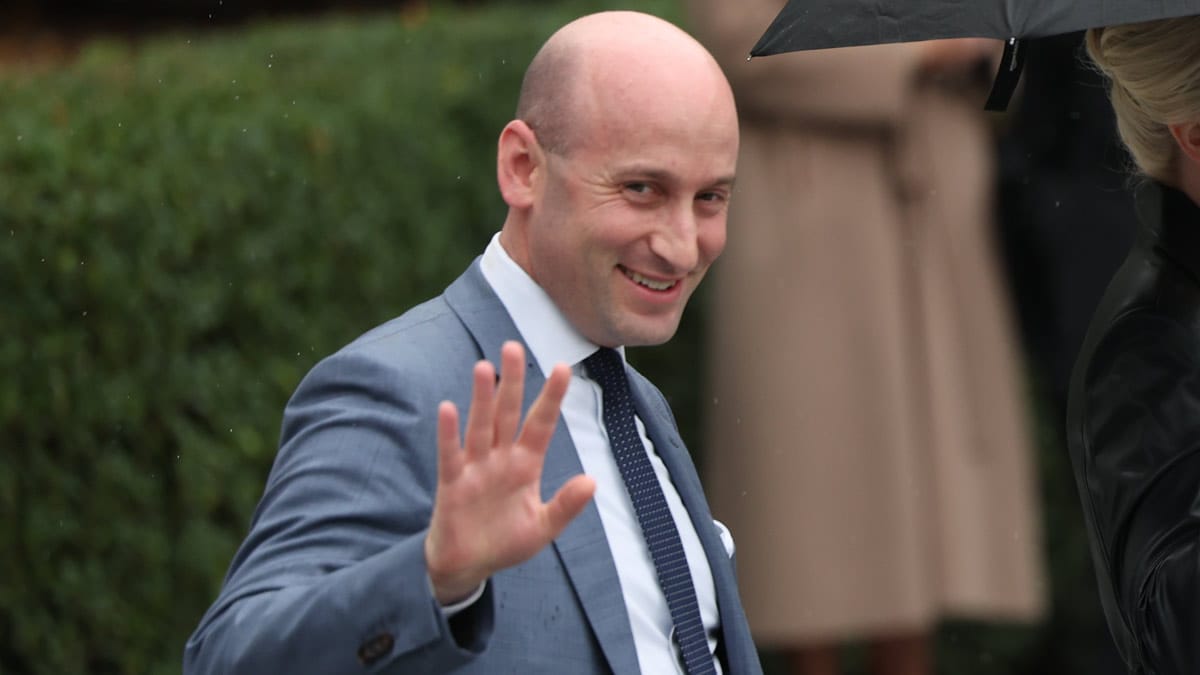
Two words. Six letters. A black-and-white portrait with jaw set like poured concrete, posted to a social media feed before the ink on the midterm election tallies had even finished drying.
MR. VETO.
If you scrolled past that image on your phone while waiting for your morning coffee to brew, you might have chuckled, rolled your eyes, or tapped a quick reaction before moving on to the weather forecast. To the pundits on cable television, it was just another piece of political theater—a branding exercise designed to project strength at the exact moment the political map shifted beneath the White House. Democrats had just seized control of Congress, flipping the levers of legislative power and setting the stage for two years of subpoenas, floor fights, and stalled agendas.
Stop. Look closer at the screen.
That two-word caption is not merely a taunt aimed at rival lawmakers on Capitol Hill. It is a warning flare fired directly over the roof of your house, your clinic, your small business, and your kitchen table. When a president trades the pen of a builder for the stamp of a blocker, the architecture of American life changes overnight—not with a dramatic explosion, but with a slow, grinding halt that reaches into places you would never expect.
I remember the last time Washington locked its doors from the inside. During a previous stretch of divided government, I spent months sitting in a cramped municipal office in the Midwest, watching a local bridge repair project—already approved, already engineered, already desperately needed by three thousand commuters every morning—die a quiet death. Not because anyone hated the bridge. Not because the steel was flawed. It died because two rival branches of government decided that letting the other side claim a victory was worse than letting the concrete crumble. You could smell the stale coffee and burnt printer toner in that office every Tuesday as another deadline passed, another federal matching grant evaporated, and another town council member stared silently at the floor.
That is what gridlock actually looks like. It does not look like a shouting match on the evening news. It looks like an empty construction site in the rain.
The Anatomy of a Two-Word Warning
To understand why the MR. VETO portrait carries such heavy weight right now, we have to strip away the partisan noise and look at the cold mechanics of the United States Constitution.
Under Article I, Section 7, the president holds a remarkably simple yet devastatingly effective brake pedal. Congress can debate for months, hold marathon committee hearings, horse-trade late into the night, and pass a bill with a clear majority in both chambers. Then that piece of parchment travels down Pennsylvania Avenue to the Resolute Desk. If the president writes vetoed across it and sends it back, the entire legislative engine slams into a brick wall.
To break through that wall, Congress must muster a two-thirds supermajority in both the House of Representatives and the Senate. In our deeply fractured political era, getting two-thirds of lawmakers to agree on what to order for lunch is a minor miracle, let alone getting them to override a sitting president.
Historically, presidents have used this power in wildly different ways. Grover Cleveland issued 584 vetoes across his two non-consecutive terms, famously rejecting hundreds of individual Civil War pension bills because he viewed himself as a stern guardian of the public treasury. Franklin D. Roosevelt topped even that record with 635 vetoes over twelve years, swatting down legislation that clashed with his vision of the New Deal. On the other end of the spectrum, Thomas Jefferson, John Adams, and James Monroe never issued a single veto during their entire presidencies, viewing the power as an extreme emergency measure reserved only for laws that were blatantly unconstitutional.
Yet there is a profound difference between using a veto quietly behind closed doors and announcing yourself as MR. VETO before the new Congress has even taken its oath of office.
When Donald Trump posted that stark monochrome portrait as Democrats claimed the congressional majority, he was engaging in what political scientists call pre-emptive signaling. Imagine a chess player who doesn't just move a rook to protect the king, but slams a heavy iron gate across the center of the board and tells the opponent, Every piece you move from this moment on will crash right into this.
It shifts the psychological gravity of Washington instantly. Suddenly, Democratic committee chairs know that any sweeping healthcare reform, climate package, tax overhaul, or labor protection they draft will not become law. It will become a messaging bill—a political flare designed to go on record, get vetoed, and be used as ammunition in the next presidential election cycle.
Meet Elena, Waiting on a Signature
Abstract constitutional mechanics are easy to ignore until you put a human face in the path of the machinery.
Consider a hypothetical scenario—a composite built from thousands of real families caught in the crossfire of divided government. Meet Elena, a forty-two-year-old physical therapist running an independent outpatient clinic in a mid-sized Pennsylvania town.
Elena does not follow cable news panels. She does not care who won the spin war on Sunday morning. What she cares about is a specific Medicare reimbursement adjustment tucked inside a bipartisan healthcare funding bill—a technical fix that determines whether her clinic can afford to keep two junior therapists on payroll through next winter.
In a unified government, that technical fix rides smoothly inside a larger legislative package. Lawmakers add their priorities, the president signs the bill in a Rose Garden ceremony, and Elena’s clinic stays open.
Now watch what happens under the shadow of MR. VETO.
The new Democratic majority in Congress drafts a broader healthcare access bill and includes Elena’s reimbursement fix inside it, alongside provisions expanding federal subsidies that the White House fiercely opposes. House leadership passes the bill with fanfare. The Senate pushes it through after weeks of tense negotiation.
Then it hits the Resolute Desk.
The president sees the subsidy expansion, pulls out the thick black marker, and vetoes the entire package. Congress lacks the two-thirds supermajority to override the rejection. The bill dies.
Elena never saw a debate about physical therapy clinics on television. No politician ever stood at a podium and said, I am voting against Elena’s clinic in Pennsylvania. Yet by Tuesday morning, she is sitting at her kitchen table with a calculator and a yellow legal pad, trying to figure out which of her two young employees she has to lay off before the end of the quarter.
Multiply Elena by ten million.
Think about the municipal water authority in Ohio waiting on updated federal infrastructure rules. Think about the semiconductor startup in Arizona waiting on research tax credit extensions. Think about the rural hospital in Georgia banking on telehealth regulatory permanence. When the executive branch and the legislative branch enter a state of open warfare, collateral damage is not an accident. It is the primary byproduct.
Why Presidents Love the Veto Trap
If the human cost of legislative paralysis is so high, why would any president lean into the MR. VETO persona with such obvious relish?
Because politically, it works.
I have spent years studying how voters process political blame, and the human brain has a notorious blind spot when it comes to institutional gridlock. When nothing gets done in Washington, voters rarely pull out a flow chart to trace which committee chair blocked which amendment. Instead, they look at whoever holds the gavel in Congress and ask why nothing is moving.
By branding himself as the ultimate gatekeeper right as Democrats take control of Congress, Trump flips the burden of governance onto his opponents. The message to the public is simple and visceral: They control the House. Let’s see what they can actually deliver.
Meanwhile, the veto pen becomes a tool of immense leverage. If congressional Democrats want to pass essential legislation—keeping the government funded, raising the debt ceiling, renewing defense authorizations—they cannot simply send their wishlist to the White House and hope for the best. Every must-pass bill becomes a high-stakes hostage negotiation.
Picture two drivers speeding toward each other on a single-lane mountain road. Neither wants to go off the cliff, yet both know that the first driver to swerve loses credibility with their passengers. In Washington, those passengers are millions of primary voters who view compromise not as statesmanship, but as betrayal.
When a president openly embraces the title of MR. VETO, he is effectively welding his steering wheel in place. He is telling Congress that he will not swerve, forcing congressional leaders to decide whether they will swallow painful concessions to get a signature, or allow the government to grind to a halt while the public watches in frustration.
The Hidden Governing Machine
Still, it would be a mistake to assume that a president who wields the veto pen stops governing altogether. Quite the opposite.
When the front door of legislation slams shut, presidents immediately head for the side doors of executive power. Unable to pass new laws through a hostile Congress, the White House turns inward—relying on executive orders, regulatory rewrites, presidential memoranda, and agency rule changes to reshape policy without a single congressional vote.
We saw this pattern accelerate under Barack Obama after the 2010 and 2014 midterms, when he famously remarked that he had a pen and a phone. We saw it during Trump’s first term after Democrats retook the House in 2018, and we saw it again under Joe Biden following the 2022 midterms.
Here is the catch that rarely makes the headlines: governing by executive order is like building a house out of wet sand. It goes up fast, looks impressive from a distance, and washes away the very second the tide turns.
Unlike a statute passed by Congress and signed into law—which remains on the books until another Congress and another president repeal it—an executive order exists purely at the pleasure of whoever occupies the Oval Office. What one president creates with the stroke of a pen on a Tuesday afternoon, the next president can erase before lunch on Inauguration Day four years later.
For ordinary people trying to plan their lives, this whipsaw governance is exhausting. Imagine trying to save for retirement if the rules governing your 401(k) changed every forty-eight months. Imagine running a manufacturing plant when environmental compliance standards swing wildly from one administration to the next, making it impossible to know whether a fifty-million-dollar equipment upgrade will be mandatory or obsolete by the time it is installed.
That uncertainty is the silent tax of the veto era. You won’t find it listed on your pay stub, and no economist can measure it cleanly on a spreadsheet, yet it quietly drains investment, stalls hiring, and deepens the cynical conviction among everyday citizens that Washington is broken beyond repair.
What Happens When the Smoke Clears
I admit that watching this cycle repeat itself can feel deeply unsettling. There are moments when even seasoned observers look at the deepening trenches between the White House and Capitol Hill and wonder whether the American system of checks and balances has mutated into a permanent stalemate machine.
Yet history offers a strange, stubborn comfort.
James Madison designed our constitutional architecture in 1787 with a clear-eyed, almost pessimistic view of human ambition. He did not expect politicians to become saints. He assumed faction would fight faction, ambition would counter ambition, and branches of government would jealously guard their turf. The veto power was never meant to make government fast; it was designed to make government deliberate, forcing rival power centers to confront one another until a broader consensus—or a clear electoral verdict—broke the deadlock.
When the dust settles over the next two years, the battles sparked by that MR. VETO portrait will force every voter in the country to confront an uncomfortable truth. We often say we want leaders who fight for our principles without compromise, right up until the moment the bridge in our town goes unbuilt, the clinic down the street closes its doors, or the government shutters for three weeks over a budget standoff.
So keep your eyes past the theatrical black-and-white graphics and the breathless cable news chyron alerts. Watch the quiet spaces where bills go to stall. Pay attention to which leaders use their constitutional brakes to protect the public, and which ones simply enjoy the sound of screeching tires.
Because long after the social media posts are buried beneath millions of newer headlines, the ink from that veto pen will still be drying on the lives of people who never asked to be caught in the middle.