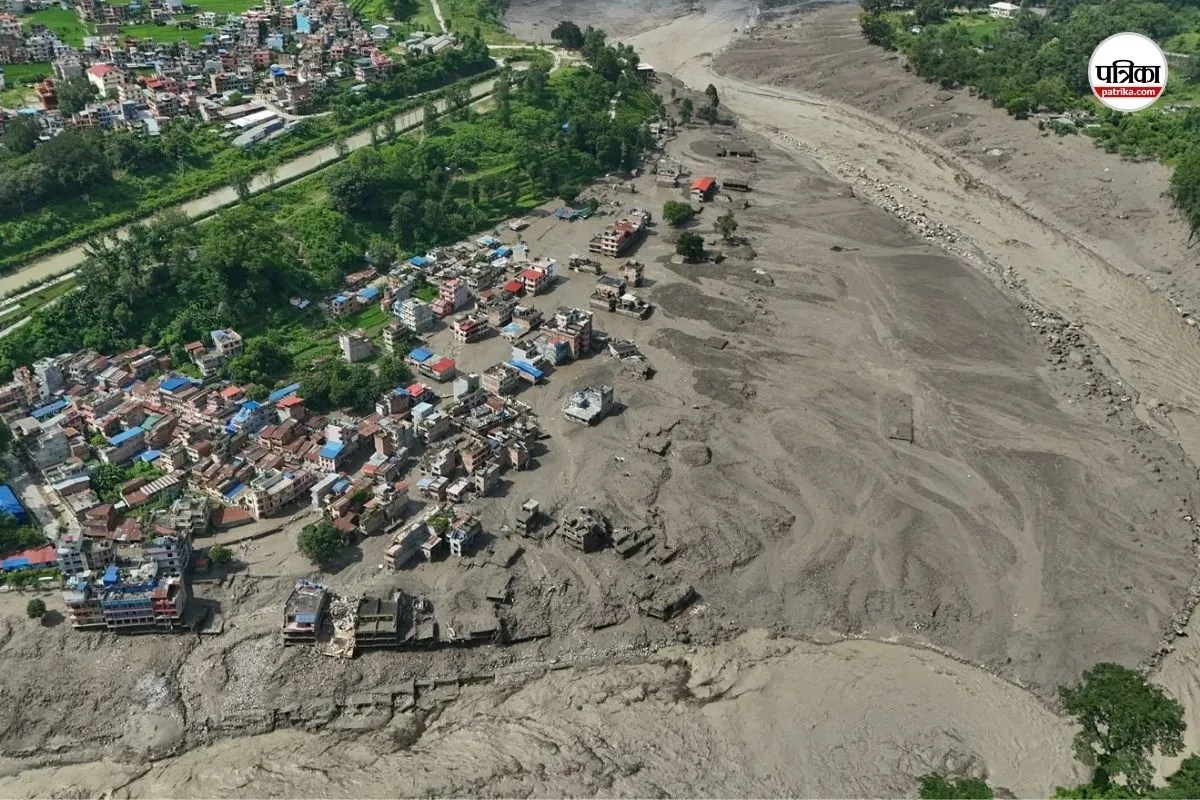
Crises generate information vacuums. When catastrophe strikes infrastructure, the velocity of raw data from ground zero drops to near zero, while the systemic demand for situational awareness spikes exponentially. In this structural deficit, digital ecosystems experience an information failure cascade. The recent flash floods along the Nepal-Tibet border, driven by severe glacial collapses and torrential monsoon surges, exposed how modern social media architectures monetize this volatility, replacing verified ground intelligence with synthetic and recycled falsehoods. Analyzing this phenomenon requires deconstructing the mechanics of digital disorder into three discrete vectors: synthetic media generation, archival asset recycling, and financial opportunism.
The Economics of Synthetic Escalation
The barrier to entry for fabricating high-fidelity crisis media has collapsed. Generative adversarial networks and text-to-video engines allow bad actors to construct hyper-realistic catastrophic scenarios within minutes. In the hours following the Bhotekoshi river flash floods, platforms like Facebook, X, and TikTok were saturated with synthetic imagery depicting non-existent architectural collapses and entirely fictional rescue scenarios.
Standard anomaly detection reveals clear economic drivers behind this content deployment. Engagement algorithms prioritize high-arousal negative stimuli—fear, shock, and awe. Accounts utilizing generative tools exploit these algorithmic biases to capture impressions, artificially inflating metrics for monetization or algorithmic clout. Unlike organic sharing, which degrades in quality over distance, synthetic assets maintain a pristine, highly polished visual fidelity that bypasses initial cognitive filters. The cost function for the creator is near zero, while the societal cost—measured in diverted emergency bandwidth and distorted rescue logistics—is extreme.
The Taxonomy of Recycled Trauma
Synthetic generation represents only half of the digital distortion vector; archival asset recycling constitutes the remainder. When real visual data is scarce, malicious or clout-seeking actors mine historical repositories for unrelated disasters, stripping them of context to fit the current narrative.
During the emergency response phase in Rasuwa and Nuwakot, verification units identified multiple instances of spatial and temporal displacement:
- Footage depicting mudslides and structural failures from historical events in Myanmar and Japan was repackaged as live streams of the Nepali flash floods.
- Tunnel rescue operations from Uttarakhand, India, were re-captioned to praise local political figures for non-existent field interventions.
- Graphic aftermath imagery lacking timestamps or geographical markers was continuously broadcast without regard for the psychological welfare of surviving families.
This cross-border asset recycling creates a feedback loop of panic. When international audiences consume recycled catastrophe clips, they misinterpret the geographic scale of the localized disaster, generating external pressure, redundant inquiries, and administrative friction for state emergency response units.
The Financial Extraction Vector
Beyond engagement farming, crisis misinformation introduces direct financial exploitation vectors. Institutional friction during emergency fund distribution opens opportunities for fraud. As official channels and relief portals—such as the Prime Minister's Relief Fund—attempt to centralize donations, malicious actors inject fraudulent QR codes and alternative payment gateways into viral comment sections.
This exploits the psychological state of sympathetic diaspora populations and international observers. By mimicking official emergency graphics, these campaigns divert liquidity away from accredited institutional recovery efforts and into decentralized, untraceable accounts. The friction of cross-border payment tracking compounds the difficulty of intercepting these funds before liquidation.
Institutional Friction and Platform Latency
State regulatory bodies, including the Nepal Press Council and the Social Media Regulation and Management Committee, face severe structural limitations when engaging platform operators. Meta, TikTok, and other major distribution networks operate on global moderation timelines that frequently average between 24 and 48 hours for regional escalations. In a disaster scenario where critical rescue windows are measured in hours, a two-day moderation latency renders reactive takedowns functionally obsolete.
Internet service providers possess the technical capability to block web domains entirely, but such measures are too blunt for targeted moderation, threatening critical communication channels. Consequently, regulatory enforcement has shifted toward direct negotiation with platform representatives, demanding proactive algorithmic suppression and automated flagging of synthetic markers such as watermarks embedded via SynthID or similar detection architectures.
Strategic Countermeasures for Crisis Environments
Mitigating information failure during systemic shocks requires a shift from reactive moderation to predictive structural defense. State apparatuses and digital platforms must integrate the following operational protocols:
- Establish automated API pipelines between national emergency operation centers and platform moderation trust teams to flag and suppress unverified geographic tags within the first 12 hours of an incident.
- Mandate real-time cryptographic provenance tagging (such as C2PA standards) at the hardware level for digital capture devices, allowing consumers to cryptographically verify the origin timestamp of disaster footage.
- Decentralize verified situational updates through low-bandwidth SMS and localized radio broadcasts to bypass the social media information vacuum entirely, starving engagement-driven actors of their primary audience.