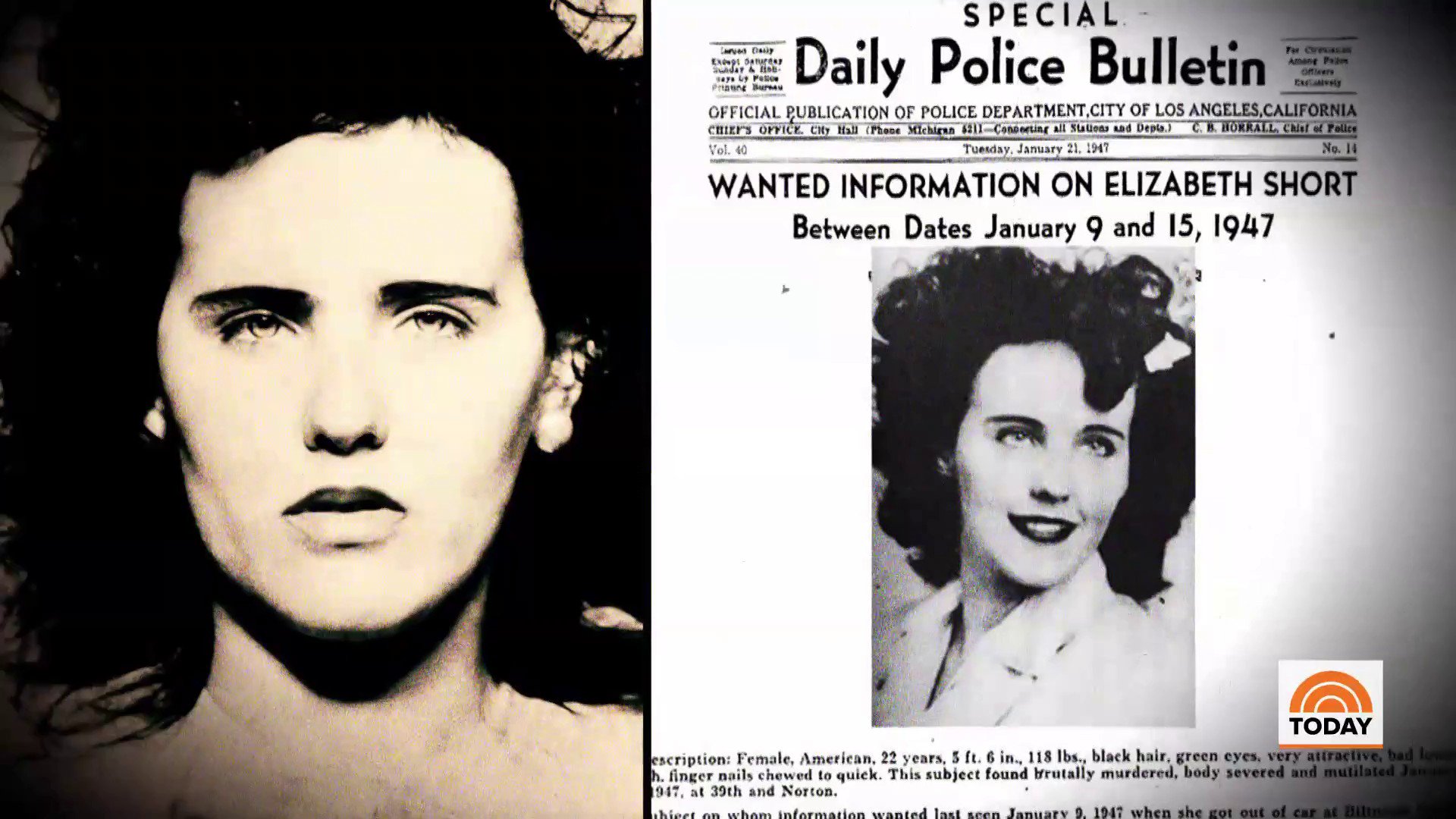
The 1947 murder of Elizabeth Short remains the most profitable cold case in American history. For nearly eighty years, the industry surrounding the "Black Dahlia" has functioned on a singular, corrosive engine: the systematic dehumanization of a twenty-two-year-old woman to sell newspapers, novels, and noir fantasies. To maintain the mystique of the Dahlia, the press and subsequent true-crime hobbyists had to transform Short from a human being into a cautionary tale of "big city" vice. They painted her as a drifter, a "man-crazy" opportunist, or a sex worker—labels used to imply that her horrific end was an inevitable consequence of her lifestyle.
This narrative is finally being dismantled. A new wave of researchers and historians is shifting the focus away from the cinematic spectacle of her bisection and back toward the structural failures of the Los Angeles Police Department and the predatory media culture of the 1940s. By stripping away the "Black Dahlia" persona, we find not a noir archetype, but a victim of a culture that prioritized a "good story" over the basic dignity of a murder victim.
The Invention of a Corpse
Elizabeth Short was never the Black Dahlia while she was alive. That name was a posthumous invention, a marketing hook sparked by the popularity of the film The Blue Dahlia and fueled by a press corps desperate for a catchy headline. In the days following the discovery of her body in a vacant lot in Leimert Park, the Los Angeles Examiner and the Los Angeles Times engaged in a race to the bottom.
To gain access to Short’s mother, Phoebe Short, reporters lied. They told her Elizabeth had won a beauty contest. Once they had her on the phone, they milked her for details before coldly informing her that her daughter had been mutilated and murdered. This wasn't journalism; it was psychological warfare.
The media’s next move was to justify the brutality. If Short was a "good girl," the crime was too senseless to process. If she was "loose," the public could distance themselves from the horror. They searched for a criminal record and found only a minor citation for underage drinking. They looked for evidence of sex work and found none. So, they improvised. They focused on her black clothing, her habit of frequenting drugstores and nightclubs, and her supposed transience. They created a caricature of a girl who asked for trouble by simply existing in public spaces.
Systematic Failure and the Corruption of Evidence
While the press was busy slandering the victim, the LAPD was busy failing to catch a killer. The department in 1947 was a swamp of corruption, more concerned with managing its public image and protecting its ties to organized crime than with rigorous forensics.
The crime scene itself was a circus. Before the area could be properly cordoned off, reporters and onlookers were allowed to trample the grass, likely destroying footprints or tire tracks. The investigation was hampered by a "too many cooks" approach, where various detectives vied for the spotlight rather than collaborating.
More damning is the evidence that the LAPD ignored viable leads to protect influential figures. Over the decades, names like Dr. George Hodel have surfaced, supported by disturbing circumstantial evidence and family testimony. Hodel, a brilliant but dark figure with ties to the city’s elite, fit the profile of someone with the surgical skill required for the hemicorporectomy performed on Short. Yet, the investigation into Hodel was quietly shelved. In the post-war era, the LAPD preferred a "whodunit" that stayed unsolved over a scandal that implicated the city’s upper crust.
The Myth of the Man Crazy Drifter
One of the most persistent lies about Elizabeth Short is that she was a "drifter" with no direction. This label is a classic tool of victim-blaming, used to suggest that she lacked the protection of a traditional home and therefore forfeited her right to safety.
In reality, Short’s movements were typical of thousands of young women in the 1940s seeking independence after the upheaval of World War II. She had lost her fiancé, a decorated pilot, to the war. She was grieving and trying to find a footing in a rapidly changing economy. Her "drifting" was a search for employment and connection.
The "man-crazy" narrative was similarly manufactured. Short was known to be cautious and even shy. Men who actually knew her described her as someone who enjoyed the social aspect of dating—the dinners, the movies, the escape from her cramped living situations—but who often kept suitors at arm's length. By reframing her social life as a series of "pickups," the mid-century press turned her into a participant in her own demise.
Forensic Realities vs. Noir Fiction
The physical reality of Short's murder is often glossed over in favor of the "Dahlia" aesthetic. We need to talk about the precision of the crime. This was not a crime of passion committed in a fever dream. It was a methodical, prolonged torture and a highly technical surgical procedure.
The killer performed a hemicorporectomy, severing the body between the second and third lumbar vertebrae. This requires significant anatomical knowledge. Furthermore, the body was drained of blood and scrubbed clean. This suggests a killer who had a private, controlled environment and a total lack of empathy—a profile that contradicts the "crazed transient" theory the police often floated.
By focusing on the "mystery" of her signature "Glasgow smile" (the incisions at the corners of her mouth), the public conversation moved away from the fact that Short was likely held captive for days. The focus on the visual spectacle allowed the public to treat her body as a piece of art—a macabre installation—rather than a site of unspeakable human suffering.
The True Crime Industrial Complex
The Elizabeth Short case served as the blueprint for the modern true-crime industry. It proved that a victim’s trauma could be packaged as a product. From James Ellroy’s fictionalized accounts to the endless stream of "I solved it" books written by retired detectives and amateur sleuths, Short has been used as a canvas for everyone else's ego.
Each new theory tends to center the author. They become the hero who finally "gives her peace," while simultaneously republishing the same gruesome autopsy photos that strip her of her final shred of privacy. This cycle doesn't offer closure; it offers a paycheck.
To truly challenge the victim-blaming of the Black Dahlia, we have to stop treating the case as a puzzle to be solved and start treating it as a tragedy to be mourned. The "mystery" isn't who killed her—though that remains a valid legal question. The real mystery is why we, as a culture, are so comfortable consuming her death as entertainment.
Shifting the Lens
Reconstructing the legacy of Elizabeth Short requires a hard pivot away from the sensational. We must acknowledge that she was a woman who liked old movies, who wrote letters to her mother, and who was terrified in her final hours. She was not a character in a Raymond Chandler novel. She was a person who was failed by every institution meant to protect her: the police, the press, and the society that watched her story unfold with voyeuristic glee.
The shift toward "victim-centered" reporting isn't just a trend in modern journalism; it's a necessary correction to decades of malpractice. When we talk about the Black Dahlia, we should be talking about the failure of the LAPD’s internal affairs. We should be talking about the ethics of the Hearst newspaper empire. We should be talking about the reality of violence against women in post-war America.
Stop calling her the Black Dahlia. Her name was Elizabeth Short. She was twenty-two years old. She deserved to grow old in a city that didn't see her body as a headline. Until we can discuss her without the noir filters and the romanticized "femme fatale" tropes, we are simply continuing the work that her killer started.
The industry of the Dahlia survives on the silence of the woman at its center. Breaking that silence means admitting that the "glamour" of the case was always a lie, constructed to mask the stench of a botched investigation and a girl's lonely, agonizing death. It’s time to stop looking at the photos and start looking at the people who took them.
Demand better from the stories you consume.