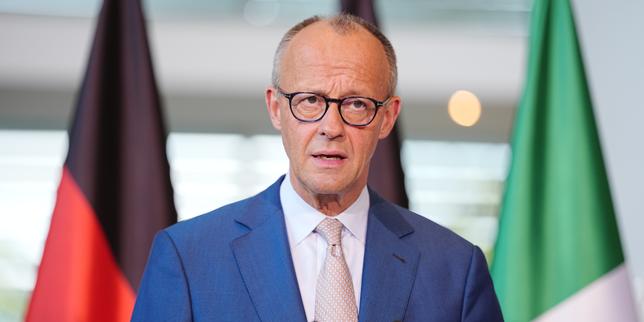
German Chancellor Friedrich Merz recently declared that Kyiv remains strong and Europe’s support will not falter, yet a stark disconnect exists between this high-level political rhetoric and the grueling material realities of Western defense production. While public statements project total solidarity, internal defense ministry audits, strained national budgets, and depleted stockpiles paint a far more precarious picture. Europe is not failing to support Ukraine out of malice, but its defense industrial base is structurally incapable of matching the consumption rate of modern artillery warfare without an immediate, wartime-footing economic overhaul that no major European power is currently willing to risk.
The political theater of solidarity has reached its mathematical limit. When leaders stand at podiums to promise indefinite backing, they routinely conflate financial commitments with physical deliverables. Kyiv does not fight with euros or credit lines. It fights with 155mm artillery shells, air defense interceptors, and armored replacement parts. The hard truth is that Europe's factories cannot build these fast enough, and the political will to force private defense contractors into high-volume, low-margin manufacturing simply does not exist.
The Industrial Chokehold Berlin Cannot Ignore
To understand why the Chancellor's rhetoric rings hollow in the Donbas, one must examine the actual assembly lines of Western Europe. For three decades, European defense procurement operated on a just-in-time logistics model designed for low-intensity counter-insurgency operations. This model prioritized cost efficiency over mass. It failed completely when confronted with a high-intensity conventional war of attrition.
Consider the baseline mathematics of artillery production. At the peak of recent offensives, Ukrainian forces required upwards of several thousand artillery shells per day just to maintain defensive parity. To meet this demand, European manufacturers like Rheinmetall, BAE Systems, and Nammo had to rapidly scale production from a peacetime baseline of less than 300,000 shells per year for the entire continent.
The expansion hit immediate walls. It was not a lack of money that slowed progress, but a severe shortage of specialized machinery, raw chemical precursors like nitrocellulose, and skilled defense engineers.
European Artillery Shell Production Dynamics
+---------------------------------------------------------+
| Peacetime Baseline: ~300,000 shells/year across Europe  |
| Ukrainian Defensive Parity Requirement: Multi-millions  |
| Primary Chokepoints: Nitrocellulose, CNC machine tools  |
+---------------------------------------------------------+
Private defense firms operate under accountability to shareholders, not sovereign battlefronts. They require long-term, guaranteed procurement contracts spanning a decade or more before investing billions in new manufacturing facilities. European governments, bound by short-term fiscal cycles and unpredictable coalition politics, have consistently dragged their feet on signing those multi-year commitments. The result is a series of stop-gap orders that keep factories running but fail to achieve the massive economies of scale required to shift the balance on the ground.
The Financial Shell Game in the Bundestag
Behind the scenes in Berlin, the fiscal architecture supporting Ukraine is fracturing. The German government operates under a constitutional mechanism known as the debt brake, which strictly limits structural deficits. While the previous administration utilized a massive off-budget special fund to begin rebuilding the German military, that capital is rapidly dwindling.
The current federal budget negotiations reveal a bitter fight over every euro allocated to foreign military aid. While the Chancellor guarantees that aid will continue, his finance ministry is simultaneously demanding that other departments slash spending to balance the ledger. This internal friction means that future aid packages are increasingly reliant on complex financial engineering rather than direct, predictable treasury funding.
The most prominent example of this engineering is the plan to utilize frozen Russian state assets to back loans for Kyiv. While legally innovative, this mechanism is bogged down in bureaucratic gridlock and international litigation threats. It takes months, sometimes years, to turn frozen assets into ammunition on a train heading east. Meanwhile, the Ukrainian army faces immediate shortages on the frontline every single day.
The Transatlantic Shift and the Burden on Paris and Berlin
The strategic calculus has changed dramatically. Western European capitals can no longer operate under the assumption that Washington will indefinitely underwrite the security architecture of the continent or shoulder the lion's share of tactical resupply. This realization has triggered panic in Paris and Berlin, though both cities handle the anxiety differently.
France has historically advocated for strategic autonomy, urging Europe to develop its own independent defense capabilities. Yet, French material contributions to Ukraine have lagged behind Germany in raw volume, leading to quiet recriminations between the two largest economies in the European Union. Berlin accuses Paris of hoarding resources and favoring its domestic defense industry over rapid procurement. Paris counters that German aid consists largely of older, refurbished stocks rather than sustainable, forward-looking hardware systems.
This bickering exposes a deeper vulnerability. Without a unified, centralized procurement authority, the European Union remains a collection of fragmented markets. Each nation insists on buying its own specific variants of tanks, air defense systems, and infantry fighting vehicles. This lack of standardization cripples the logistical supply chain. When a specialized radar system breaks down in Ukraine, it cannot simply be swapped with a part from a neighboring country’s inventory because the software architectures and physical connectors are entirely incompatible.
The Physical Exhaustion of Available Stocks
The most urgent crisis is one of absolute depletion. During the initial phases of the escalation, European nations drew down their own active-duty stockpiles to rush equipment to the front. Air defense batteries, anti-tank missiles, and armored personnel carriers were stripped from domestic units in Germany, Poland, and Denmark.
That reservoir is dry. Military commanders across NATO are now warning their respective civilian leaders that further drawdowns would compromise national defense obligations under collective security treaties. A nation cannot give away its last remaining air defense batteries without leaving its own critical infrastructure entirely undefended.
The situation with air defense is particularly critical. The production of a single sophisticated interceptor missile takes anywhere from twelve to twenty-four months from the placement of the order to final delivery. Russian missile and drone strikes consume these interceptors at a rate that outpaces production by a factor of at least four to one. No amount of optimistic political messaging from Berlin can alter this physical reality. Kyiv is being forced to ration its air defense assets, choosing daily between protecting frontline troops or safeguarding major civilian infrastructure hubs and power grids.
The Strategic Miscalculation of a Frozen Conflict
Many European policymakers secretly harbor the hope that the conflict will settle into a frozen state, allowing for a paused frontline and a slow diplomatic settlement. This is a dangerous miscalculation rooted in a misunderstanding of industrial warfare. A static frontline does not decrease the consumption of material; it merely shifts the demand from offensive armor to defensive engineering, long-range counter-battery artillery, and endless electronic warfare components.
The Russian industrial apparatus has fully transitioned to a war footing. Factories in the Urals are operating on triple shifts, twenty-four hours a day, insulated from Western sanctions by deep supply networks through third-party intermediaries. They are producing hulls, barrels, and propellants at a predictable, state-mandated velocity.
Europe, by contrast, treats the war as an external crisis to be managed via regulatory frameworks and traditional market mechanisms. This asymmetrical approach means that even if Europe spends more money in terms of absolute GDP value, it yields far less physical military output. The purchasing power of a defense euro in Europe is severely degraded by corporate overhead, regulatory compliance, and national protectionism.
The rhetoric of leaders like Friedrich Merz serves a domestic political purpose, reassuring voters that Europe remains a moral and geopolitical force. But on the muddy fields of eastern Ukraine, the gap between what is promised in the halls of power and what arrives in the supply depots is wider than ever. The current trajectory suggests that without a fundamental structural shift—one that overrides corporate profit margins and suspends peacetime fiscal rules—the European promise of support will become a tragic exercise in giving too little, too late. The front lines do not require reassurance. They require factories that run all night.