The Soft Bigotry of Athletic Low Expectations
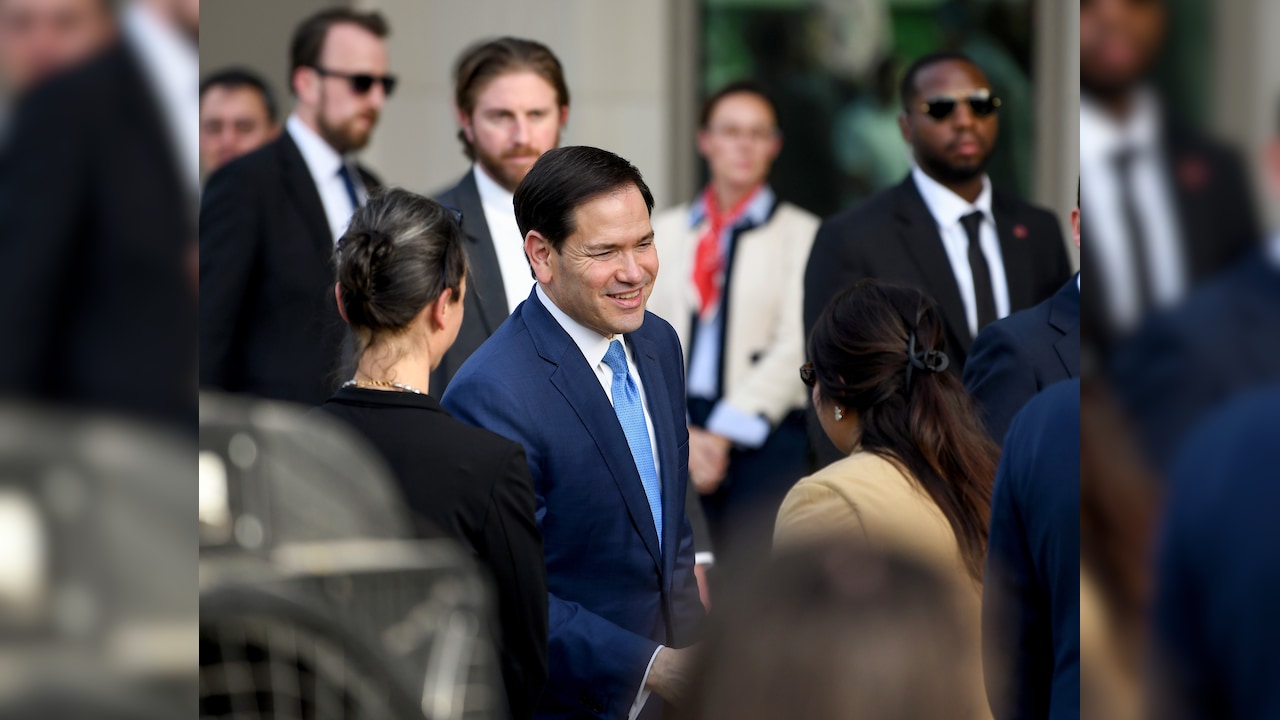
When United States Secretary of State Marco Rubio stood before a crowd and compared the Ultimate Fighting Championship (UFC) to the 1969 Apollo 11 moon landing, the collective sports media did exactly what it always does. It nodded. It amplified the quote. It treated a piece of naked political theater as if it were profound cultural analysis.
It was not. It was a staggering misreading of history, technology, and the actual mechanics of global entertainment.
To equate a state-funded, non-profit technological crusade that permanently altered humanity's relationship with the cosmos to a highly profitable, privately owned sports promotion is worse than lazy. It is mathematically and sociologically illiterate. The narrative floating around the media ecosystem right now suggests that the UFC has achieved some sort of peak civilizational milestone by scaling its brand across the globe.
Let us dissect the reality behind the promotional fog. The UFC did not engineer a leap into the unknown. It perfected a very old, very effective, and deeply cynical business model: the commodification of human conflict, scaled through modern digital distribution. That is an impressive feat of capitalism, but it is not the moon landing.
The False Analogy of Global Consensus
The core argument deployed by Rubio—and parroted by uncritical sports commentators—is that both events represent moments where the world stopped to witness a singular pinnacle of human achievement.
This completely ignores how the Apollo program actually functioned. The moon landing required the mobilization of over 400,000 scientists, engineers, and technicians. It consumed over $4$ percent of the United States federal budget at its peak. It was a geopolitical gambit designed to demonstrate ideological supremacy during the Cold War. The byproduct was an explosion of public-domain technology, from microprocessors to water purification systems, that fundamentally built the modern world.
$${\text{Apollo Budget (Peak)}} \approx 4%\text{ of US Federal Budget}$$
Now look at the UFC. The organization is a triumph of corporate consolidation. It took a fractured, legally embattled underground spectacle and streamlined it into a broadcast-friendly powerhouse. But who benefits? A small circle of executives, a private equity firm, and a highly concentrated roster of fighters who receive a notoriously small percentage of the revenue split compared to athletes in major leagues like the NBA or NFL.
If you want to look at the numbers, look at fighter pay. While the NBA splits its basketball-related income roughly 50/50 with players, estimates and antitrust lawsuits have consistently shown the UFC's athlete revenue share hovering much lower, often cited around 13 to 20 percent.
Imagine a scenario where NASA told the astronauts on Apollo 11 that they had to pay for their own training camps, secure their own corner men, and accept a tiny fraction of the mission's value while the administrators took the rest. The comparison falls apart under the slightest economic scrutiny.
The Mirage of "Mainstream" Dominance
Every sports executive loves to talk about global footprints. They point to broadcast deals in over 170 countries. They cite billions of social media impressions.
But social media metrics are the fool's gold of the digital age. An impression is not an engaged fan; it is a thumb scrolling past a ten-second clip of a knockout while sitting in traffic.
The lazy consensus insists that mixed martial arts has eclipsed traditional sports because its digital engagement numbers look massive. Having spent years tracking how media companies manipulate these metrics to secure venture capital and broadcast rights, I know exactly how the sausage is made. You buy bot traffic, you aggregate views across dead platforms, and you present a inflated chart to politicians who do not know the difference between a unique viewer and an automated impression.
The real test of cultural dominance is the ability to command premium, recurring live gate revenue and sustained pay-per-view buys outside of a few anomalous superstar draws. When Conor McGregor or Jon Jones are not on the marquee, the financial reality of the sport settles back down to earth. The UFC is not a self-sustaining cultural juggernaut; it is a star-driven promotion that suffers from the same cyclical volatility as the boxing eras that preceded it.
Dismantling the "People Also Ask" Delusion
Go look at what people search when they look up the growth of combat sports. The questions betray a fundamental misunderstanding of the industry.
Is the UFC the fastest-growing sport in the world?
No. It is the most aggressively marketed sport. The distinction matters. True growth is measured by grassroots participation, youth league infrastructure, and long-term public investment. The UFC operates as a closed ecosystem. It does not build public parks; it builds corporate performance institutes designed to optimize its own contracted assets. The sport's "growth" is actually the expansion of a single corporation's market share, achieved by swallowing smaller promotions and maintaining a near-monopoly on elite mixed martial arts talent.
Did combat sports save the modern media model?
The premise is flawed. Combat sports did not save the media model; they exploited the desperation of legacy television networks and streaming platforms hungry for live content that cannot be replicated by artificial intelligence or delayed viewing. Live sports are the last line of defense against the total fragmentation of the media audience. The UFC capitalized on this by offering a high volume of content—nearly every weekend—which makes them highly valuable to a network like ESPN. But this is a marriage of convenience based on programming hours, not a cultural revolution.
The Trade-off of Hyper-Commercialization
There is a dark side to the corporate optimization of fighting that the romanticizers completely ignore. In its quest to become a clean, corporate-approved product suitable for political praise, the sport has stripped away much of what made it raw and unpredictable.
We now see an era of over-saturation. When you run events almost every Saturday of the year, the stakes drop precipitously. Card quality degrades. Apex athletes are forced into short turnarounds or sidelined by contract disputes. The fan base becomes numb to the spectacle. A knockout in 2026 does not feel like a historic milestone; it feels like content chunk number 42 from the weekend's digital drop.
The Apollo missions stopped because they were prohibitively expensive and achieved their specific geopolitical objective. They left behind a legacy of awe. The UFC cannot stop, because it is trapped on a corporate treadmill that demands quarterly growth for shareholders. It must continue to churn out fights, whether the matchups are meaningful or not, to satisfy its broadcast obligations.
The Uncomfortable Truth
Politicians use sports metrics to signal alignment with a younger, male demographic that prizes raw meritocracy and anti-establishment aesthetics. Marco Rubio was not making a serious historical comparison; he was pandering.
The UFC is an elite execution of corporate strategy. It took blood sport, wrapped it in slick production values, and sold it back to Wall Street. That takes discipline, ruthlessness, and an acute understanding of human psychology.
But let us stop pretending it is an aspirational monument to human progress. It is an entertainment business built on the backs of athletes who trade their long-term health for short-term visibility. It is a spectacle designed to extract dollars from viewers and attention from platforms.
The moon landing expanded the boundaries of human capability without demanding a blood sacrifice for prime-time ratings. The cage is just a cage, no matter how bright the lights are shined upon it.