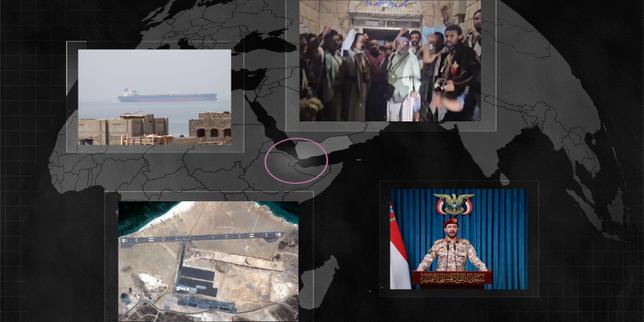
You have probably seen headlines flashing across your screen about Houthi missile attacks in the Red Sea, cargo ships forced to reroute around Africa, and Western airstrikes hitting Yemen. Most news coverage treats these fighters as a sudden, shadowy militia materialized out of nowhere to disrupt global trade. That framing is lazy.
The Houthi movement didn't pop up overnight. They are a deeply rooted political, social, and military force that has spent decades shaping the destiny of the poorest nation in the Middle East. If you want to understand why they hold so much power right now, you have to look past the breaking news alerts and examine their actual history.
From Mountain Tribes to State Power
The official name of the group is Ansar Allah, which translates to Partisans of God. But everyone calls them Houthis after Hussein Badreddin al-Houthi, the charismatic religious leader who founded the movement back in the 1990s.
Hussein and his followers started out in the northern mountains of Saada, near the Saudi border. They didn't start as a missile-firing insurgency. Initially, they formed a cultural and educational revival movement called the Believing Youth. Their original goal was straightforward: protect Zaydi Islam, a branch of Shia Islam that has ancient roots in northern Yemen, from what they saw as an influx of conservative Wahhabi and Salafi influences funded by regional powers like Saudi Arabia.
Zaydis ruled northern Yemen as an imamate for nearly a thousand years until a civil war overthrew them in 1962. For decades afterward, Zaydi communities felt politically marginalized and economically neglected by the central government in Sanaa.
When the Yemeni government, led by long-time president Ali Abdullah Saleh, aligned too closely with United States counterterrorism policies after the September 11 attacks, the Houthis found their voice. They began chanting anti-American and anti-Zionist slogans during Friday prayers. Saleh didn't like the rising dissent in his backyard. In 2004, the government tried to arrest Hussein al-Houthi. That mistake sparked a brutal counterinsurgency campaign. Government troops killed Hussein, but martyrdom turned him into a symbol. His followers picked up his banner, adapted his ideology, and transformed the movement into a hardened guerrilla fighting force.
Surviving Wars and Seizing Capital Cities
Fighting the Yemeni military through the 2000s wasn't a walk in the park. The Houthis fought multiple full-scale wars against the state, frequently drawing in the Saudi military, which launched airstrikes across the border to crush the rebels.
Instead of getting wiped out, the Houthis mastered asymmetric warfare. They learned how to dig into treacherous mountain terrain, stockpile weapons, and win the loyalty of local populations through a mix of religious conviction and social services.
When the Arab Spring swept through the region in 2011, Yemen erupted. President Saleh was forced out of office, and the country plunged into political chaos. A Saudi-backed transition plan led by Abdrabbuh Mansur Hadi failed to stabilize the government. The Houthis capitalized on the vacuum. In a stunning display of strategic patience and military momentum, they swept out of their northern strongholds in 2014, marched south, and captured the capital city of Sanaa.
They didn't act alone, either. In a classic twist of realpolitik, they allied with their former enemy, ousted president Ali Abdullah Saleh, who still commanded loyalty within segments of the military. Together, they chased President Hadi out of the country and took control of the government apparatus.
The Regional Proxy Trap
You cannot talk about the Houthis today without mentioning Iran. Western intelligence agencies and regional adversaries point to the group as a direct proxy of Tehran, weaponized to project power across the Bab el-Mandeb strait, one of the world's most critical shipping chokepoints.
The relationship is real, but calling them a simple puppet ignores reality. Iran and its so-called Axis of Resistance—including Hezbollah in Lebanon and various militias in Iraq and Syria—certainly provide the Houthis with advanced military hardware, drone technology, and ballistic missile components. Smuggling networks across the Arabian Sea have kept their arsenals well-stocked despite years of naval blockades.
Yet the Houthis drive their own agenda. They are home-grown insurgents with domestic grievances, local ambitions, and a fierce sense of Yemeni nationalism. They fight because they control territory, collect taxes, govern millions of citizens, and view themselves as the rightful defenders of Yemen against foreign aggression. Iran offers valuable support, but the tactical decisions on the ground belong to the Houthi leadership council.
The Humanitarian Cost at Home
Behind the geopolitical grandstanding and the dramatic missile launches lies an absolute catastrophe for ordinary Yemenis.
For nearly a decade, a military coalition led by Saudi Arabia and the United Arab Emirates rained bombs on Houthi-held territory, trying to reinstate the internationally recognized government. The blockade choked off fuel, food, and medical supplies. Millions of people faced acute malnutrition and preventable diseases. Hospitals crumbled. Schools turned to rubble.
The Houthis leveraged this suffering brilliantly for domestic propaganda. Every airstrike reinforced their narrative that they were standing alone against a brutal, foreign-backed conspiracy. Inside the territory they control—home to roughly 70 percent of Yemen's population—they established strict authoritarian rule. They overhauled school curriculums, restricted women's rights, clamped down on independent media, and built a massive security apparatus to stamp out internal dissent.
They are not benevolent liberators. They are ruthless rulers who transformed a fractured state into a militarized zone while using the Palestinian cause as a rallying cry to unite a war-weary populace behind their flag.
What Comes Next for the Red Sea
When the Gaza war exploded in late 2023, the Houthis found an opportunity to elevate their status from a regional nuisance to an international player. By launching drones and missiles toward commercial ships linked to Israel, the United States, and Britain, they successfully choked shipping traffic through the Suez Canal, forcing global supply chains to take the long, expensive route around the Cape of Good Hope.
Western naval task forces and repeated airstrikes haven't stopped them. The Houthis thrive on conflict. Decades of surviving Saudi bombing campaigns taught them how to hide arsenals in caves, decentralize command structures, and absorb heavy blows without breaking.
Understanding the Houthis means accepting an uncomfortable truth. They aren't going away because of a few targeted airstrikes. They are deeply entrenched in the political fabric of Yemen, backed by a powerful regional network, and convinced that history is on their side. Ignoring their historical grievances or treating them as a temporary flash-in-the-pan guarantees that the world will keep misjudging the conflict in the Arabian Peninsula.