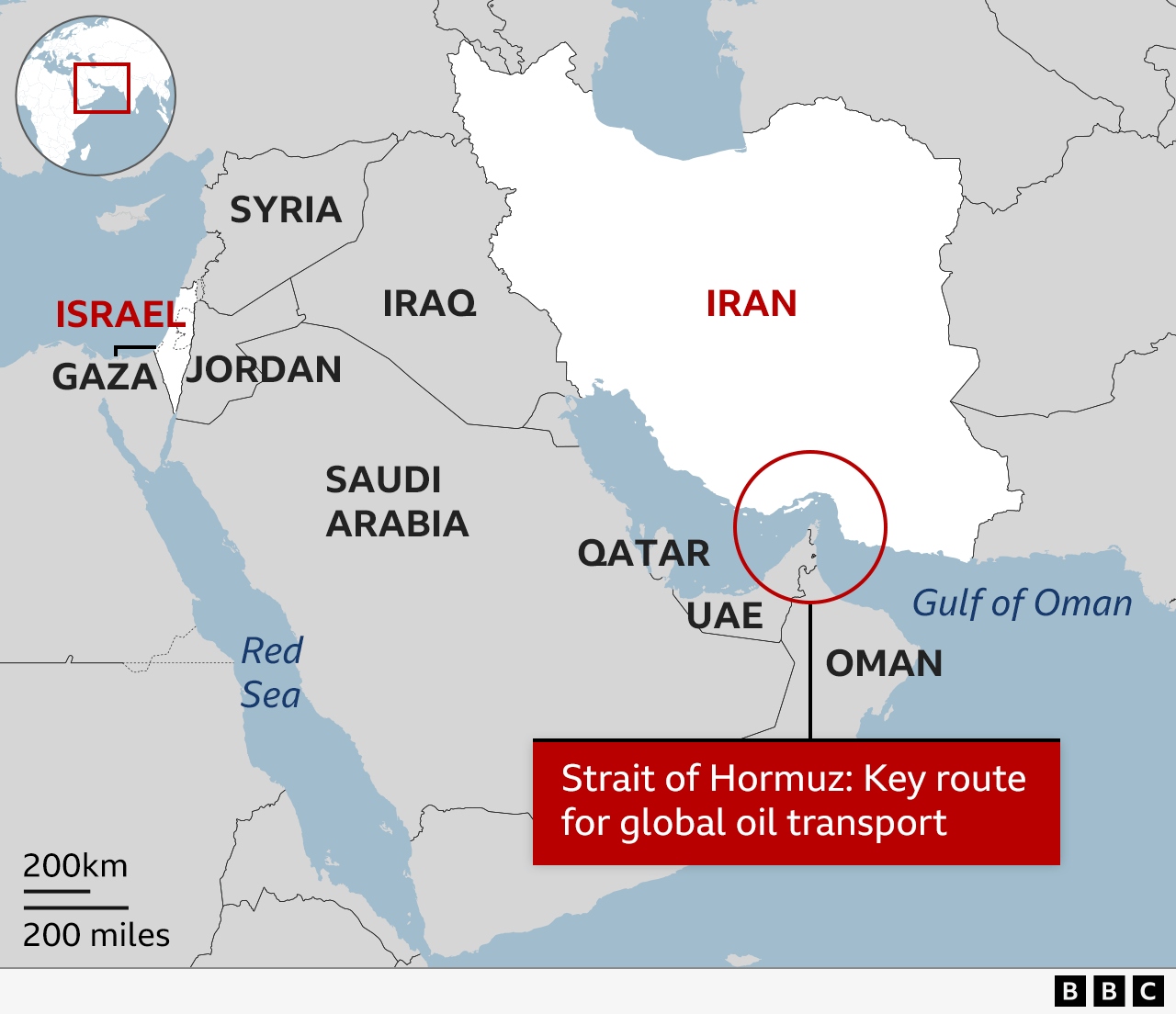
The energy industry loves a good ghost story, and the "Strait of Hormuz Blockade" is the campfire classic that never dies. Every time tensions flare between Tehran and the West, a flurry of maps appears in trade journals. They show colorful arrows pointing away from the Persian Gulf, tracing hypothetical pipelines across the Arabian Peninsula or through the mountains of Oman.
These maps are fantasies.
The idea that we can simply "bypass" the world’s most critical chokepoint is a trillion-dollar delusion. We aren't just looking at a logistical hurdle; we are looking at the fundamental laws of maritime physics and the cold, hard reality of infrastructure economics. Most "alternative routes" touted by analysts aren't solutions. They are expensive, vulnerable bandaids that would fail the moment a real kinetic conflict began.
The Volume Problem: You Can't Squeeze an Ocean Through a Straw
The most common "lazy consensus" in energy security is that pipelines like Saudi Arabia’s East-West Petroline or the Abu Dhabi Crude Oil Pipeline (ADCOP) are sufficient safety nets. They aren't.
Let’s look at the math. The Strait of Hormuz handles roughly 21 million barrels of oil per day (bpd). That is about 21% of global petroleum consumption.
- Saudi East-West Pipeline: Capacity is roughly 5 million bpd. Even with upgrades, it barely handles a quarter of the flow.
- ADCOP (UAE): Can move about 1.5 million bpd to the port of Fujairah.
- The Reality: Even if every single bypass pipeline on the planet operated at 100% efficiency tomorrow, over 15 million barrels per day would still be trapped.
Building a pipeline isn't like laying a garden hose. These are massive, static targets. To replace the transit capacity of the Strait, you would need to build dozens of new Petroline-scale projects across some of the most inhospitable terrain on Earth. The cost would be astronomical, and the ROI would be zero during peacetime. No CFO in their right mind would approve a $50 billion "just in case" project that sits idle 99% of the time.
The Infrastructure Trap: Pipelines are Static Targets
The second great myth is that moving oil into a pipe makes it "safe." In reality, you are trading a mobile, defensible sea lane for a fixed, indefensible line in the sand.
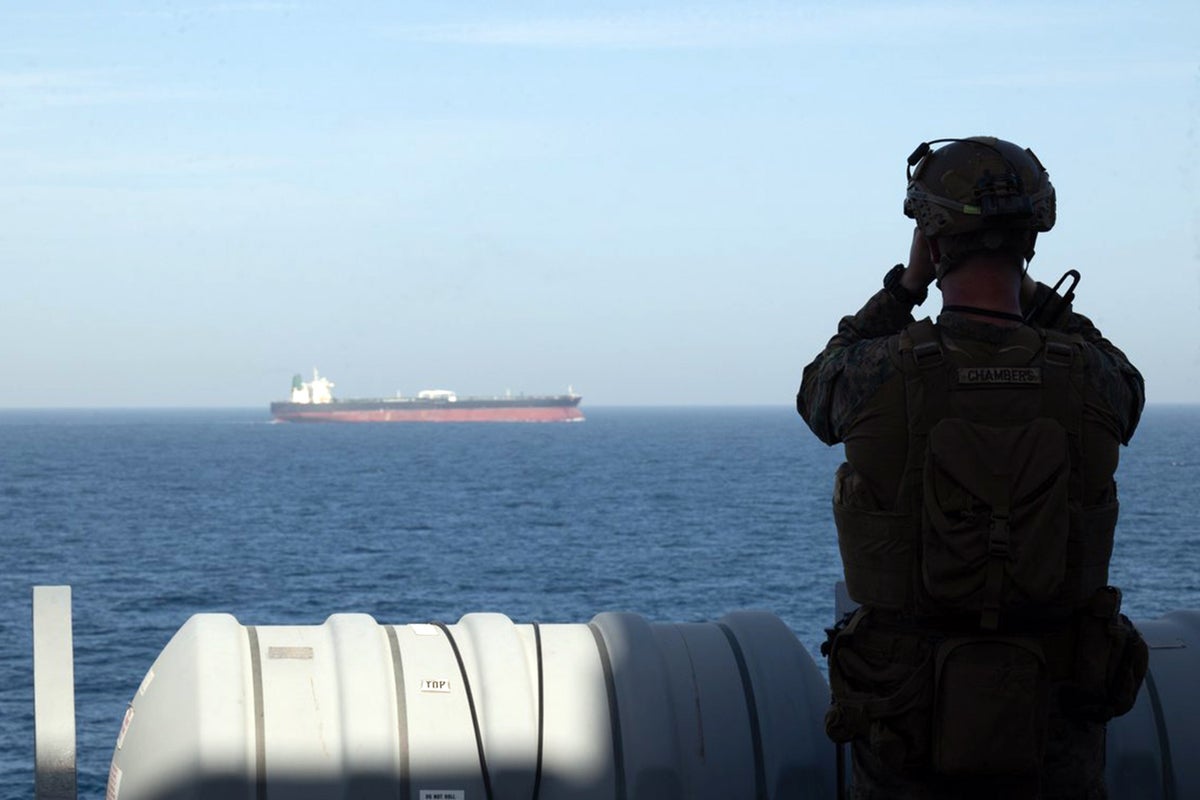
I’ve seen how quickly security budgets balloon when you realize a $5 drone can disable a pumping station that cost $500 million to build. A tanker in the Strait of Hormuz is a massive steel beast protected by international navies, radar, and the sheer vastness of the water. A pipeline is a sitting duck. It follows a predictable path. It has thousands of miles of "soft" exposure.
If a regional power is motivated enough to close the Strait, they are motivated enough to sabotage the bypasses. It takes months to repair a sophisticated pumping station or a major terminal. It takes minutes to hit it with a cruise missile. Suggesting we "bypass" the Strait to find safety is like moving from a fortified castle into a glass house because you’re afraid of the front gate being jammed.
The LNG Bottleneck: The Invisible Crisis
Everyone talks about oil. Almost no one talks about Liquified Natural Gas (LNG).
Oil can be diverted—at least in theory—via trucks or existing regional grids if you’re desperate. LNG cannot. Qatar is one of the world's largest exporters of LNG, and every single cubic foot of that gas must pass through the Strait of Hormuz.
There is no bypass for Qatari gas. None.
The infrastructure required to liquefy gas, store it, and load it onto specialized carriers is hyper-localized. You cannot simply build a 2,000-mile "LNG pipeline" across a desert to the Red Sea on short notice. The cryogenic requirements alone make it a multi-decade engineering nightmare. If Hormuz closes, the lights go out in Tokyo, Seoul, and parts of Western Europe. No amount of "strategic thinking" about pipelines changes that.
The "Red Sea" Fallacy: Out of the Frying Pan, Into the Fire
The most popular bypass route involves moving crude to the Red Sea ports, like Yanbu. This assumes the Red Sea is a peaceful lake.
Recent history has shattered that illusion. The Bab el-Mandeb strait is just as vulnerable—if not more so—than Hormuz. By redirecting the world’s energy flow to the Red Sea, we aren't bypassing a chokepoint; we are just choosing a different one. We are concentrating risk in a narrow waterway controlled by volatile coastal actors and non-state groups armed with sophisticated anti-ship tech.
It is a strategic shell game. You move the pea, but the risk remains exactly where it was.
The Economic Suicide of "Just in Case"
The "competitor" view suggests we should aggressively fund these alternative routes to ensure global stability. This ignores the "Green Transition" reality.
Energy majors are currently under immense pressure to decarbonize. Asking them to sink hundreds of billions into redundant fossil fuel infrastructure that only serves a purpose during a third world war is a non-starter. This is why these projects never get past the "feasibility study" phase. They aren't commercially viable.
If we want to spend that kind of capital, it won't be on pipes. It will be on localized energy generation—nuclear, renewables, and massive battery storage—that reduces the dependence on the Persian Gulf entirely. That is the only real "bypass."
The Counter-Intuitive Truth: Dependency is the Only Peace
Here is the take that makes the hawks angry: The fact that there is no bypass is exactly what keeps the peace.
The "Mutual Assured Destruction" of the global economy is tied to that 21-mile-wide strip of water. Because the Strait is un-bypassable, every major global power—the US, China, India, the EU—has a vested interest in keeping it open. If we actually succeeded in building a viable bypass for 50% of the oil, the incentive to intervene and prevent a conflict in the Gulf drops.
By making the world "safer" through bypasses, you actually make the outbreak of local war more likely. The fragility of the system is its greatest strength. It forces adversaries to calculate the cost of a total global collapse before they pull the trigger.
The Strategic Pivot
Stop asking how we can go around the Strait. Start asking how we can live without what's inside it.
The obsession with bypasses is a 20th-century solution to a 21st-century problem. We are trying to use Roman technology (aqueducts/pipes) to solve a geopolitical deadlock. If you are a policymaker or an investor, ignore the pipe-dream maps.
The only way to win the "Hormuz Game" is to stop playing it. Any dollar spent on a pipeline to "bypass" the Gulf is a dollar that could have been spent on ending the reliance on that specific geography altogether.
The Strait of Hormuz is a permanent fixture of our reality. It cannot be outmaneuvered, it cannot be ignored, and it certainly cannot be bypassed. Accept the bottleneck. Secure the bottleneck. Or move beyond the fuel that makes the bottleneck matter.
Everything else is just drawing lines in the sand.