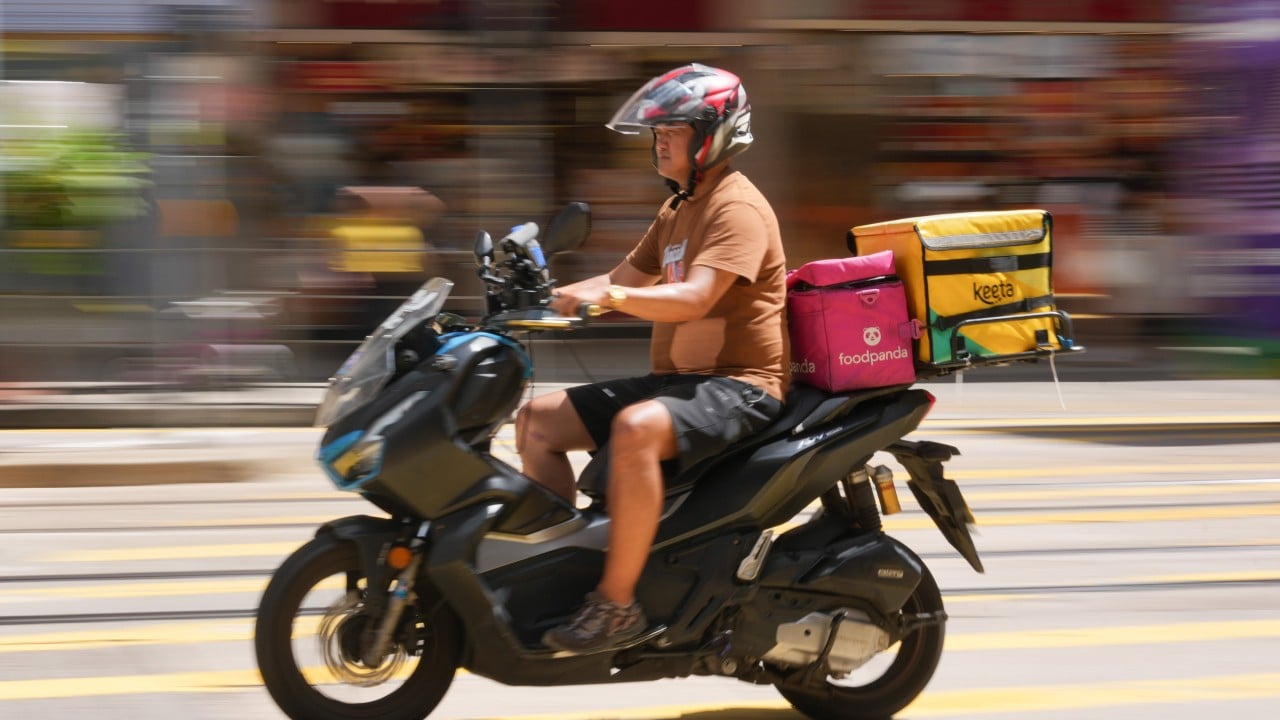
You’ve seen them weaving through traffic on Hennessy Road or sprinting up the hills of Mid-Levels in the pouring rain. Hong Kong’s food delivery riders are the literal lifeblood of the city's convenience economy. Yet, until recently, if a courier for Keeta, Foodpanda, or Deliveroo got hit by a taxi, they were basically on their own. Platforms could just point to a digital terms-of-service agreement and shrug.
That hands-off era is officially ending.
The Hong Kong government is moving forward with a legislative framework to force digital platforms to provide workplace injury compensation for food and goods delivery couriers. It's a massive shift in how the city defines labor. For years, platforms hid behind the "independent contractor" label to escape the strict mandates of the Employees' Compensation Ordinance (ECO). Now, the Labour and Welfare Bureau is breaking that shield.
But if you think this is a simple, copy-paste application of traditional labor law, you're mistaken. The government's proposal introduces a highly customized, fragmented approach to insurance that attempts to balance rider safety with the chaotic reality of app-based work.
Here is exactly what's changing, what it means for the bottom line of major platforms, and why the new system places a heavy burden on the riders themselves.
The Reality of the New Safety Net
The core of the proposal is status-agnostic protection. The government is skipping the exhausting legal debate over whether a rider is an "employee" or "self-employed." Instead, if you are performing platform work and get hurt, you are covered.
Coverage kicks in the second a rider sets off for a designated pickup location after accepting an order. It stays active through the delivery and even covers the window when a worker is returning to their vehicle.
The framework also addresses Hong Kong’s notorious extreme weather. If an accident happens while a rider is commuting home within four hours of finishing a shift during a Typhoon Signal No. 8 or a Black Rainstorm Warning, they can still claim compensation.
The benefits mirror traditional employment protections for catastrophic events.
- Fatalities: Families are eligible for statutory death benefits, which have a floor of HK$514,510.
- Permanent Disability: Workers can receive permanent incapacity compensation up to a ceiling calculated from a monthly income cap of HK$38,670, with a statutory minimum floor of HK$584,220.
- Medical Expenses: The framework covers standard surgical appliances, medical bills, and direct expenses related to rehabilitation.
This is a massive step up from the voluntary, private accident policies currently offered by platforms, which often feature low caps on temporary disability and don't match statutory ECO standards.
The Fine Print on Sick Leave and the Income Floor Trap
While the protections for permanent disability and death are robust, the rules for temporary sick leave payouts reveal a major compromise.
Under standard Hong Kong labor law, traditional employees are protected by a minimum monthly income floor of HK$5,710 when calculating temporary disability payments. This ensures that even low-wage or part-time workers receive a livable baseline while recovering.
The government explicitly waived this minimum floor for gig workers.
Why? Because authorities argue that since platform work is highly fragmented, keeping the floor would create bizarre scenarios where a casual rider making HK$2,000 a month could get a temporary injury payout higher than their actual earnings. Instead, sick leave compensation will be tied strictly to a worker's real, documented average earnings on the app.
If you are a full-time rider grinding 50 hours a week, you will likely be fine. But if you are a student or a part-time worker logging a few hours a week for extra cash, your temporary disability checks will be tiny.
The Onus Is Now on the Courier
Digital platforms have long complained that they can't verify every single scrape or minor accident because they don't have eyes on the street. To appease the tech lobbies, Hong Kong's new system places a unique administrative burden directly on the injured worker.
To claim compensation under the new framework, an injured platform worker must personally report the incident details to the Labour Department within a specific, strict timeframe.
This is a sharp departure from traditional employment, where the boss is legally required to notify the government when an employee gets hurt on the job. If a rider is hospitalized, concussed, or simply overwhelmed by paperwork, navigating the Labour Department bureaucracy alone is going to be a massive hurdle.
Furthermore, the law doesn't fully solve a messy logistical headache: multi-app routing. Many riders simultaneously run Keeta, Foodpanda, and Deliveroo to maximize their hourly intake. If a rider gets hit while carrying an order for one platform but has an active app open for another, determining which platform’s insurance triggers—or how the premium liability is split—remains a gray area that the Labour Department will have to iron out via supplementary regulations.
What This Means for Platform Bottom Lines
Let's be real: this is going to drive up costs for delivery platforms. The business model of the gig economy has always relied on outsourcing capital risks (vehicles, fuel, smartphones) and social costs (health insurance, retirement) to the workers.
With the legislative push advancing through the Legislative Council (LegCo), platforms will have to pay insurance premiums on a per-order or per-day basis to fund these mandatory pools.
We have already seen what happens when platforms face financial pressure in Hong Kong. Uber Eats famously wound down its local food delivery business years ago because turning a profit was too difficult. More recently, delivery drivers for platforms like Keeta have staged strikes over algorithmically driven pay cuts and tight delivery windows that force riders to run red lights and speed just to avoid financial penalties.
Platforms will likely try to offset these new mandatory insurance costs in two ways:
- Lowering Base Rates: Adjusting the algorithmic payout per delivery to ensure the added insurance premium doesn't eat into corporate margins.
- Passing Costs to Consumers: Increasing the platform delivery fees for the end-user ordering a bowl of wonton noodles in Causeway Bay.
Next Steps for Platforms and Riders
If you run a digital platform or operate as a fleet subcontractor in Hong Kong, you need to audit your data tracking immediately. You must ensure your system precisely logs the exact second an order is accepted, when the rider arrives at the merchant, and when the delivery is completed. Gaps in this data will leave you exposed to major legal liabilities if a rider challenges an unrecorded accident.
For riders, the game plan changes immediately once this law takes effect. You cannot rely on the app to automatically handle your injury claims. You must document everything. If you get into an accident, take photos of the scene, secure medical reports immediately, and prepare to file an independent report directly with the Labour Department. Your payout depends entirely on your ability to prove you were actively on a job window when the wheels hit the asphalt.
The days of frictionless, zero-liability delivery management in Hong Kong are officially over. Platforms must now pay to play, and riders will finally get a safety net—assuming they can handle the paperwork required to catch them.