Every few years, policy wonks in glass towers along Victoria Harbour dust off a spreadsheet, look at regional GDP, and panic. The current ritual involves setting a grand target: push research and development spending to three percent of gross domestic product by 2030. Bureaucrats nod approvingly. Press releases celebrate a bold commitment to high-tech glory. Consultants bill their retainers and nod in solemn agreement.
It is a comforting delusion. Learn more on a related topic: this related article.
The lazy consensus says that Hong Kong lags behind Shenzhen, Singapore, or Seoul simply because it writes smaller checks for laboratories and incubator desks. Pour enough cash into government-backed science parks, offer enough tax incentives for patent boxes, and behold: the magic of state-directed invention will spark a gleaming new economy.
I have watched venture capital firms light millions of dollars on fire trying to scale hardware startups in government-funded co-working incubators while founders spent more time filling out bureaucratic grant compliance forms than talking to actual users. The diagnosis is entirely backwards. Hong Kong does not suffer from an innovation deficit. It suffers from a systemic aversion to risk, an asphyxiating regulatory framework, and an elite class that treats technological progress as a real estate marketing strategy. Additional reporting by Business Insider delves into comparable perspectives on the subject.
The Capital Fallacy
Let us dismantle the three percent GDP target with basic economic reality. Money is a lubricant, not a fuel. Throwing billions of dollars of public capital into an ecosystem that lacks commercial oxygen creates a very specific kind of distortion: zombie enterprises designed to extract subsidies rather than solve hard problems.
Look at the numbers that matter. For decades, Hong Kong’s capital markets have been among the deepest and most liquid on earth. Private equity pools are enormous. Sovereign wealth and family offices sit on dry powder numbering in the hundreds of billions. If the constraint to invention was a lack of available funding, venture capital would naturally fill the void without a single legislative mandate from the Legislative Council.
Yet private sector research and development investment remains chronically low compared to regional peers. Why? Because rational capital flows toward high-return, low-friction assets. When your entire commercial history is built on property development, trade logistics, and financial intermediation—sectors where regulatory certainty and asset-backed leverage reign supreme—burning capital on early-stage biotech or artificial intelligence algorithms looks less like investing and more like lighting cash on fire in a typhoon.
When the government steps in to subsidize what the market refuses to fund organically, it crowds out genuine market signals. Founders stop building things customers want to buy and start building things grant committees want to approve. You end up with a subsidized ecosystem of pitch-deck artists who are world-class at navigating bureaucracy and completely incompetent at surviving a competitive global market.
The Real Estate Trap
You cannot separate Hong Kong's innovation stagnation from the cost of four walls. When commercial rents consume forty to sixty percent of an early-stage startup's burn rate before they even hire their first engineer, capital efficiency dies.
Imagine a scenario where a brilliant team of cryptographers or robotics engineers wants to set up a workshop. In Shenzhen or Austin, they lease an industrial loft with flexible terms, cheap power, and room to iterate. In Hong Kong, they compete for cramped commercial space against wealth management offices and luxury watch retailers, driving seed capital straight into the pockets of landlords.
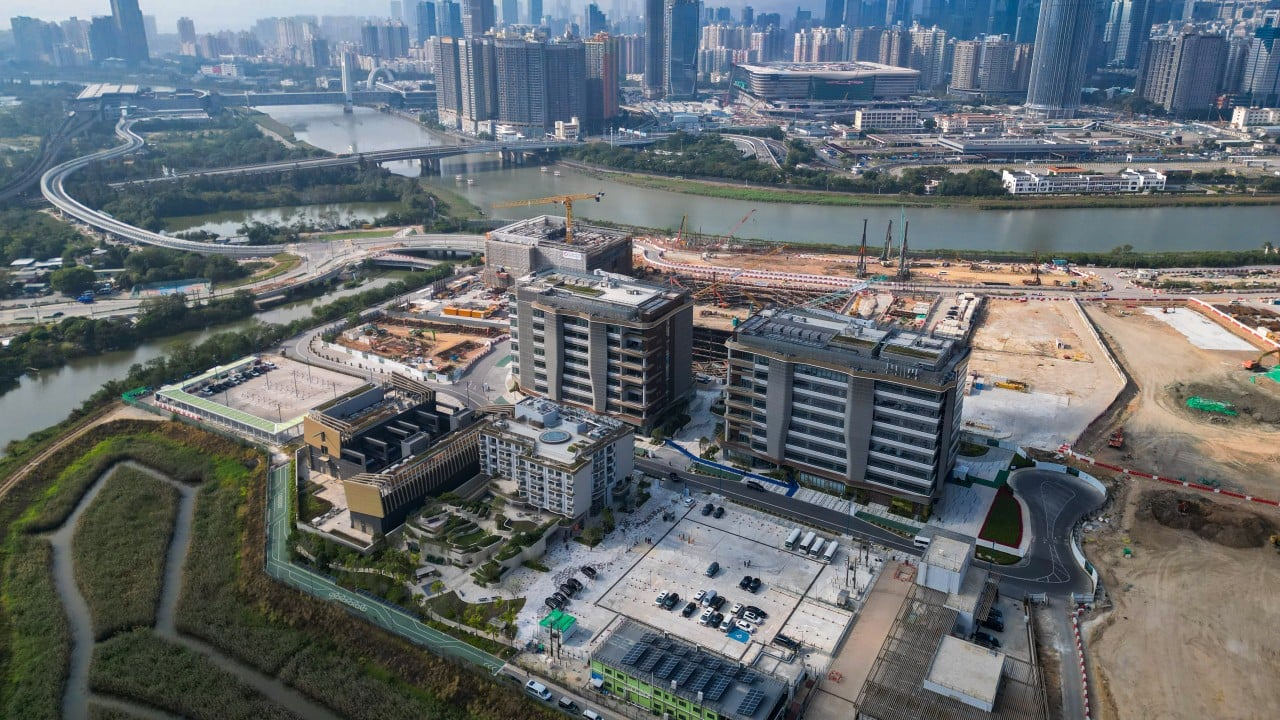
The government’s answer has been to build subsidized science parks and industrial estates far out in the New Territories, as if putting brilliant minds in a suburban bubble fixes the underlying structural cost disease. Innovation does not happen in antiseptic corporate campuses isolated from the pulse of the city. It happens where collision is cheap, density is organic, and talent can afford to live within walking distance of where ideas are forged. By protecting property valuations above all else, the city's economic architects have made physical space too expensive for the very people required to reinvent the economy.
The Compliance Straitjacket
Let us talk about risk appetite. True technological breakthroughs require tolerance for total failure. They require regulatory sandboxes where things break, rules get bent, and legal grey areas are navigated with aggressive optimism.
Hong Kong inherited a brilliant legal and institutional framework from its British past, optimized for the predictable execution of contracts, international trade arbitration, and banking compliance. That same framework is an absolute catastrophe for high-uncertainty technology.
Try launching a novel decentralized finance protocol, an autonomous drone delivery service, or an AI-driven healthcare diagnostics platform under the watchful eye of legacy regulators who view every anomaly as a criminal offense. The compliance burden is suffocating. Risk-averse institutions prefer doing nothing over doing something new that might trigger a compliance inquiry.
When failure is treated as a career-ending moral failing rather than a mandatory cost of education, smart people choose banking, law, or property leasing. They do not drop out of elite universities to build unproven software. The talent pipeline is not empty; it is systematically diverted toward safe, high-status mediocrity.
The Myth of Regional Catch-Up
Every policy debate assumes Hong Kong is locked in a zero-sum race with Shenzhen or Singapore. This framing is fundamentally flawed. Trying to beat Shenzhen at hardware manufacturing or consumer electronics is like trying to out-swim a shark in its home reef. Shenzhen has an integrated supply chain, manufacturing velocity, and a domestic market of over a billion people that no tax incentive in Sai Kung can replicate.
Hong Kong's historic superpower was never manufacturing. It was friction-free intermediation, global connectivity, rule of law applied to international capital, and a cultural bridge between East and West.
The path forward requires leaning into those unique institutional advantages rather than building replica laboratories that pale in comparison to what exists across the border. Instead of subsidizing local R&D to hit an arbitrary percentage of GDP, the city should ruthlessly dismantle the regulatory barriers stopping global talent from setting up shop instantly, slash the cost of commercial space by forcing real estate liberalization, and rewrite compliance frameworks to encourage experimentation rather than bureaucratic paralysis.
Reaching three percent of GDP in research spending by 2030 will achieve nothing if every dollar is filtered through risk-averse committees and trapped in high-rent glass towers. Stop counting the cash. Start removing the friction.