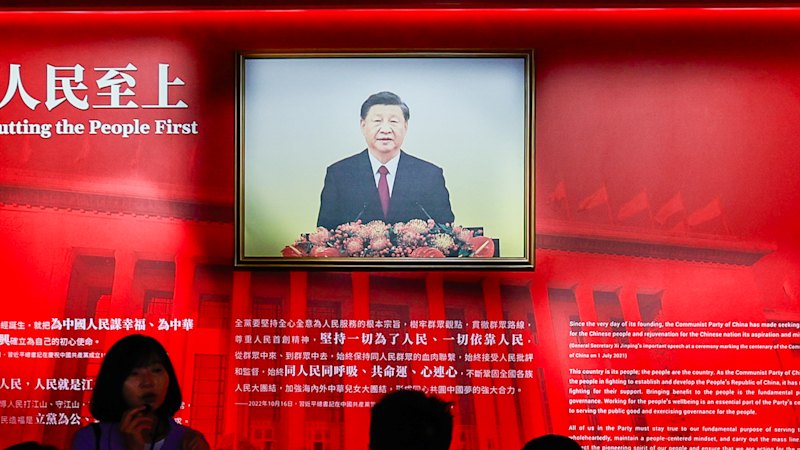
Hong Kong is sending a chilling message straight to Australian soil. Walk into a state-backed national security exhibition in Hong Kong, and you might spot familiar Australian faces staring back at you from a wall. They aren't there to be celebrated. They are featured on a literal bounty wall, branded as fugitives who will be pursued for life.
This isn't just standard political theater. It is a direct, calculated extension of Beijing's authoritarian reach into western democracies, using financial incentives to hunt down dissidents who thought they found safety abroad. If you think what happens in Hong Kong stays in Hong Kong, you are miscalculating the situation entirely.
The Reality of the Lifelong Pursuit
The Hong Kong government placed hefty bounties on several overseas activists, including Australian citizens and residents like lawyer Kevin Yam and former Hong Kong lawmaker Ted Hui. Each carries a price tag of one million Hong Kong dollars on their head. The state museum exhibitions display these targets prominently, ensuring the public views them as permanent enemies of the state.
This targeting relies heavily on the extraterritorial reach of the National Security Law imposed on Hong Kong in 2020. The law claims jurisdiction over anyone, anywhere on Earth, who speaks out against the administration. Living in Melbourne or Sydney does not grant automatic immunity from the legal machinery of Hong Kong.
The strategy aims to isolate these individuals completely. By publicizing their faces and offering massive cash rewards, authorities turn the global diaspora into a potential network of informants. It forces activists to constantly look over their shoulders, wondering if a fellow community member, a neighbor, or a stranger might try to collect the payout.
Transnational Repression on Australian Soil
Transnational repression happens when foreign governments harass, intimidate, or attack individuals living outside their borders. The bounty wall acts as the public face of this covert pressure campaign.
Activists in Australia report experiencing frequent cyberattacks, digital surveillance, and threats directed at their families back in Hong Kong. The emotional toll is massive. Family members remaining in the city face intense police questioning, effectively holding domestic relationships hostage to silence critics living overseas.
Australia faces a complex sovereignty issue here. When a foreign government places a bounty on an Australian citizen for actions performed within Australia, it openly challenges Australian law and democratic protections. The Federal Police have investigated these foreign interference attempts, but stopping digital threats and community surveillance remains incredibly difficult.
How the Payout System Shifts the Risk
The million-dollar bounties change the threat dynamic from state actors to everyday citizens. Intelligence agencies do not always need to send agents abroad when they can crowd-source surveillance instead.
- Financial Motivation: A million Hong Kong dollars is a life-changing sum for many people, creating a permanent incentive for bounty hunters or informants.
- Travel Restrictions: Targeted individuals cannot travel to countries that hold extradition treaties with Hong Kong or China, severely limiting their global movement.
- Banking Disruption: Financial institutions often freeze the assets of individuals accused under national security laws, cutting off access to global banking systems.
This economic warfare cuts deeper than the threat of physical arrest. It systematically dismantles the target's ability to live a normal life, hold a job, or run a business internationally.
What Needs to Change to Protect Dissidents
Western nations cannot rely solely on standard diplomatic protests anymore. Issuing statements of concern does little to deter a government willing to paste the photos of foreign citizens on bounty walls.
Stronger counter-interference measures must become the standard response. Australia needs to aggressively monitor foreign state media operating within its borders, crack down on illegal surveillance networks, and provide direct, specialized security support to targeted individuals.
Public awareness remains our strongest defense tool against this covert overreach. Recognizing that these bounty walls exist helps communities identify intimidation tactics early, allowing individuals to report suspicious activities to intelligence agencies before threats escalate into physical harm. Protecting democratic expression requires active, daily defense of the people targeted by foreign regimes.