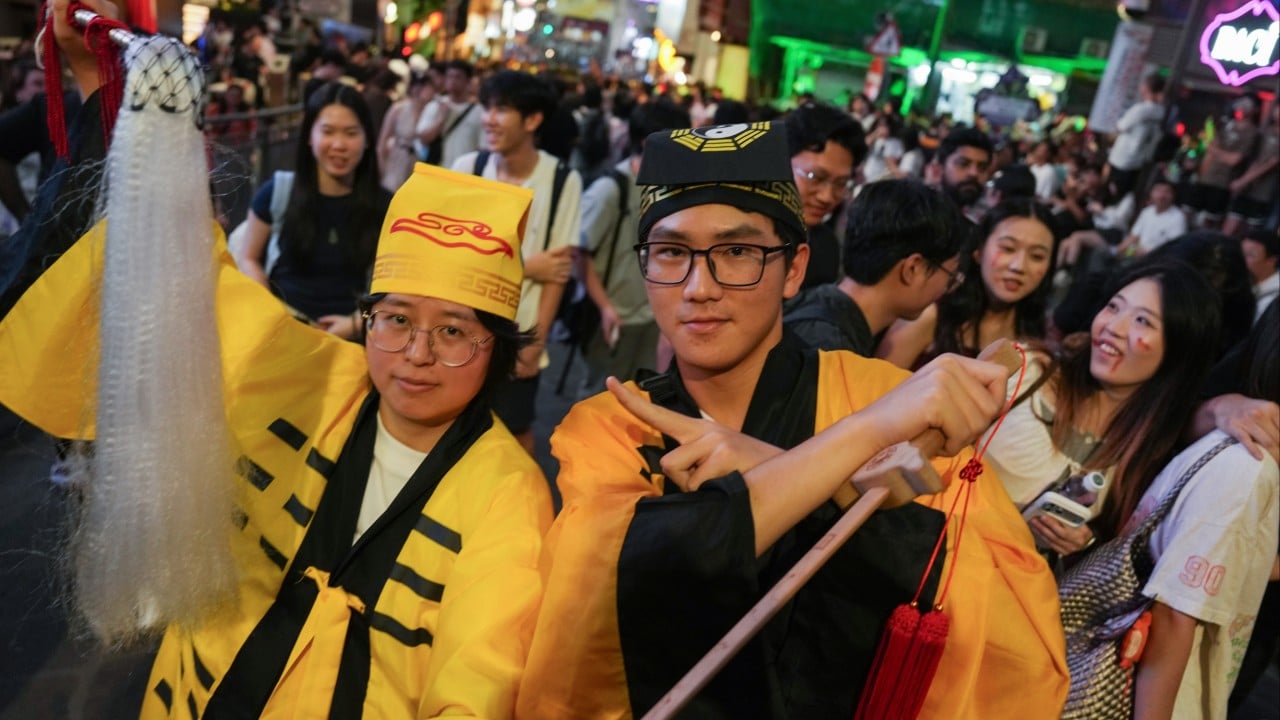
Hong Kong wants to become Asia’s premier Halloween destination, and the reason is purely financial. With local residents spending their weekends across the border in Shenzhen and traditional Western tourist arrivals still recovering, the city’s tourism board and hospitality sector are aggressively marketing October as a major festival season. By combining Western fright-night traditions with local Chinese ghost folklore, Hong Kong hopes to capture high-spending regional travelers from mainland China, Southeast Asia, and beyond. Yet turning a single night of costume parties into a sustainable economic pillar faces steep logistical, cultural, and regulatory hurdles.
The Economics of Desperation and Reinvention
Retail and hospitality numbers tell the real story. Over the past few years, Hong Kong’s nightlife and food-and-beverage sectors have taken a sustained beating. High commercial rents collide with shifting consumer habits.
Local residents routinely cross the border into Guangdong province on Friday nights, drawn by cheaper dining, massive entertainment complexes, and aggressive service standards. Meanwhile, traditional long-haul travelers from North America and Europe have been slow to return in pre-pandemic volumes due to expensive airfare and geopolitical friction.
To plug the revenue gap, the Hong Kong Tourism Board and private developers have shifted toward an "event economy" model. If people will not come simply to shop at luxury malls anymore, the city has to manufacture urgency. You need a calendar packed with reasons to book a flight right now.
Halloween fits this strategy surprisingly well. Unlike Lunar New Year, which is deeply family-oriented and causes businesses to shut down for days, Halloween is commercial, youth-driven, and heavily reliant on alcohol, dining, and ticketed attractions. It keeps bars open late and fills hotel rooms during an otherwise shoulder travel month between the October Golden Week holiday and the December Christmas rush.
Why Hong Kong Has a Natural Edge
Critics often dismiss Halloween in Asia as a synthetic import. They are wrong. Hong Kong actually possesses the exact cultural DNA required to pull this off better than regional rivals like Singapore or Tokyo.
For decades, Hong Kong cinema dominated Asian pop culture with a very specific genre: the jiangshi (hopping vampire) comedy-horror film. Movies like Mr. Vampire blended slapstick humor, Taoist mysticism, and genuine scares into a distinct aesthetic that remains iconic across East and Southeast Asia. The city does not need to copy American haunted houses because it already owns a recognizable horror brand.
Furthermore, Hong Kong’s urban geography works in its favor. The dense, vertical concrete canyons of Central, Wan Chai, and Mong Kok naturally look like a movie set at night. Neon signs, steep stone staircases, and narrow alleys create an atmosphere that purpose-built theme parks spend millions trying to replicate.
The Theme Park Arms Race
The city’s two major theme parks have spent more than twenty years perfecting the commercial side of October. Ocean Park’s Halloween Fest is arguably the most successful seasonal attraction in Asia. Starting back in 2001, it transformed a struggling marine park into a powerhouse of theatrical horror, utilizing local urban legends, Cantonese opera tropes, and elaborate maze designs.
Hong Kong Disneyland takes the opposite approach, leaning into family-friendly villains, elaborate parades, and merchandise drops that drive massive per-capita spending among visiting families from the Greater Bay Area. Together, these two parks prove that regional tourists will happily pay premium ticket prices for well-executed October programming.
The Lan Kwai Fong Bottleneck
Step outside the theme parks, however, and the operational reality gets messy. For decades, the epicenter of Hong Kong’s street-level Halloween has been Lan Kwai Fong, a steep, L-shaped cobblestone lane in Central packed with bars and clubs.
Every October 31, tens of thousands of revelers cram into these few narrow blocks. The energy is electric, but the crowd control is a nightmare.
Following tragic crowd crushes elsewhere in Asia—most notably the 2022 Itaewon disaster in Seoul—Hong Kong police have dramatically tightened crowd management protocols. Today, entering Lan Kwai Fong on Halloween night requires navigating a labyrinth of steel barricades, one-way pedestrian routing, and heavy police checkpoints.
While necessary for safety, these measures kill spontaneity. Bar owners frequently complain that overly aggressive street closures choke off foot traffic before midnight, preventing patrons from bar-hopping and depressing overall beverage sales. If Hong Kong wants to scale up its Halloween ambitions, it cannot rely on funneling the entire city into one cramped hillside alley.
Competing Against Regional Heavyweights
Hong Kong is not operating in a vacuum. Every major Asian hub is chasing the exact same tourist dollar, and several neighbors offer compelling alternatives for October travelers.
Tokyo remains the undisputed king of organic street culture. Even after Shibuya ward officials banned public drinking and discouraged Halloween street gatherings to curb rowdiness, private clubs in Shinjuku and Roppongi, alongside Universal Studios Japan in Osaka, continue to draw massive international crowds. Japan benefits from a weak yen, making hotels and dining significantly cheaper than in Hong Kong.
Singapore leverages Universal Studios Singapore’s Halloween Horror Nights, a slick, high-budget production that dominates the Southeast Asian market. Singapore offers predictability, cleanliness, and seamless transit, appealing to travelers who want a sanitized, well-organized scare without the gritty chaos of Hong Kong’s streets.
Bangkok competes on price and pure nightlife energy. With relaxed licensing laws, massive rooftop venues, and inexpensive hospitality, Thailand easily siphons away younger budget travelers who might otherwise consider a weekend trip to Hong Kong.
| Destination | Primary Halloween Draw | Key Competitive Advantage | Major Vulnerability |
|---|---|---|---|
| Hong Kong | Theme parks, Lan Kwai Fong, local ghost lore | Bilingual culture, dense urban atmosphere, cinema heritage | High hotel/dining costs, strict street crowd controls |
| Tokyo / Osaka | Universal Studios Japan, club events | Weak currency, unmatched pop-culture fandom | Crackdowns on public street gatherings in Shibuya |
| Singapore | Universal Studios Singapore | Regional safety, high production value | High alcohol taxes, sterile nightlife environment |
| Bangkok | Nightclubs, rooftop parties, street bars | Low cost, permissive nightlife regulations | Lack of signature family-friendly theme park events |
The Cultural Tightrope of East Meets West
Marketing horror in Chinese societies requires delicate cultural navigation. While young urbanites in Hong Kong, Shanghai, and Taipei treat October 31 as an excuse to dress up and party, traditional beliefs around death and spirits remain deeply ingrained.
Hong Kong already has its own indigenous ghost festival: Yu Lan, or the Hungry Ghost Festival, which takes place during the seventh lunar month (usually August). During Yu Lan, residents burn incense and paper offerings on sidewalks to appease wandering spirits. It is a solemn, superstitious period where people avoid swimming at night, moving house, or speaking ill of the dead.
Commercializing horror requires separating the playful, Westernized carnival of Halloween from the genuine spiritual anxiety associated with Yu Lan.
Marketing campaigns that lean too heavily into authentic Chinese funerary imagery—such as traditional paper effigies or ancestral tablets—risk alienating older demographics or triggering complaints of bad luck from local businesses. Conversely, sticking strictly to generic plastic pumpkins and witches makes Hong Kong indistinguishable from any suburban shopping mall in North America. The sweet spot lies in playful nostalgia: jiangshi costumes, retro Hong Kong cinema references, and haunted tram tours that celebrate local history without crossing into genuine taboo.
What Actually Needs to Change
If Hong Kong’s leadership wants Halloween to evolve from a noisy weekend into a legitimate regional tourism anchor, handing out free drink vouchers at the airport will not cut it. The city needs structural adjustments to how it manages public space and commercial licensing.
First, authorities must decentralize the party. Instead of forcing everyone into Central, the government should actively facilitate district-wide night markets and pop-up events along the West Kowloon Cultural District, the Wan Chai waterfront, and Tsim Sha Tsui’s Avenue of Stars. Wide harborfront promenades can safely absorb massive crowds without requiring suffocating steel barricades.
Second, licensing red tape needs a temporary October thaw. Securing permits for outdoor live music, temporary bars, or street performances in Hong Kong is notoriously slow and bureaucratic. Creating a streamlined, fast-track event permit specifically for the final two weeks of October would allow independent restaurant groups, art spaces, and hotels to build creative, immersive experiences rather than relying on the same tired drink specials.
Finally, the hospitality sector must address the value proposition. Visitors from mainland China and Southeast Asia are increasingly savvy; they will not pay five-star prices for three-star service. Hotels and airlines need to bundle attraction tickets, late-night dining credits, and harbor cruise passes into cohesive weekend packages that feel effortless to book.
The Verdict on Hong Kong’s Fright Night Strategy
Can Hong Kong become Asia’s Halloween capital? On paper, the pieces are all there. The city possesses world-class theme park operators, a legendary horror film archive, a dramatic skyline, and an unmatched concentration of bars and restaurants within walking distance of mass transit.
Yet ambition alone does not override economics. As long as commercial rents force bar owners to charge twenty dollars for a watered-down cocktail, and as long as bureaucratic caution turns public celebrations into heavily policed obstacle courses, regional travelers will keep looking elsewhere. Hong Kong knows how to put on a show, but until the city loosens its grip and lets the streets breathe, its bid to own October will remain a work in progress.


