Fluorescent lights hum over a row of identical grey monitors at 9:42 PM. Someone clicks a mouse. Another keyboard rattles in the quiet corner near the glass partition. A young analyst stares at a spreadsheet that has already been revised four times since dinner, wondering when "entry-level" stopped meaning a doorway into adulthood and started feeling like a locked room.
Exhausted.
That is the single word that keeps surfacing whenever young graduates talk about the early years of white-collar work across major Chinese cities. Long shifts, intense competition for white-collar roles, and rising expectations around credentials have pushed many twenty-somethings to ask a blunt question: if working sixty or seventy hours a week in a cubicle barely buys peace of mind, what happens if you step onto a plane instead?
A growing number of young people have found a quiet workaround. They become paid flight companions.
Instead of applying for corporate roles or chasing a traditional promotion ladder, some graduates and freelancers advertise their willingness to travel alongside older adults who find international airports overwhelming, or alongside families relocating pets across borders. One person helps a grandmother navigate customs forms, terminal transfers, and boarding announcements in a foreign language. Another flies with a golden retriever or a cat in a carrier, handling airline paperwork, health certificates, and layover checks so the animal arrives safely on the other side.
Look closely at the surface of this trend and it sounds like a quirky internet fad. A travel hack. A rebellious gap year disguised as a side hustle.
Look beneath it, and you see two colliding realities. On one side stands a generation of young adults burnt out by rigid office routines, anxious about career stability, and eager to see the world while their bodies are still light on their feet. On the other side stands an aging population that wants to visit family abroad or travel overseas, alongside pet owners who treat animals as beloved household members and dread putting them on a long-haul flight alone.
To make these invisible stakes concrete, consider a hypothetical scenario. Suppose a twenty-four-year-old named Lin leaves a junior marketing job in Shanghai after two years of late-night revisions and stagnant pay. She is not wealthy. She cannot fund endless round-the-world tickets out of savings. Yet when an elderly neighbor needs help flying to Vancouver to visit a son, and later a couple in Shenzhen needs someone to accompany their terrier to Frankfurt, Lin steps into the aisle seat beside strangers and animals alike.
That hypothetical example is not a verified news report about a real person named Lin, nor does it claim that every young flight companion follows that exact path. Still, it captures the real mechanics driving this phenomenon: practical problem-solving meeting emotional hunger.
Why a Boarding Pass Feels Lighter Than a Badge
For decades, a steady office job carried an unspoken promise. You endured grueling hours early on, collected titles, saved steadily, and earned security over time.
That contract feels frayed to many young workers today. When entry-level salaries stretch thin in expensive cities, and when automation and shifting corporate budgets make even "safe" white-collar tracks feel uncertain, the emotional return on endless overtime shrinks. Sitting under harsh ceiling lights while watching the clock crawl past midnight takes a quiet toll on sleep, posture, and spirit.
Airport terminals are loud, crowded, and unpredictable. They test your patience in ways a desk never does. Delayed flights shuffle gates at the last minute; security lines snake across marble floors; luggage wheels clatter over tile; strangers speak languages you barely recognize.
Yet for someone weary of staring at the same four walls, movement itself can feel like oxygen. Walking from check-in to passport control to the departure lounge gives a day a clear beginning, middle, and end. You land in a new time zone. You see unfamiliar street signs through a taxi window. Even when you are working—translating a menu, filling out an arrival card, checking on a pet in an approved carrier—the work has a visible finish line.
I know the lure of trading routine for motion, even if my own journeys have mostly been measured in train platforms, cramped buses, and late-night airport benches rather than paid companion gigs. There is a distinct relief in holding a ticket and knowing that for the next twelve hours, your only job is to get from here to there intact. A boarding pass feels like permission to breathe, even while you stay alert for someone else.
The Quiet Fear at the Gate
Travel looks glamorous in photos. Sunlit terminals. Window seats above clouds. Luggage gliding across polished floors.
Reality at the gate is much messier.
Imagine an older traveler standing near an international departure board, squinting at small flight numbers while announcements echo across a cavernous hall. Maybe they have never used a self-service kiosk. Maybe their English stops at hello and thank you. Maybe their knees ache after a long walk from the drop-off curb, and a sudden gate change turns a simple trip into a spike of panic.
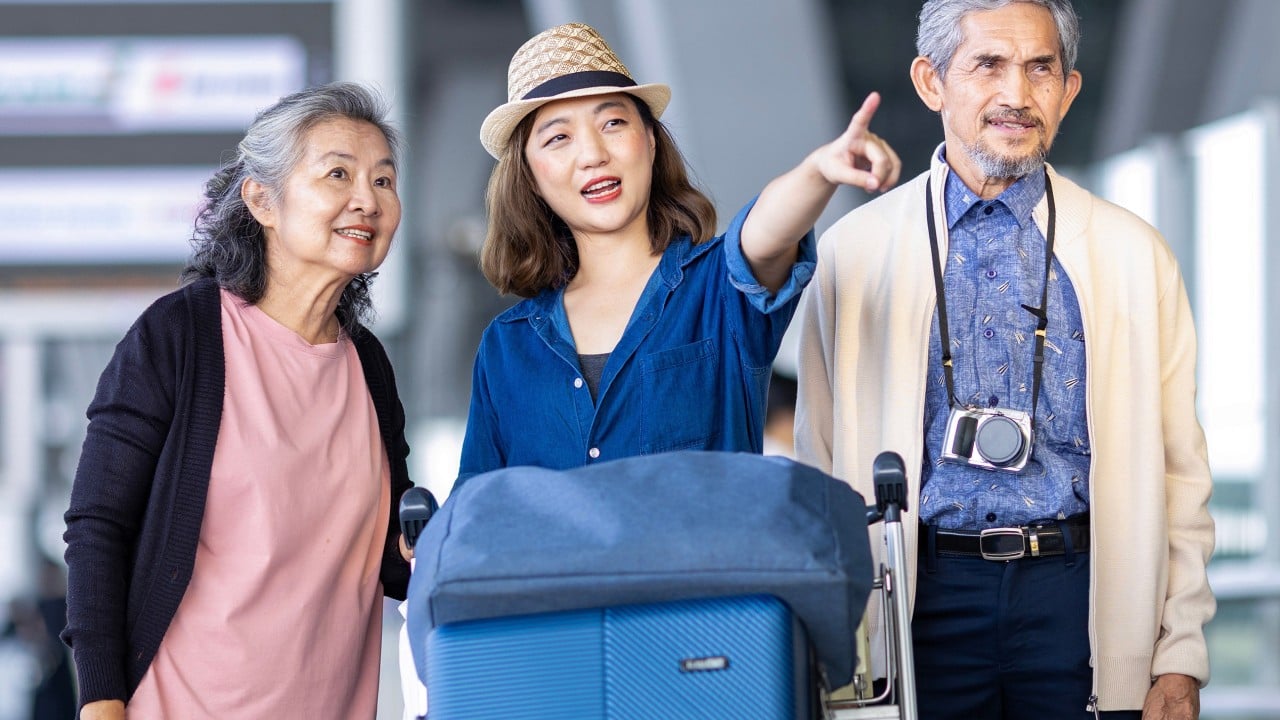
For older adults, an airport is not just a building. It is a maze of rules, screens, and time pressure where one wrong turn can mean missing a connection or getting stranded alone. Having a calm, patient young person walking beside them—carrying a bag, reading the signs, speaking up to airline staff—changes the entire emotional weight of the journey.
Now picture a different kind of anxiety. A pet owner hands over a travel crate containing a cat or dog that has slept at the foot of their bed for six years. The owner has spent weeks gathering vaccination records, microchips, and import permits. Every horror story about cargo holds or missed connections replays in their head. Paying a companion to fly with the animal—keeping a close eye on routines, comfort, and documentation along the way—is not a luxury splurge to those owners. It is an attempt to buy peace of mind during a stressful move.
That is where trust becomes the hardest currency in this arrangement.
When someone hires a stranger to travel with a vulnerable parent or a cherished pet, neither side can rely on a glossy corporate brand alone. The traveler has to show reliability before takeoff: arriving early, knowing the entry rules, staying level-headed when delays hit, and treating someone else's loved one—human or animal—with genuine care. And the traveler, in turn, has to weigh safety, clear boundaries, payment terms, and what happens if a flight is canceled or a medical or logistics snag appears mid-trip.
Is this a permanent career for most young people? Almost certainly not.
Companion trips are irregular, often seasonal or event-driven, and rarely come with health insurance, paid sick leave, or a predictable monthly paycheck. If you treat flying with strangers or pets as a long-term substitute for every financial safety net, you can easily trade one kind of stress—office burnout—for another: income instability and travel fatigue.
Admitting that uncertainty matters. Anyone looking at this trend from the outside can get swept up in romantic headlines about "ditching the rat race," while anyone living it knows that jet lag, irregular gigs, and sudden delays wear you down fast. Calling it a cure-all would be dishonest. Calling it a clever, human-scale response to real friction is much closer to the mark.
Two Generations Meeting in Mid-Air
Think of the economy as a crowded train station where people are rushing in opposite directions—some trying to catch up to a fast schedule, others trying to slow down or cross a gap they cannot cross alone. Sometimes two travelers who seem to have nothing in common end up sitting in adjacent seats because each solves a problem the other cannot solve alone.
In a broader sense, this trend shows how people improvise when standard institutions feel out of sync with daily life. Young workers want flexibility, fair effort, and experiences that make them feel alive rather than hollow. Older adults and pet owners want dignity, safety, and human warmth in moments that feel intimidating or logistically heavy.
Neither side is asking for a grand revolution on a long-haul flight. Usually, they are asking for something much simpler.
A steady hand on a moving walkway.
A clear answer when a customs officer asks a question.
A calm check on a pet carrier before the cabin lights dim.
A break from a life that felt stuck in neutral.
Outside the terminal glass, engines spool up against cold morning air, propellers or turbines humming with quiet force as another flight lines up for takeoff. Inside, two people—or a young traveler and a sleepy animal tucked neatly beside a seat—adjust their straps, pull a jacket closer against the cabin chill, and wait for the wheels to lift off the ground.