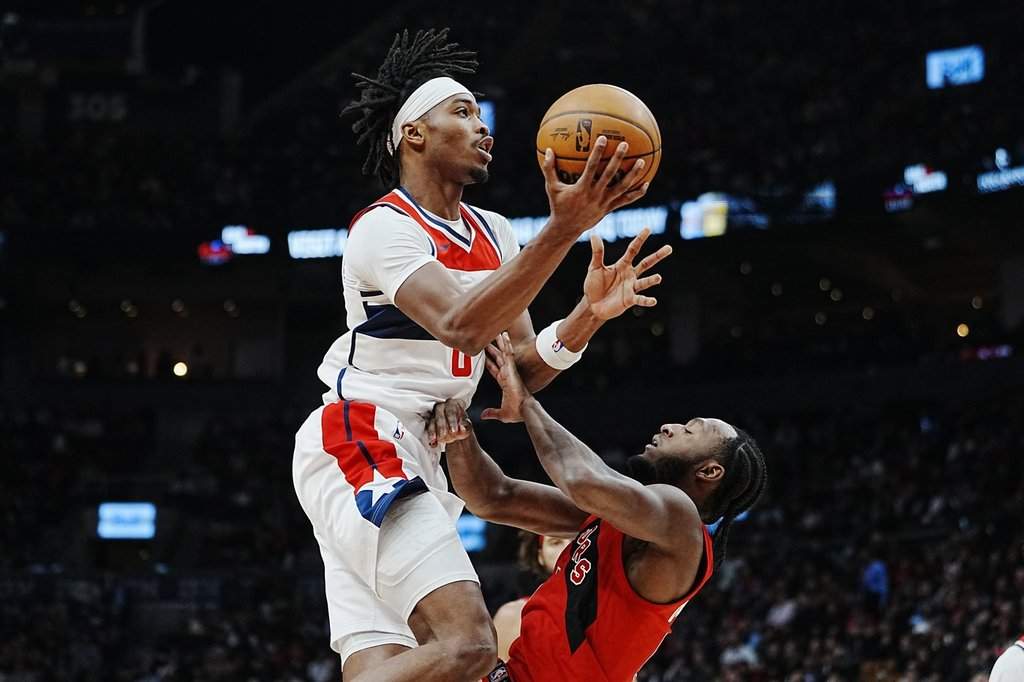
Silence.
That is the first thing you notice when a professional basketball team loses six games in a row, not the shouting of frustrated coaches or the clatter of folding chairs, but a thick, suffocating quiet that settles into the concrete corridors beneath the arena like winter fog off Lake Ontario. If you enjoyed this piece, you should read: this related article.
On paper, the Toronto Raptors’ current six-game losing skid looks like a routine entry in the ledger of a long, grueling eighty-two-game NBA season. Standings shift. Percentages dip. Box scores get uploaded, dissected by algorithms, and forgotten before the team plane even reaches cruising altitude out of Pearson International. A casual observer glances at the ticker, sees six consecutive red letters in the win-loss column, and moves on to the morning coffee.
They miss the entire story. For another look on this event, refer to the recent coverage from Bleacher Report.
Because a six-game losing streak in the National Basketball Association is never just six isolated nights of missed jump shots or blown defensive rotations. It is a slow psychological erosion. It is the precise moment when optimism curdles into doubt, when muscle memory hesitates by a tenth of a second, and when twenty-something millionaires start looking at the floor instead of each other’s eyes during a third-quarter timeout.
I have spent enough cold November and December nights standing outside NBA locker rooms—watching the sweat dry on jerseys while beat writers check their watches and arena security guards jingle their keys—to know that losing has a distinct physical smell. It smells like stale sports drink, ice bags melting onto damp carpet, and the sharp, metallic tang of adrenaline that had nowhere to go. You can feel it in the hallway before the heavy metal doors even swing open.
To understand what is actually happening to the Toronto Raptors right now, you have to step away from the cold arithmetic of offensive ratings and look at the human machinery breaking down under the bright lights of Scotiabank Arena.
The Anatomy of a Freefall
Consider a hypothetical scenario—a composite of every young rotation player currently wearing red and black in Toronto. Let’s call him Devon.
Devon is twenty-three years old. Six weeks ago, during training camp, he was convinced this was the winter he would cement his place in the league. He spent July in a humid gym in Miami taking five hundred corner threes a day until his calves cramped. He studied film until his eyes burned. When the season tipped off, the ball felt light in his hands, the rim looked as wide as a hula hoop, and every defensive switch happened on a string.
Now, six losses deep into the skid, the basketball feels like a wet medicine ball.
In game one of the streak, the Raptors simply ran into a hot shooting team on the second night of a back-to-back. Shrug it off. Turn the page. In game two, they led by fourteen points midway through the third quarter before a series of careless turnovers—a telegraphed chest pass here, a lazy closeout there—let the opponent back into the building. The locker room afterward was loud with accountability. Guys said all the right things into the cluster of microphones. We have to clean up the glass. We have to trust the pass.
By game four, the speeches stopped.
When a losing streak crosses the threshold from a bad week into a genuine skid, something subtle happens to the geometry of a basketball court. Think of a functioning NBA offense like a jazz quartet playing without sheet music. Every cut, screen, and skip pass depends on an unspoken faith that your teammate will be standing in the exact spot he occupied five seconds ago. You throw the ball to empty space because you know he is already moving into it.
During a six-game losing streak, that faith evaporates.
Instead of throwing the ball to the open space, Devon holds it for half a beat to make sure his teammate is actually there. That half-beat is an eternity against NBA length. A defender recovers. The passing lane slams shut. The shot clock ticks down from ten to six to three, forcing a contested, off-balance fadeaway from twenty-two feet that clanks loudly off the back iron.
On the other end of the floor, the exact opposite occurs. Instead of trusting that the weak-side helper will rotate over to wall off the paint, two defenders panic and lunge at the same driving guard, leaving a shooter standing completely alone in the weak-side corner. Swish. Another three-pointer. Another quiet sigh from eighteen thousand fans who paid three hundred dollars a seat to watch a slow-motion car crash.
Why Six Games Is the Breaking Point
Why does the number six carry so much weight in a season that stretches from October to April? After all, six games represent barely seven percent of an NBA schedule. Mathematically, it is a blip.
Historically and psychologically, however, six games represent two full weeks of calendar time. Two weeks of waking up in unfamiliar hotel rooms, scrolling past brutal social media clips on your phone over room-service eggs, and answering the exact same variations of "What’s going wrong right now?" from reporters who are simply doing their jobs.
In the NBA, losing is infectious, and the symptoms follow a predictable clinical timeline.
First comes over-helping. Players try to win the game by themselves on a single possession. A point guard dribbles into a crowd of three defenders hoping to draw a foul that the referees aren't calling. A power forward leaves his assignment to chase a blocked shot he has no chance of reaching, giving up an easy offensive rebound and a put-back dunk. Effort isn't the problem; the Raptors are running hard, diving on the hardwood, and burning calories at a frantic pace. The problem is that frantic effort without discipline is just chaos in matching sneakers.
Second comes the fourth-quarter freeze. When the game tightens inside the final four minutes—what the league calls "clutch time"—a team on a five- or six-game skid plays with a visible fear of making the fatal mistake. Nobody wants to be the guy whose turnover gets replayed on national television at midnight. Passes become safe and horizontal around the perimeter rather than sharp and vertical toward the basket. The ball sticks. The offense turns into five guys standing still while one exhausted ball-handler tries to beat an entire set defense off the dribble.
Third—and most dangerous of all—comes the quiet fracture.
Nobody throws punches. Nobody demands a trade in the post-game press conference. Instead, the fracture shows up in body language so small that only people who have lived inside team sports recognize it. It is the missed high-five at the free-throw line. It is the subtle roll of the eyes when a rookie misses a defensive coverage. It is the way players disperse immediately after the final buzzer—straight down the tunnel, headphones already over their ears, retreating into the solitary confinement of their own stalls.
The Weight of the North
For Toronto, this psychological pressure carries an extra layer of complexity that other NBA franchises rarely experience.
Playing for the Raptors means representing an entire country while operating inside an American sports ecosystem. Every road trip requires crossing an international border, clearing customs, and dealing with travel logistics that teams in the American Midwest never think twice about. When things are rolling—like during the electric 2019 championship run or the gritty, overachieving seasons that followed—that isolation feels like a superpower. It creates an "us against the world" bunker mentality that turns Scotiabank Arena into one of the loudest, most intimidating venues in professional basketball.
When the losses pile up, however, that isolation feels like an island.
You cannot simply blend into the background of a city with four other major sports franchises fighting for the back page. In Toronto, the Raptors are woven into the civic identity. When they lose six straight, the baristas on King Street talk about the third-quarter collapses. The cab drivers heading down the Gardiner Expressway dissect the rotation minutes. Even the kids shooting on frozen driveways in Scarborough mimic the frustrations they saw on their television screens the night before.
For a young roster trying to establish its identity in the Eastern Conference, carrying the expectations of an entire fanbase while still learning how to close out tight NBA games is an enormous burden. You can see it in the way the younger players rush their free throws in the fourth quarter, exhaling sharply at the line as if trying to blow the pressure off their chests before releasing the ball.
Looking Beneath the Box Score
If you examine the granular data from Toronto’s six-game slide, a fascinating contradiction emerges. The Raptors are not being blown off the floor night after night by thirty points. They are not quitting. In several of these losses, their paint touches, transition opportunities, and defensive energy through the first thirty minutes have rivaled playoff-caliber basketball.
The collapse is happening in the margins.
Basketball, at its highest level, is a game of five-possession swings. Over forty-eight minutes, each team gets roughly one hundred possessions. That means the difference between a euphoric winning streak and a miserable six-game skid often comes down to five or six microscopic moments:
- A box-out missed by six inches that turns into a second-chance corner three.
- A transition layup blown at full speed because a guard looked back over his shoulder for a trailing defender instead of focusing on the square of the backboard.
- A foul committed eighty feet from the basket while already in the penalty, gifting an opponent two free points with the clock stopped.
- A miscommunication on a high pick-and-roll where one defender switches and the other drops back, handing an All-Star guard an unobstructed runway to the rim.
When you win, nobody remembers those five possessions. They get buried beneath highlights of dunks and deep three-pointers. When you lose six straight, those five possessions become the entire story. They replay in the coaching staff’s video room at two in the morning while blue light illuminates tired faces and empty coffee cups.
I remember talking years ago with a veteran NBA assistant coach who had survived a brutal eight-game losing streak in January. I asked him what the film sessions looked like during the worst of it. He laughed—a dry, exhausted sound—and told me that by game six, you stop showing the players what they did wrong.
"They already know," he said. "They’re smart kids. If you show them forty clips of blown coverages when they’re already drowning, you just push their heads further under water. You have to show them the ten clips where they actually played together, just to remind them they still know how to swim."
What Breaking a Streak Actually Takes
There is a popular myth among sports fans that losing streaks end because of a fiery, Hollywood-style halftime speech where a coach flips over a whiteboard and challenges everyone’s manhood.
In reality, those speeches almost never work. Adrenaline fades within three minutes of tip-off. You cannot yell your way out of bad spacing or shout a team into making open jump shots.
Teams break out of six-game skids through mundane, unglamorous monotony.
They break out of it by shortening the rotation and leaning on simple, repeatable actions that require zero guesswork. Instead of running complex five-man sets with multiple reads, the coaching staff strips the playbook down to its studs: high pick-and-roll, clear the weak side, attack the paint, spray it out to the corners. Make the right play ten times in a row, regardless of whether the shot goes in.
They break out of it on the defensive glass. Rebounding is the purest truth serum in basketball because it requires zero talent—only the willingness to hit someone bigger than you in the chest when the shot goes up and hold your ground until the ball hits the floor. When a struggling team commits to ending possessions with a single defensive rebound, the entire emotional temperature of the game changes. You stop taking the ball out of the net. You start running in the open court. Easy layups restore confidence faster than any pep talk ever could.
And most of all, they break out of it when one player refuses to let the collective anxiety infect his own posture.
Every locker room needs an emotional anchor during a skid—someone whose heart rate stays at sixty beats per minute when the arena grows restless and the opponent goes on an 8-0 run. Sometimes it is the highest-paid star calmly demanding the ball at the elbow and knocking down a tough midrange jumper over an outstretched hand. Just as often, it is a bench player diving across the scorer's table to save a loose ball in the second quarter, jarring his teammates out of their trance and reminding them that basketball is still supposed to be played with joy rather than fear.
The Thin Line Between Collapse and Breakthrough
Stand inside an NBA arena right before tip-off of game seven after six straight losses, and you can feel the tension humming in the floorboards.
The pre-game warmups are unusually quiet. Guys shoot with intense, almost grim concentration. The trainers hand out towels with brisk efficiency. Everyone in the building knows what is at stake, even though nobody says it out loud. A seventh loss turns a rough patch into a crisis—the kind that triggers trade rumors, rotation overhauls, and frantic talk-radio monologues across the city. A win, even an ugly, grinding, four-point win where nobody shoots above forty percent, acts like breaking a fever.
Because once that first win finally lands, the oxygen rushes back into the room instantly.
The jokes return on the team bus. The rookie stops looking over his shoulder toward the bench every time he misses a shot. The extra pass happens instinctively again, zipped across the baseline without hesitation, finding an open shooter in rhythm. Suddenly, the exact same group of players who looked heavy-legged and lost forty-eight hours earlier looks fast, cohesive, and dangerous.
That is the cruel, intoxicating beauty of an eighty-two-game season. The distance between despair and redemption is never as wide as the standings make it look. Sometimes it is just one loose ball, one contested defensive rebound, and one deep breath taken before the shot goes up.
Until that buzzer sounds with Toronto ahead by a single point, however, the hallway outside that locker room remains the loneliest place in professional sports—a long stretch of concrete where twenty grown men are waiting to remember who they were before the losing started.


