The red dust of the Cerrado settles on everything in Brasília, even the gleaming white curves of Oscar Niemeyer’s modernist palaces. Stand outside the Palácio do Planalto at dusk, and the air smells faintly of dry grass, diesel exhaust, and impending rain. Inside, the fluorescent lights hum over long mahogany tables where the fate of over two hundred million people is negotiated line by line, budget item by budget item.
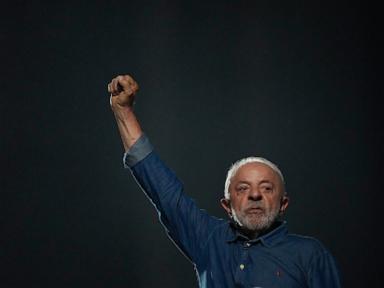
Luiz Inácio Lula da Silva knows the rhythm of those hallways better than anyone alive. Having won an unprecedented fourth presidential term in Brazil’s October 2026 election, the former metalworker and union leader has stepped back onto a familiar stage. Yet the script has changed. According to political analysts and major international reporting covering the election’s aftermath, securing the presidency is merely the prologue to a far more arduous chapter—one defined by a deeply polarized electorate, a conservative-leaning Congress, tight fiscal constraints, and intense global scrutiny over the Amazon.
To understand what a fourth term actually means beyond the headlines, picture a hypothetical household in the outskirts of Recife, in Brazil’s northeast. Let us call the matriarch Dona Maria. She remembers the early 2000s, when Lula’s first two terms coincided with a global commodities boom, lifting millions out of poverty and putting meat back on Sunday dinner tables. When she cast her ballot in 2026, she was not voting for an abstract ideological platform. She was voting for the memory of stability, for affordable groceries, and for the hope that her grandchildren might attend a federal university.
Now shift the camera south, to a hypothetical mid-sized soybean farm in Mato Grosso, run by a grower named Carlos. For Carlos, the political calculus looks entirely different. He watches interest rates, export tariffs, and environmental regulations with the vigilance of a hawk. To him, expanded social spending threatens inflation and higher taxes, while stricter enforcement against deforestation feels like an intrusion from Brasília into the engine room of Brazil’s agricultural economy.
Dona Maria and Carlos live under the same flag, yet they inhabit nearly separate realities. Bridging that gulf is the central, invisible struggle of Lula’s fourth term.
The Arithmetic of a Divided Nation
Numbers in politics rarely tell the whole story, though they set the boundaries of what is possible. Political observers point out that Lula’s return to the Planalto for a fourth term—following his earlier tenures from 2003 to 2010 and his third term beginning in 2023—places him in a league of his own in modern Brazilian democratic history. No other leader since the country’s return to democracy in 1985 has commanded the executive branch across four separate mandates.
Victory, however, arrived in a country split nearly down the middle. Over the past decade, Brazilian politics has hardened into two fiercely loyal camps, each viewing the other not merely as mistaken, but as an existential threat to the nation’s values. In neighborhoods from São Paulo to Manaus, family WhatsApp groups still go silent when elections approach. Neighbors know which side of the street voted which way.
Consider what happens next when a president governs under these conditions. Every policy proposal—whether a tax adjustment, an infrastructure project, or an educational reform—is immediately filtered through partisan suspicion. Compromises that once happened quietly behind closed doors now play out in real time across social media feeds, where nuance rarely survives for more than a few seconds.
For Lula, whose political genius has historically rested on personal charisma and the art of the face-to-face deal, the terrain is unforgiving. The easy consensus of the mid-2000s is gone. In its place sits a skeptical public that demands immediate, tangible improvements in daily life while remaining quick to punish missteps.
Congress Holds the Purse Strings
If the presidency is the steering wheel of the Brazilian state, Congress increasingly controls the fuel line. Over recent election cycles, legislative power in Brasília has shifted dramatically. A powerful bloc of conservative and centrist lawmakers—often referred to collectively as the Centrão, alongside firmly entrenched right-wing caucuses representing agribusiness, evangelical churches, and security hardliners—commands decisive majorities in both the Chamber of Deputies and the Senate.
Think of governing Brazil today like trying to captain a massive cargo ship where the bridge sets the compass, but an independent crew in the engine room decides how much steam to release—and charges a steep political toll for every turn of the valve.
Through constitutional amendments and expanded parliamentary budget earmarks, lawmakers have secured unprecedented control over billions of reais in public funds. Without their cooperation, bills stall in committee, presidential decrees expire, and ministerial appointments turn into drawn-out battles of attrition.
To pass legislation during his fourth term, Lula must continually assemble fragile, issue-by-issue coalitions. Doing so requires distributing cabinet posts and federal resources to parties whose ideological DNA runs counter to his own Workers’ Party (PT). Every concession made to appease centrist allies risks alienating his progressive base, who demand bold action on inequality, labor rights, and public services. Walk too far to the left, and Congress freezes the agenda; lean too far toward the center, and core supporters feel abandoned.
It is an exhausting tightrope walk, performed daily without a net.
The Fiscal Squeeze and the Cost of Living
Walk through any municipal market in Belo Horizonte or Salvador on a Saturday morning, and you can hear the real economy speaking. Shoppers pause longer in front of the butcher’s counter. They compare prices per kilogram on rice, beans, coffee, and cooking oil. Inflation may be far tamer than the hyperinflation nightmares of the 1980s and early 1990s, yet elevated borrowing costs and stubborn food prices still pinch working-class budgets.
Economists and financial analysts note that the macroeconomic backdrop of Lula’s fourth term bears little resemblance to the tailwinds of his first presidency. In 2003, booming Chinese demand for iron ore, soy, and oil flooded Brazil’s treasury with revenue, allowing the government to expand welfare programs like Bolsa Família while simultaneously paying down debt.
Today, the fiscal margin is razor-thin. Brazil’s public debt load and strict fiscal framework leave little room for unchecked spending. Financial markets—both in São Paulo’s Faria Lima district and on Wall Street—react swiftly to any hint that the government might loosen budget rules to fund new social initiatives. When investor confidence wobbles, the Brazilian real weakens, interest rates stay elevated, and the cost of credit climbs for everyone from major manufacturers to a street vendor buying a new cart.
Here lies the core economic dilemma: how to honor campaign promises of higher minimum wages, expanded public healthcare, and targeted poverty relief without triggering market anxiety that erodes those very gains through higher borrowing costs.
The Amazon and the Weight of the World
Step off a small boat onto a muddy riverbank deep in the state of Pará, and the scale of Brazil’s environmental responsibility becomes visceral. The air is thick, warm, and alive with the hum of insects. Towering kapok trees rise above dark waters that carry the lifeblood of South America’s climate system.
Internationally, few issues define Lula’s presidency more starkly than the fate of the Amazon rainforest. Global leaders, climate scientists, and European trade partners look to Brasília to curb illegal logging, halt wildcat gold mining on Indigenous lands, and steer Brazil toward a green industrial transition. During his third term, deforestation rates fell significantly from previous peaks, restoring Brazil’s standing at international climate summits.
Sustaining that momentum through a fourth term, however, tests the limits of state capacity. The Amazon basin spans an area larger than Western Europe, much of it remote, lightly policed, and increasingly infiltrated by transnational criminal networks involved in illicit mining, timber trafficking, and narcotics.
At the same time, environmental enforcement collides with local economic pressures. Millions of Brazilians live in the Amazon region, many of them struggling with inadequate infrastructure, scarce formal jobs, and limited public services. Telling a struggling family in the interior of Amazonas or Rondônia what they cannot clear or harvest—without offering a viable, profitable alternative—breeds resentment that local politicians eagerly harvest.
Meanwhile, powerful agricultural lobbies in Congress push back against stricter land-use rules and Indigenous land demarcations, arguing that Brazil’s food production feeds the world and should not be constrained by foreign demands. Balancing conservation with economic development is not merely a diplomatic talking point in Brasília; it is a daily tug-of-war over land, livelihoods, and sovereignty.
Public Security and the Anxiety on the Street
Ask ordinary Brazilians across the political spectrum what keeps them awake at night, and one concern consistently rises near the top: personal safety.
From the coastal capitals of the northeast to the sprawling suburbs of Rio de Janeiro and São Paulo, organized crime syndicates have grown wealthier, better armed, and more deeply embedded in local economies. Extortion rackets, territorial disputes between rival factions, and street crime affect daily routines—dictating which bus routes people take, when shopkeepers pull down their metal shutters, and where children can safely play after school.
Historically, public security has been a political vulnerability for the Brazilian left, which often emphasizes social prevention and police reform while conservative opponents campaign on tough-on-crime rhetoric and expanded police powers. Under Brazil’s constitution, primary responsibility for policing rests largely with state governors rather than the federal government. Yet when violence spikes, citizens look to the president for leadership.
During his fourth term, Lula faces mounting pressure to coordinate federal intelligence, border enforcement, and prison reform with state-level forces—many of them led by conservative governors eyeing the next presidential race.
Time, Succession, and the Question of Legacy
There is one adversary no political coalition can outmaneuver: the calendar.
Having turned 81 in October 2026, Lula enters this fourth mandate as the oldest sitting president in Brazilian history. His stamina on the campaign trail has long defied expectations, fueled by decades of political instinct and an unmistakable connection with crowds. Even so, questions about health, energy, and political succession hover quietly over every strategic discussion in Brasília.
For over four decades, the Brazilian left has revolved almost entirely around Lula’s gravitational pull. No clear successor within the Workers’ Party or its broader alliance has yet matched his national reach or ability to unite disparate factions. As the four-year term progresses, the battle over who will carry that banner forward in 2030 will inevitably intensify, creating friction inside the government long before the next campaign officially begins.
Opposition leaders, meanwhile, are already positioning themselves. Whether rallied around figures aligned with former president Jair Bolsonaro or newer conservative governors presenting a more technocratic image, the right remains energized, well-organized, and eager to capitalize on any economic slowdown or political misstep.
Late in the evening in Brasília, long after the television crews have packed their tripods and the ministries have emptied out, a handful of lights still burn behind the glass facade of the Palácio do Planalto. Outside, the wide avenues stretch toward the horizon in quiet symmetry, designed decades ago as a monument to a future Brazil that always seemed just within reach. Inside, the work of a fourth term begins not with a triumphal speech, but with a stack of unsigned bills, a divided legislature waiting across the plaza, and a nation watching closely to see whether a familiar leader can still bend a stubborn reality to his will.