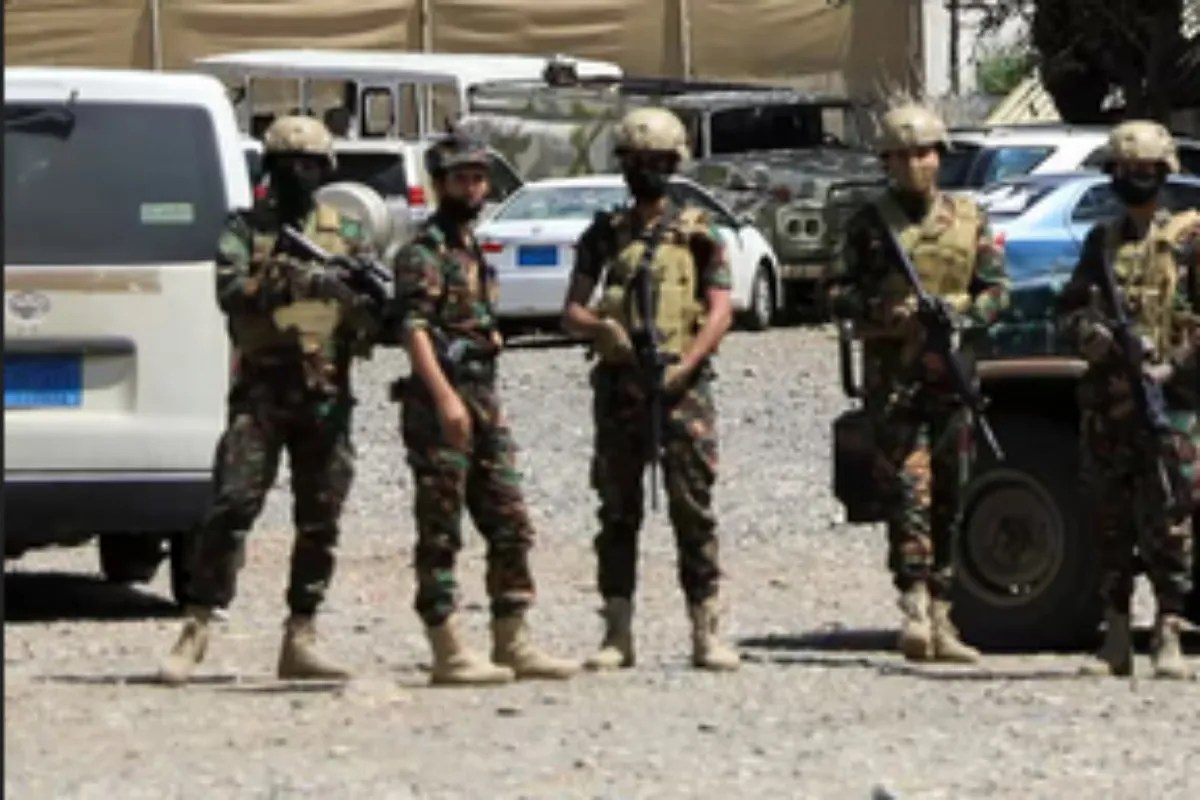
Dawn in Yemen does not arrive with birdsong. It arrives with the dry rattle of distant artillery, the hum of a reconnaissance drone overhead, and the quiet exhale of people who made it through another night behind sandbags.
On a frontline outside Taiz, a soldier I am calling Tariq—a composite figure drawn from the accounts of frontline troops and displaced families in the region—presses his shoulder against warm limestone and listens. Behind him, a long siege has choked roads, slowed medicine, and turned ordinary errands into calculated risks. Ahead of him, in the scrub and broken stone of the hills, Houthi fighters are probing for a seam in the line, testing whether exhaustion has made the defenders careless.
Then the radio crackles. Movement on the flank. A suicide drone buzzing low. Another infiltration push trying to slip past under cover of dusk and dust.
When standard wire reports cover a moment like this, they read like a ledger. A number of strikes logged. A tally of vehicles hit. A line stating that Yemeni forces repelled an attack and thwarted an infiltration attempt. Those lines matter because they record reality, yet they flatten the human weight sitting inside every word. A "thwarted attack" on paper is, in flesh and bone, a family in a besieged neighborhood keeping their lights off one more evening, a medic not having to triage shrapnel wounds on a cracked floor, and a tired infantryman holding his ground when his legs ache from days in a trench.
The Invisible Stakes Behind a Frontline Bulletin
To understand why a repelled assault in Yemen echoes far beyond a single ridge, look at how a front line works. Think of a defensive line not as a solid brick wall, but as a levee holding back a rising river. Every sandbag, every observation post, every artillery battery is a patch keeping water out of the town behind it. When forces push back an assault along fronts like Taiz, Lahj, Marib, or Hajjah, the immediate victory is measured in meters held and infiltrators turned back.
The deeper stake is civilian survival.
For years, residents in cities like Taiz have lived with the slow grinding pressure of blockade and intermittent shelling—where supply routes bottleneck, prices climb, and safety is measured in hours between incoming fire. Even when fighting flares along border crossings such as Haradh or stretches toward Aden, the stakes are never abstract. A breakthrough on one sector can shift pressure onto another, threatening supply corridors, displacement camps, and homes already patched together from whatever materials survived earlier rounds of war.
Military spokesmen speak in operational cadence—hundreds of strikes across multiple fronts during escalations, drone interceptions, counterattacks to clear mines and unexploded ordnance from recaptured ground. Those numbers point to a grinding war of attrition rather than a clean, Hollywood ending. Clearing a hillside of landmines after pushing attackers back is slow, nerve-wracking work. A single overlooked device can turn a moment of relief into tragedy hours after the gunfire stops.
I have spent enough time reading field dispatches and talking with people who live through protracted conflict to know how misleading quiet moments can be. Quiet in a war zone rarely means peace. Usually, it means someone is reloading, repositioning, or waiting for nightfall.
When a Flank Holds, What Changes on the Ground?
Let's walk through a hypothetical scenario to see how a foiled push ripples through daily life—explicitly a composite picture built from documented patterns of fighting around besieged urban corridors rather than a single verified incident.
Picture a neighborhood on the southern edge of Taiz at four in the morning. Inside a concrete ground-floor room, a mother I will call Salma lies awake listening to the rhythm of the night. She knows the sound of outgoing rounds versus incoming ones. She knows when neighbors start moving mattresses into hallways. When word filters down by morning that an attack on the sector was repelled and a drone brought down, nobody throws a parade. Relief in a prolonged conflict looks quieter than that. It looks like a baker opening his shutter twenty minutes earlier. It looks like a father walking a shorter, slightly less perilous route to find clean water or medicine.
Why does holding that line matter so much when the broader conflict remains unresolved?
Because without containment, every push inward tightens the noose. When Yemeni armed forces, backed by local resistance fighters and coalition air support during broader operations, turn back assaults and disrupt staging points, they buy time. Time for aid workers to move supplies. Time for families to breathe without a breach right outside their door. Time for negotiators and regional actors—whose moves can shift abruptly amid wider regional tensions—to deal with a map that hasn't collapsed overnight.
Yet I would be dishonest if I pretended that repelling an attack solves the underlying crisis. It doesn't. Wars fought across rugged terrain, shifting alliances, and long supply lines rarely end on a single triumphant morning. And if I'm being completely candid with you, that uncertainty is the hardest part for anyone watching from afar—or living through it up close. You want a clean turning point. Real conflicts give you contested ridges, stalled talks, fresh escalations, and hard-won pauses that can fray by afternoon.
The Wider Ripple Across Sea Lanes and Borders
What happens inside Yemen never stays neatly boxed inside Yemen's borders. The country sits beside the Red Sea and the Bab al-Mandab Strait—one of the world's vital maritime arteries—and shares a long, sensitive border with Saudi Arabia.
When Houthi forces launch drones or missiles, or press along ground fronts, the shockwaves travel outward. Shipping lanes face heightened risk and rerouting costs, regional air defenses stay on high alert, and cross-border flashpoints draw wider military responses and retaliatory strikes. Even an operation aimed at dismantling missile assembly or propellant sites reflects how interconnected local frontlines and regional security have become.
Still, headlines about global trade routes or regional geopolitics can easily crowd out the people standing directly in the path of the first wave. A container ship rerouting around southern waters costs money and time—real economic friction. A mortar or suicide drone striking near a crowded residential pocket costs lives. Treating both as equal in human terms would be a moral mistake.
Consider what happens next when a push fails: the side that tried to advance often regroups, shifts tactics, or probes another weak spot. In protracted conflicts, deterrence is less like flipping a switch and more like keeping a campfire lit in wet wind. Every spark you put out keeps the blaze from spreading, even while damp wood keeps smoking around you.
Why the Smallest Victories Still Carry Weight
Critics and weary observers sometimes ask why military updates about repelled attacks matter if the war drags on. It is a fair question, born of fatigue. After years of fighting, announcements of thwarted infiltrations or strikes on staging areas can blur together until every week sounds like a rerun of the last.
The answer lies in what didn't happen.
History shows again and again that in long wars, survival often hinges on preventing worst-case cascades. A breached defense can mean thousands newly displaced, hospitals overwhelmed, or a siege tightening around tens of thousands more civilians. Holding the line does not bring peace by itself, nor does it erase grief, ruined homes, or years of lost schooling and livelihood. What it does is preserve a fragile threshold—keeping a city from falling, keeping a road from closing, keeping today from turning worse than yesterday.
Back on that limestone ridge, as sunlight finally reaches the valley floor, Tariq lowers his binoculars and takes a slow drink of lukewarm water from a dented canteen. The hills are quiet again, deceptive and watchful, while miles away a child wakes up under a roof that is still standing.
This video is relevant because it covers reporting on a thwarted Houthi attack and the broader regional security context tied to the conflict.


