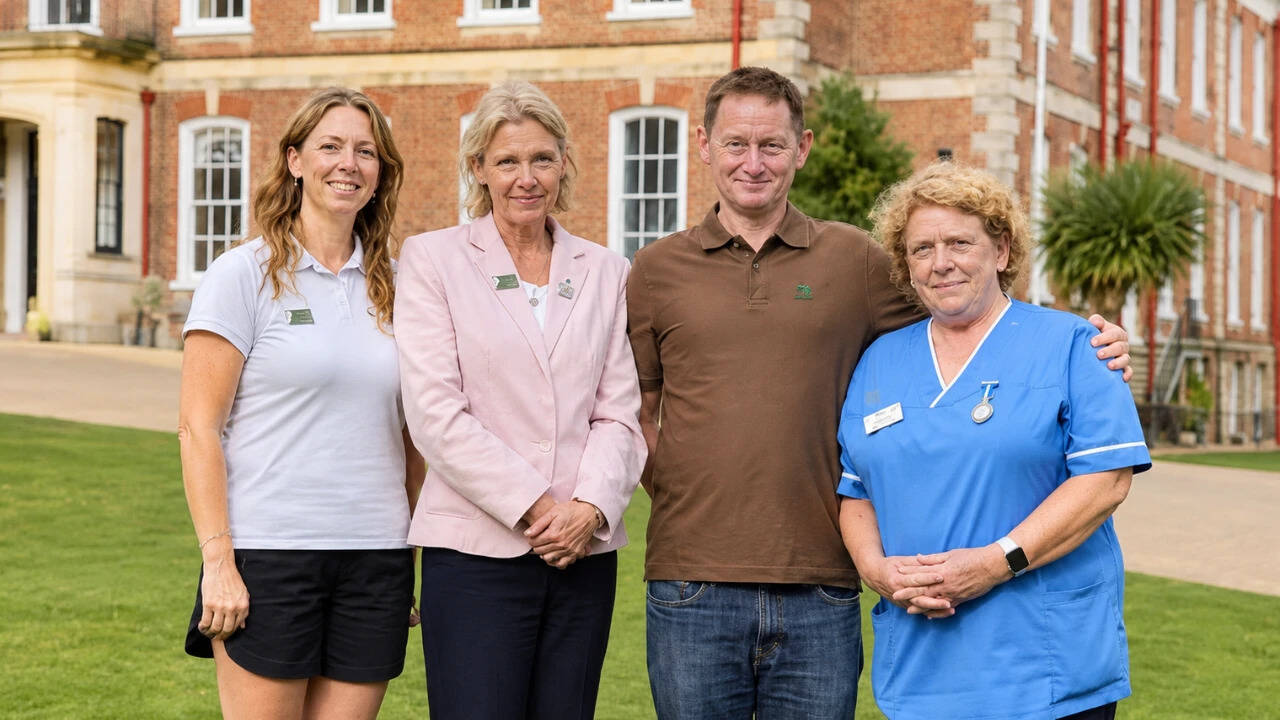
Most local news stories about three school colleagues receiving awards for saving a cyclist in cardiac arrest stop right after the handshake and the plaque. They celebrate the bravery. They mention the bystander CPR. Then they move on.
That misses the entire point.
When everyday educators step onto a roadside and bring someone back from sudden cardiac arrest, it's not luck or superhero instinct that keeps that person alive. It's a brutal, fast-moving chain of physiological events where every sixty seconds without blood flow drops survival odds by roughly 7% to 10%, according to the American Heart Association. Three school colleagues didn't just get lucky on a random morning or afternoon—they executed the exact sequence of actions that emergency medicine doctors wish the general public actually understood.
I've spent years analyzing workplace emergency response and bystander resuscitation outcomes, and the gap between what people think happens during a cardiac arrest and what actually saves a life is massive. Let's break down why school staff are uniquely positioned to handle sudden roadside emergencies, what really happens in those critical first four minutes, and how you can replicate their readiness before someone collapses in front of you.
Why School Colleagues Make Effective First Responders
You might assume medical professionals or off-duty firefighters make the best bystanders during a public collapse. Sometimes they do. Yet school employees—teachers, administrators, coaches, and support staff—consistently outperform the general public when someone goes down in cardiac arrest.
There's a simple reason for that.
Schools are one of the few workplaces in the country where annual CPR and Automated External Defibrillator (AED) drills are treated as routine rather than optional corporate box-checking. Most school districts mandate basic life support certification for coaches, physical education teachers, nurses, and designated emergency response teams. More importantly, school staff are trained to manage chaos in groups.
Think about what happens when three coworkers witness a cyclist collapse. One person doesn't have to do everything alone. In an illustrative example of a three-person school response team, the workload splits instinctively because they already work together under pressure every day:
- The first person takes airway and compressions. No hesitation, no debating whether the cyclist just fainted or had a heat stroke.
- The second person calls emergency services and pinpoints the exact location. Dispatchers lose precious minutes when panicked callers can't name the nearest cross street or mile marker.
- The third person runs for the nearest AED or flags down arriving paramedics. Having someone physically waving down an ambulance at a school entrance or roadway intersection shaves thirty to ninety seconds off response times.
That division of labor is everything. A single bystander doing chest compressions burns out within two minutes. Your arms turn to lead. Your compression depth drops below the two-inch threshold needed to actually push oxygenated blood to the brain. When three colleagues rotate every two minutes, compression quality stays high until paramedics take over.
Cardiac Arrest Is Not a Heart Attack
Here's where most people freeze up. They confuse a heart attack with cardiac arrest, and that confusion kills people every single day.
A heart attack is a plumbing problem. Blood flow to part of the heart muscle gets blocked, usually by a clot. The person is typically awake, complaining of chest pressure, sweating, or feeling short of breath. They can talk to you.
Sudden cardiac arrest is an electrical problem. The heart's rhythm suddenly scrambles into ventricular fibrillation or pulseless ventricular tachycardia. The pump stops completely. Within seconds, the person collapses, loses consciousness, and stops breathing normally.
Cyclists face a distinct risk profile here. High-exertion endurance exercise triggers spikes in adrenaline and blood pressure that can unmask underlying arrhythmias or silent coronary plaque, even in riders who look completely fit. When a cyclist drops off their bike without trying to break their fall, you aren't looking at simple exhaustion.
The Agonal Breathing Trap
If you ever witness a cyclist collapse, watch out for the single biggest mistake untrained bystanders make: waiting to start CPR because the person appears to be breathing.
During the first few minutes of cardiac arrest, the brainstem often triggers reflexive gasps called agonal respirations. It looks like snoring, snorting, or gasping for air. It sounds terrifying. And to an untrained eye, it looks like the person is still alive and breathing on their own.
They aren't.
Agonal gasps deliver zero useful oxygen to the lungs. If three school colleagues encounter a downed cyclist making gasping noises and decide to "wait and see if they wake up," brain damage begins within four to six minutes. By the time an ambulance arrives eight or ten minutes later, the window for a full neurological recovery has already closed.
According to data tracked by the Cardiac Arrest Registry to Enhance Survival (CARES), roughly 90% of people who experience an out-of-hospital cardiac arrest die before reaching hospital discharge. When bystanders recognize unresponsiveness immediately and start chest compressions before paramedics arrive, survival rates double or triple.
What Actually Happens During Roadside CPR
Movies have ruined public expectations of resuscitation. On television, someone gets thirty seconds of gentle chest pushes, coughs dramatically, sits up, and asks what happened.
Real CPR is violent, exhausting, and loud.
To manually squeeze blood out of a stopped heart and up into the carotid arteries, you have to compress the center of the chest at least two inches deep at a rate of 100 to 120 beats per minute. If you're doing it right on an adult cyclist, you will almost certainly feel or hear cartilage popping or ribs cracking. Many first-time rescuers panic at that sound and ease up on their pressure.
Don't. A cracked rib heals in six weeks. An oxygen-starved brain doesn't heal at all.
Why Rescue Breaths Matter Less Than You Think
Another common hesitation stems from mouth-to-mouth resuscitation. Nobody wants to perform unprotected rescue breaths on a stranger on the side of the road, especially if the cyclist suffered facial abrasions when they went down.
Good news—you don't have to.
The American Heart Association updated its bystander guidelines years ago to emphasize Hands-Only CPR for teens and adults who suddenly collapse. When an adult goes into sudden cardiac arrest, their bloodstream still holds several minutes' worth of residual oxygen. Continuous, uninterrupted chest compressions circulate that oxygen to the heart and brain far more effectively than stopping every thirty compressions to fumble with rescue breaths.
Every time you stop pushing on the chest, blood pressure crashes back to zero. It takes ten to fifteen compressions just to build that pressure back up again. Having three colleagues on scene means one person can slide into position on the opposite side of the cyclist and take over compressions with less than five seconds of interruption.
The Role of School AEDs in Roadside Rescues
If the cyclist collapsed near a school campus, there's a strong chance one of those three colleagues sprinted back inside the building to grab an Automated External Defibrillator.
CPR buys time, but electricity restarts the heart. Chest compressions keep brain cells alive while you wait for a defibrillator, yet compressions alone rarely convert a chaotic ventricular fibrillation rhythm back into a normal heartbeat.
Modern AEDs are practically foolproof. You turn the device on, and a calm voice talks you through every step. You peel the backing off two adhesive pads, stick one on the upper right chest and one on the lower left ribcage, and stand clear. The machine analyzes the heart rhythm automatically. It will not let you shock someone who doesn't need a shock.
Cutting Through Cyclist Gear Under Pressure
Roadside rescues come with logistical headaches you never practice on a rubber mannequin in a sterile classroom. If you're helping a cyclist, you run into specific physical barriers immediately:
- Helmets and chin straps. Leave the helmet on unless it actively blocks the airway or stops the head from resting flat. Unbuckling a tight strap wastes time when compressions are the priority.
- Tight synthetic jerseys and bib shorts. AED pads need direct contact with bare skin. Don't waste forty seconds trying to peel a sweat-soaked compression jersey over someone's head and arms. Use the trauma shears packed inside the AED carrying case to slice straight up the middle of the jersey.
- Sweat and chest hair. Defibrillator pads won't stick properly to a soaking-wet chest, and poor contact reduces shock efficiency. Wipe the chest dry with a towel or shirt sleeve before applying the pads.
When three coworkers tackle a roadside rescue together, one person handles the shears and dries the chest while another keeps pumping. Nobody loses rhythm.
Why Formal Awards Matter Beyond Public Relations
Local fire departments, ambulance services, and school boards routinely hand out bystander lifesaving awards—often called Citizen Lifesaving Medals or Phoenix Awards—when civilians successfully resuscitate someone.
Cynics sometimes view these ceremonies as feel-good photo ops. They're wrong. Public recognition serves a measurable public health purpose.
Bystander CPR rates across the United States hover around 40%, according to national registry figures. That means six out of ten people who collapse in public receive zero help until an ambulance pulls up. People freeze because they're terrified of getting sued, terrified of hurting the victim, or convinced someone more qualified will step forward.
Highlighting three school colleagues who stepped up and saved a cyclist breaks that bystander effect. It reminds teachers, parents, and commuters that ordinary people without medical degrees are the real first link in the chain of survival. It also pushes local school boards to keep funding AED maintenance, battery replacements, and staff training when budgets get tight.
If you're wondering about legal liability, every U.S. state has Good Samaritan laws protecting bystanders who provide emergency care in good faith without gross negligence. Nobody successfully sues the person who saved their life because of a bruised sternum.
What You Should Do Today to Be Ready
Reading about three school colleagues saving a cyclist is inspiring, but inspiration disappears the second someone collapses ten feet away from you. Preparation is the only thing that holds up when adrenaline hits your bloodstream.
Take three concrete steps this week so you don't freeze when it counts:
- Locate the AEDs in your daily environment. Walk into your office, gym, or local school tomorrow and find the exact wall cabinet holding the defibrillator. Check if the status indicator light is green. Knowing where it hangs saves two minutes of frantic searching later.
- Download PulsePoint Respond on your phone. If your local emergency dispatch participates in the PulsePoint Foundation network, the app alerts CPR-trained citizens whenever someone collapses in a public place within walking distance, while simultaneously showing the nearest registered AED on a map.
- Practice the 100-to-120 BPM tempo. Queue up a song with a steady 100–120 beat-per-minute tempo—Stayin' Alive by the Bee Gees is the classic example, though Crazy in Love or Pink Pony Club work just as well—and push hard against a firm couch cushion for two full minutes without stopping. You'll feel immediately how fast your arms tire and why calling for backup matters.
Three school colleagues earned their awards because they refused to stand around waiting for someone else to take charge. When a heart stops on the side of the road, hesitation is the only fatal mistake.



