The ticket clerk in Tehran gripped the edge of the counter, his knuckles white against the formica. Across from him, a mother of two clutched a crumpled blue boarding pass for a flight to Dubai that would now never push back from the gate. There was no shouting. There never is when the architecture of a normal life quietly dissolves into paper dust. There was only the low hum of the fluorescent lights and the heavy, settling weight of an absolute end.
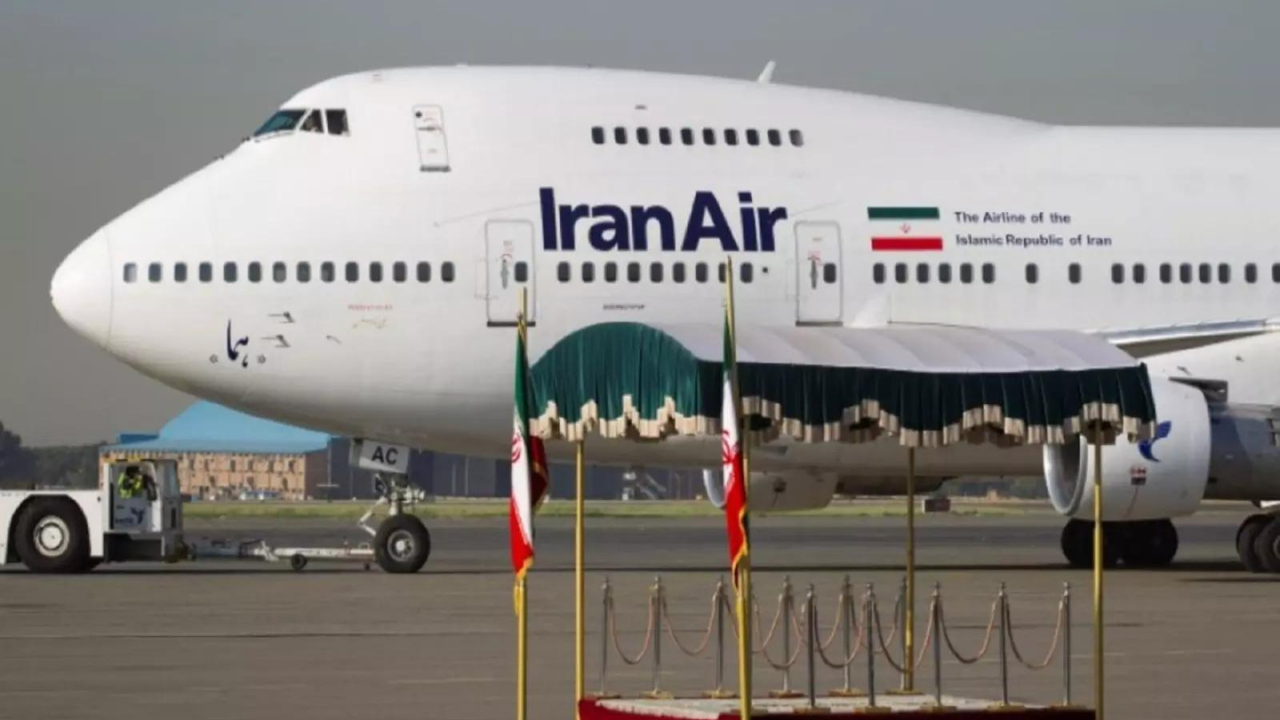
Twenty-seven. That is the number of carriers swept into the ledger of isolation. Every remaining commercial airline bearing the flag of Iran has now been pinned beneath the heavy boot of United States sanctions. Think of an airline not merely as a corporate entity with balance sheets and quarterly reports, but as a nervous system. It is the metal tube that carries a worried daughter to a dying father in Frankfurt. It is the cargo hold packed with urgent pharmaceutical components that cannot be manufactured locally. When you sever the wings, you do not just punish a government. You strand the citizen.
I stood in a similar departure hall years ago, watching the board flip from green to red, the destination cities blinking out one by one like dying stars. You learn quickly that geopolitics is rarely experienced in conference rooms or parliamentary speeches. It is experienced in the hollow ache of a waiting room where the clock has stopped moving.
The official justification from Washington is cold, precise, and bureaucratic. The Treasury Department points to logistics networks, military supply chains, and the dual-use machinery that transforms passenger jets into vectors of shadow logistics. Intelligence briefs whisper of illicit cargo slipping into conflict zones under the guise of commercial flight numbers. On paper, the calculus makes a ruthless kind of sense. If an engine can carry a tourist, it can theoretically carry a crate of unauthorized drone parts. If a state-owned airline acts as an arm of the state, then the state's reach must be clipped at the feathers.
Yet, machinery does not bleed. People do.
Consider what happens to the ordinary mechanics, the ticket agents, the veteran pilots whose licenses are suddenly as worthless as confetti. They did not draft policy. They did not engineer the proxy conflicts playing out across the region. They woke up on a Tuesday morning expecting to guide a Boeing or an Airbus down a strip of hot tarmac, only to find themselves locked out of the global sky.
The web of international aviation is fiercely delicate. Modern flight relies on a dizzying symphony of shared parts, software updates, insurance pools, and leasing agreements. When sanctions hit this sector, they do not just stop planes from flying to New York or London. They starve the fleet of the mundane spare parts that keep a cabin pressurized at thirty thousand feet. A single faulty valve can ground an entire fleet. The new sanctions turn that logistical vulnerability into a deliberate strategy of total attrition.
We are watching the complete decoupling of a nation from the circulatory system of global travel.
Step back and look at the historical echo. This is the culmination of decades of economic gravity pulling inward. But there is a profound difference between a slow squeeze and a total vacuum. By taking out the final twenty-seven carriers, the policy architects have eliminated any remaining gray areas. There are no exceptions left. There is no longer a loophole through which a commercial traveler can slip.
For the people living inside that vacuum, the world has suddenly grown very small. Visas are harder to secure. Foreign currency loses its purchasing power against the sky-high cost of alternate, convoluted routing through non-sanctioned regional hubs. A journey that once took four hours now takes thirty, weaving through a labyrinth of secondary airlines and nervous border controls.
We tell ourselves that these measures are bloodless. We comfort ourselves with the clean lines of diplomatic strategy, believing that pressure applied uniformly will eventually yield a predictable reaction. But human beings are endlessly adaptable and endlessly resilient, even as they are crushed beneath the weight of decisions made thousands of miles away. They will find other ways to connect, other routes to cross the border, other methods to survive the quiet strangulation of their isolation.
The ticket clerk in Tehran finally handed the mother her passport back. She did not cry. She simply turned around and walked out into the dusty afternoon heat, swallowed whole by a city that must now learn how to live entirely within its own borders, staring up at an empty sky where the planes used to fly.