The fluorescent lights of a supermarket on a Tuesday evening don't usually feel like a political theater. But for Maria, a mother of three balancing a rigid budget and a fraying nerves, the checkout line is where policy meets the plastic bag. For years, the math was simple, if soul-crushing. A two-liter bottle of generic soda cost less than a gallon of milk. A box of neon-colored cereal was a guaranteed breakfast without a fight.
That math is currently being rewritten.
The Supplemental Nutrition Assistance Program, or SNAP, has long been the silent engine keeping millions of American kitchens running. It is a lifeline. But for just as long, it has been a point of friction. Critics argue the government is essentially subsidizing the very chronic diseases—diabetes, obesity, heart disease—that strain the healthcare system. Now, under a shifting political tide spearheaded by a new health agenda, the "A" in SNAP is being interrogated. Is it truly "Nutrition" assistance if the cart is filled with liquid sugar?
The shift isn't just a whisper in Washington anymore. It is a calculated, aggressive push to redefine what qualifies as fuel for the American family.
The Great De-Sweetening
Consider the logic of the vending machine. For decades, the rules of SNAP were intentionally broad to avoid "shaming" recipients or creating administrative nightmares for grocers. You could buy a steak, and you could buy a Snickers. You could buy organic kale, and you could buy a mountain of powdered donuts. The philosophy was one of autonomy: the government gives you the credits, and you decide how to feed your kin.
The new push led by RFK Jr. and a coalition of health-focused reformers operates on a different premise. They argue that the "freedom" to buy ultra-processed foods is actually a trap. When the cheapest, most accessible calories are those stripped of fiber and loaded with high-fructose corn syrup, the choice isn't really a choice at all. It is an economic nudge toward a doctor's office.
The primary target in this overhaul is the sugary beverage.
Metabolically, your body treats a soda differently than it treats an orange. The orange comes with a scaffolding of fiber that slows sugar absorption. The soda is a biological ambush. By proposing a ban on using SNAP benefits for sugar-sweetened beverages, the administration is attempting to cut the cord on a cycle that feeds the obesity epidemic. It is a move that sounds common-sense to some and paternalistic to others.
But for Maria, it means her "safe" staples—the treats that keep her kids quiet in the cart—are suddenly on the "out" list.
What Stays in the Cart
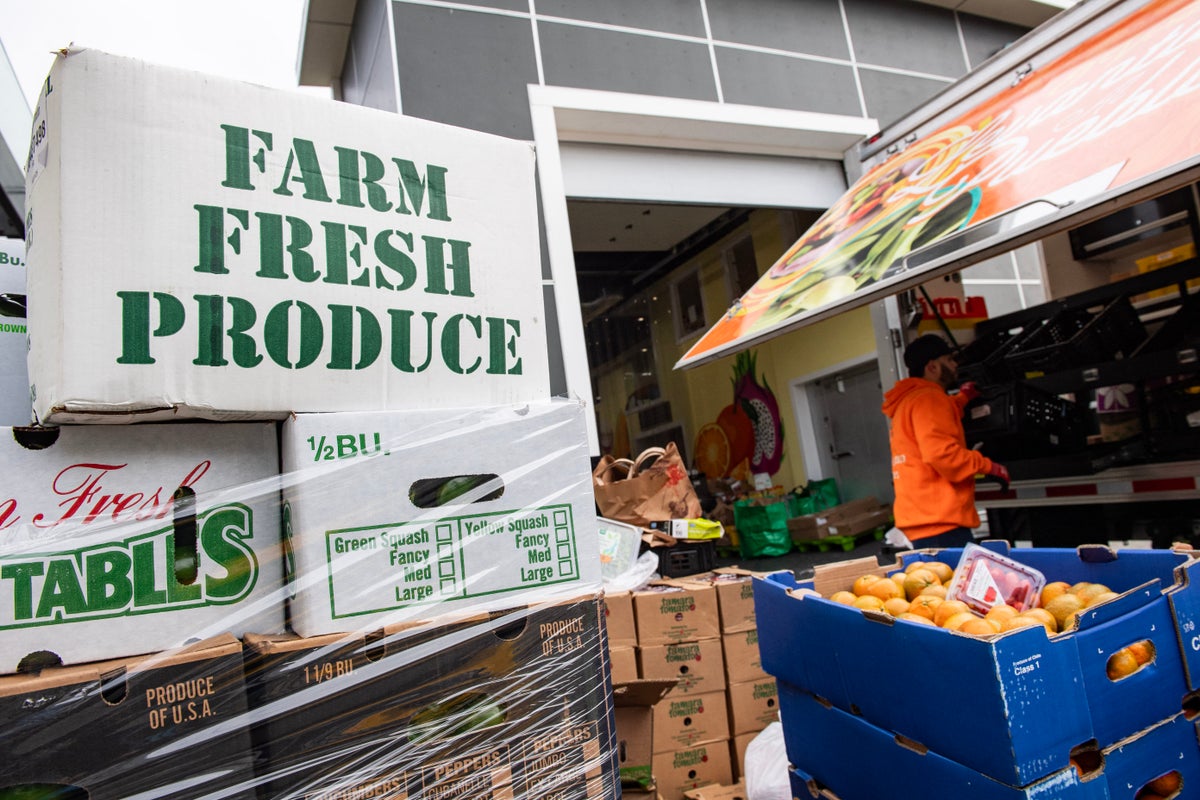
The new guidelines aren't just about taking things away. They are about a forced pivot toward the perimeter of the store. The goal is to incentivize the "In" list: whole grains, fresh produce, lean proteins, and dairy without the dessert-level sugar counts.
This isn't just about health; it’s about the hidden cost of the cheap calorie. We pay for the soda twice: once at the register with taxpayer-funded SNAP credits, and again through Medicaid when that soda contributes to a lifelong battle with insulin resistance. This is the "Invisible Stake" of the American diet.
The proposed changes aim to make the following items the bedrock of the program:
- Fresh and Frozen Fruits and Vegetables: The emphasis is on accessibility. Frozen peas are just as nutritious as fresh ones, and often more realistic for a working parent.
- Whole Tubers and Legumes: Beans and potatoes—the ancient anchors of the human diet.
- High-Quality Proteins: Moving away from processed deli meats toward eggs and poultry.
The tension arises in the "Gray Zone." What happens to the fruit juice that is 100% juice but still high in natural sugars? What happens to the yogurt that is packed with protein but also flavored with vanilla syrup? The reformers are drawing a line in the sand, and that line is increasingly being defined by "ultra-processing." If a food item looks nothing like its original form in nature, its days on the SNAP-eligible list are likely numbered.
The Friction of the Transition
It is easy to cheer for "healthy eating" from a high-altitude policy briefing. It is much harder when you are the one standing in the aisle trying to figure out why your card was declined for a pack of juice boxes.
Critics of the RFK Jr.-backed push point out that "food deserts" don't disappear just because the rules change. If the corner store in a low-income neighborhood only stocks chips and soda, banning those items doesn't magically sprout a salad bar. It simply leaves the shelf empty for the person with the EBT card.
There is also the matter of time. Poverty is a thief of hours. Preparing a bag of dried beans takes hours of soaking and simmering. Opening a can of processed soup takes thirty seconds. By shifting SNAP toward raw ingredients, the government is inadvertently asking the poorest Americans to spend more of their limited time in the kitchen.
This is the bridge that the new "Make America Healthy Again" (MAHA) movement must cross. It isn't enough to ban the bad; they must subsidize the good. There are talks of "double-up" programs—where every dollar spent on a vegetable counts as two dollars. This would turn the economic nudge in the other direction. Imagine a world where a head of broccoli is cheaper than a bag of Flamin' Hot Cheetos. That is the endgame.
The Biological Reality
Behind the political bickering lies a hard, cold biological truth that transcends party lines. The human body was never designed to process the sheer volume of refined sugar currently being funneled through the SNAP program.
$$Sugar\ Consumption \propto Chronic\ Inflammation$$
This isn't a metaphor. It's biochemistry. When we talk about "What's Out," we are talking about chemicals that trigger the dopamine centers of the brain in the same way certain drugs do. We are talking about additives that disrupt the gut microbiome and cloud cognitive function.
The push to change SNAP is, at its core, a massive public health experiment. It is an attempt to see if we can use the lever of government spending to pivot the health trajectory of an entire generation. It recognizes that the "freedom" to get sick is a hollow liberty.
The New Grocery List
So, what does the future look like at the register?
The "Out" list is becoming clearer by the day:
- Sugar-Sweetened Beverages: This is the non-negotiable. Sodas, energy drinks, and heavily sweetened teas are the first to go.
- Highly Processed Snack Foods: Items where the ingredient list reads like a chemistry textbook.
- Confectionery: Candy and sweets that offer zero nutritional density.
The "In" list is an invitation back to the kitchen:
- Nutrient-Dense Staples: Brown rice, quinoa, and oats.
- Direct-from-Farm Options: Expanding SNAP use at farmer's markets to bridge the gap between rural producers and urban consumers.
- Educational Support: Programs that teach the "lost arts" of quick, healthy cooking on a budget.
The transition will be messy. There will be headlines about "The Food Police" and stories of frustrated families. But the proponents of these changes argue that the current system is a slow-motion disaster. They see a country where the poorest are the sickest, not by choice, but by design.
The invisible stakes are the children growing up today. If the SNAP cart changes, their palate might change too. They might grow up seeing water or milk as the default, rather than a neon-blue sports drink. They might avoid the "Pre-Diabetes" diagnosis that currently haunts their parents.
As Maria reaches the front of the line, she eyes the display of candy bars. In the past, she might have tossed one in as a reward for a long day. Under the new rules, she might pause. She might look at the bag of apples instead. It’s a small moment, but multiplied by 42 million people, it’s a revolution.
The fluorescent lights haven't changed, but the game has. The American grocery cart is no longer just a vessel for calories; it is being drafted into a war for the nation’s longevity. Whether this push succeeds depends on more than just a list of "In" and "Out" items. It depends on whether we can make health as affordable and convenient as the poison we are trying to replace.
The silence of the checkout line is heavy with the weight of that challenge. Maria swipes her card, her eyes shifting from the screen to the bags, wondering if the change will actually make her family feel better, or if it will just make the hard life of the working poor a little bit harder. The answer won't be found in a policy paper, but in the blood sugar readings of the next generation. It’s a gamble on the American gut, and the stakes couldn't be higher.